
Israel’s Blockade Worsens Gaza Winter Crisis As Tents of Displaced Palestinians Flooded
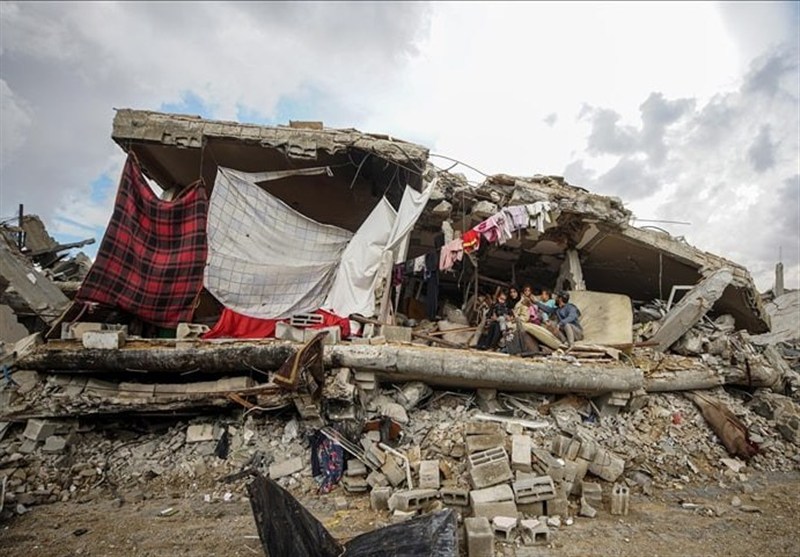
Palestinians across Gaza faced rising winter rains and freezing winds on Saturday as the Israeli enemy maintained its blockade on shelter supplies, deepening the humanitarian collapse after nearly two years of military assault.
Cold temperatures and heavy rain intensified already severe conditions for displaced Palestinians while Israel continued blocking tents and essential shelter materials from entering the enclave.
Families dug trenches around unstable tents to prevent flooding, and many sought refuge in damaged buildings that themselves risked collapsing.
“I have been crying since morning,” a displaced mother of two said pointing to her tent, which had flooded overnight.
She said she was struggling to care for her children after several relatives, including her husband, were killed during Israel’s war that began in October 2023.
“I am asking for help to get a proper tent, a mattress and a blanket. I want my children to have suitable clothes,” she said. “I don’t have anyone to turn to … There is no one to help me.”
Aid agencies have warned for weeks that Palestinians living in camps and makeshift structures lack the supplies needed to endure winter in the coastal territory.
Many residents have been displaced multiple times as Israel’s bombardment has damaged or destroyed more than 198,000 buildings across Gaza, according to UN figures.
Humanitarian groups have urged Israel to lift restrictions on aid, but the Israeli government has maintained tight limits on the flow of supplies despite the ceasefire with Hamas that took effect on October 10.
Aid groups said about 260,000 Palestinian families — nearly 1.5 million people — were at risk as winter approached.
UNRWA said it has enough shelter materials for roughly 1.3 million people but cannot move them into Gaza because of Israeli restrictions.
UNRWA chief Philippe Lazzarini said deliveries were critical as winter overlaps with mass displacement.
“It’s cold and wet in Gaza. Displaced people are now facing a harsh winter without the basics to protect them from the rain and cold,” he said in a social media post.
Calling the conditions “misery on top of misery,” he said fragile shelters “quickly flood, soaking people’s belongings.”
“More shelter supplies are urgently needed for the people,” he added.
Al Jazeera’s Hind Khoudary, reporting from az-Zuwayda in central Gaza, said many residents must remain in unstable and flooded tents because Israel destroyed their neighbourhoods and available shelters are full.
“Parents are unable to [buy] their children winter clothes, shoes and slippers,” she said. “Families are left helpless, without knowing what to do.”
Late Saturday, the Israeli military fired flares southeast of Khan Younis, according to sources in southern Gaza.
Earlier, Israeli forces launched air strikes near southern Khan Younis and northern Gaza City.
“Despite the guns falling silent in the Gaza Strip, the sound of Israeli air strikes continue behind the yellow line, the boundary set under the first phase of the ceasefire agreement between Hamas and Israel,” Al Jazeera’s Ibrahim al-Khalili said from Gaza City.
“One was in Khan Younis in southern Gaza, and the other happened in the Zeitoun neighbourhood in Gaza City behind the ‘yellow line’. The situation is getting much more dire for families who live near this yellow line, including my family, who lives a few metres from the line,” he said.
There were no immediate reports of casualties.
The Palestinian Ministry of Health in Gaza said Israeli forces have killed 260 people and wounded 632 others since the ceasefire began.
Overall, Israel’s war on Gaza has killed at least 69,182 Palestinians and injured 170,703, according to the ministry.