
Storms expose fragility of shelters… Gaza displaced live between torn tents & lack of alternatives
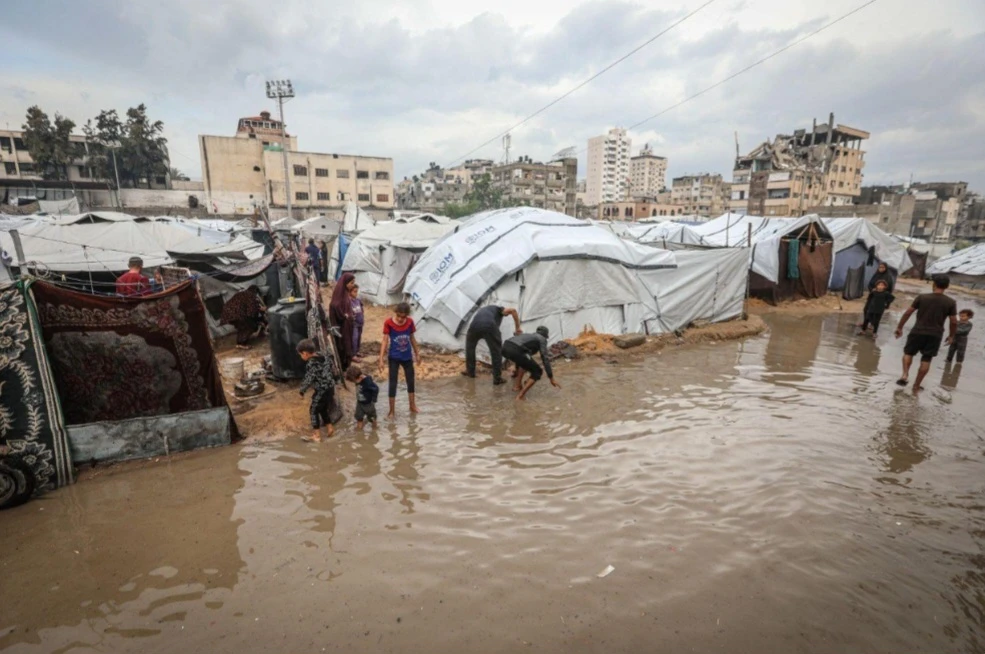
Across the coastal territory, fabric and nylon tents are widespread, serving as the only refuge for tens of thousands after the Israeli army destroyed vast areas of residential neighborhoods during the genocidal war, leaving families to face a harsh reality they had never known before.
In an informal camp on Al-Wahda Street in Gaza City, elderly Abdul Hadi Ahmed inspects the scattered holes in his tent during the day, racing against the night to patch them with his family.
In a quiet voice, he told Palestine Online today, Monday: “If we don’t do this, we will be drowned by the rain… we can no longer endure.” The torn tent, sheltering 14 people, has become the only refuge after their house in Beit Lahia was destroyed, while the enemy prevents them from approaching their area under the pretext that it lies behind the “yellow line.”
Abdul Hadi adds: “Every weather front, we reinstall the tent, but it is no longer even suitable for sheltering for a few minutes.” He questions the reasons behind blocking the entry of shelter materials: “Wasn’t destroying our houses enough? Why do they prevent us from getting new tents?”
UN data indicates that the Israeli control over crossings prevents tens of thousands of tons of aid from entering, including shelter tents and food supplies.
In another camp inside Gaza, 41-year-old Sameh Abdel Nasser tries to reinstall his tent, which lost its roof during a recent storm. All that remains are wooden poles and torn pieces of nylon.
He says: “I know it won’t protect us, but we have no alternative.” Sameh, whose house was destroyed by the enemy in the Shujaiya neighborhood, has lived in a tent for the third year during the rainy season. He adds: “We’ve been flooded multiple times… we are looking for a shelter to protect my five children, but all places are full of displaced people.”
Meanwhile, 31-year-old Mahmoud Ayesh faces the recurring task of rebuilding his tent, which is repeatedly damaged and uprooted by the wind.
He recounts: “We woke up to the sound of the wind pulling out the main pole… within minutes, we were exposed.” He adds: “The tents do not protect us from the cold and rain… we need a shelter that ends our suffering.”
With each new storm, the stories of the displaced are repeated: dilapidated tents, children shivering from the cold, and families lacking the most basic necessities. Amid postponed reconstruction and faltering relief efforts, the tent — despite its fragility — remains the last refuge for thousands of families in Gaza.