
Faith-Based Identity in Leader’s Discourse: Qur’anic vision to confront arrogance of global hegemony
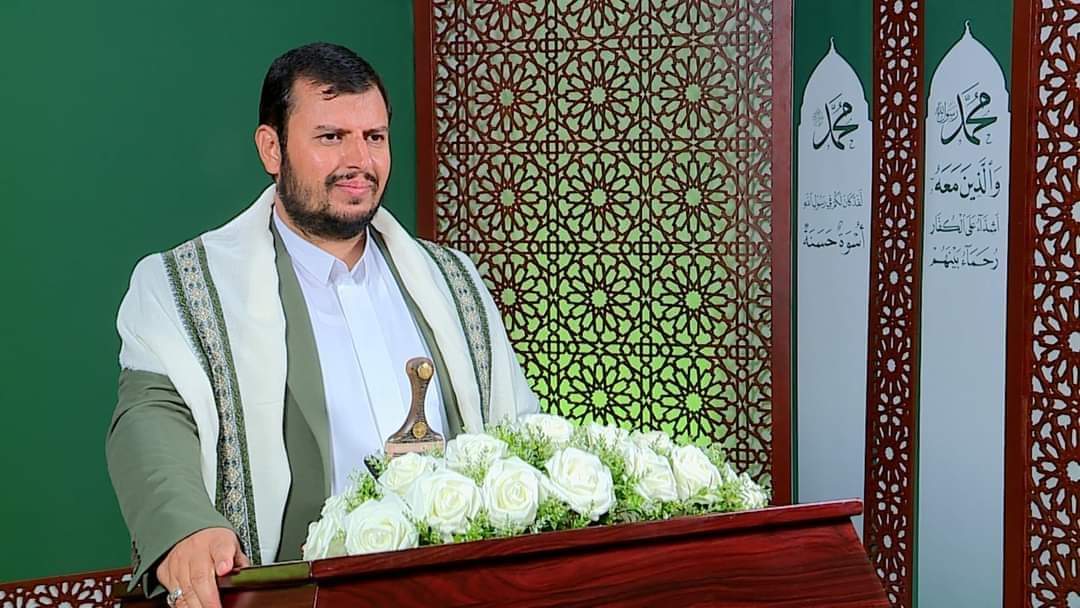
This is a luminous indication that highlights an important aspect of the Yemeni character, reflecting the authenticity of their religious affiliation, the depth of their connection to the message of Islam, and a renewed readiness to shoulder responsibility in arenas of truth—demonstrating an active faith-based presence across different stages , a practical engagement with the causes and major responsibilities of the Ummah.
Today, as the battle intensifies, the Ummah becomes hostage to its enemies, and transforms into a central arena of conflict, faith-based identity comes to the forefront as a pillar of cultural fortification and a compass for positioning. Qur’anic discourse seeks to entrench this identity as a conscious faith-based system that awakens responsibility toward the Ummah’s causes—foremost among them Palestine—in the face of the arrogance of global hegemony , its political and media tools.
Within this context, Sayyed Abdulmalik Badr al-Din al-Houthi represents a leadership model in restoring the centrality of faith-based identity as the foundation of civilizational and human construction, through a comprehensive Qur’anic project that reinstates the Holy Qur’an’s central role in shaping awareness, guiding behavior, forming positions, and linking faith to action, responsibility, and practical commitment to religious values.
This vision stems from a deep understanding of the Yemeni faith-based identity—an identity singled out by the Messenger of Allah, peace and blessings be upon him and his family, in the noble prophetic hadith on faith and wisdom. This description carries spiritual, historical, and political connotations that reflect the authenticity of this people’s faith-based affiliation , their innate connection to God’s religion and its just values.
Accordingly, the Leader presents Qur’anic discourse as a tool for awareness and construction, restoring the Qur’an as a source of guidance and practical movement in confronting challenges, making it a reference for diagnosing risks, shaping positions, and charting paths of construction and confrontation across various fields.
The Qur’anic vision in the speeches of Sayyed Abdulmalik Badr al-Din al-Houthi stands out as a state of intellectual and cultural fortification against soft wars that target societal awareness and identity through media disinformation and cultural invasion—contributing to raising popular awareness , understanding the true nature and dimensions of the conflict with the Ummah’s enemies.
At the core of this vision, the Palestinian cause occupies a central place. Qur’anic discourse links faith-based identity with supporting the oppressed, making the stance toward Palestine an ethical and faith-based criterion that reveals the sincerity of affiliation to religion , the message, translating faith into action , a practical stance against Zionist-American aggression and normalization regimes.
Accordingly, the Leader affirms that sincere faith-based affiliation translates into practical responsibility—manifested in confronting global tyranny, opposing projects of domination and colonialism, and reinforcing the principle of faith-based dignity enshrined by the Qur’an in the conscience of believers.
In recalling roots, Qur’anic discourse invokes the historical role of Yemenis since the dawn of Islam, when they entered God’s religion in multitudes in response to the Messenger’s message conveyed by his emissary Imam Ali, peace be upon him—a founding moment that launched a deeply rooted faith-based identity present across stages and turning points.
Extending this meaning, the Leader is keen to transform such occasions into forums for awareness and the strengthening of faith-based mobilization, contributing to building a conscious individual and reinforcing societal resilience against intellectual and cultural invasion, while restoring identity as a civilizational shield that preserves the Ummah’s authenticity and independence. This is evident in the momentum of activities dedicated to the Feast of Rajab Friday and the renewed faith-based and cultural messages it carries.
In this direction, reviving religious occasions—foremost among them Rajab Friday—represents a practical manifestation of entrenching this identity, as a station for magnifying God’s rites, renewing attachment to religion and the Messenger, and deepening awareness of Yemen’s faith-based history , its role in supporting Islam and the Ummah’s causes.
The cultural and popular dimension also receives clear attention through religious gatherings, activities, cultural events, and broad meetings that have become sincere expressions of faith-based identity and tools for consolidating awareness and conveying Qur’anic concepts in language close to the society’s conscience.
In this context, faith-based identity contributes to strengthening social cohesion and alignment, re-anchoring belonging on a comprehensive religious and moral foundation—consolidating unity of stance, fortifying the internal front against challenges, countering external conspiracies, opposing projects of violation, confronting campaigns that insult the Qur’an and sacred sites.
This is linked to the Leader’s emphasis that liberation and independence are natural fruits of sincere belonging to God, and that adherence to the Qur’an and faith-based identity is the primary gateway to building a free, sovereign stance—reflected in Yemen’s honorable positions toward the Ummah’s causes despite challenges.
Today, Yemenis’ faith-based identity is manifested in the courage of leadership stances, the people’s rallying around their choices, and practical presence in supporting Palestine through various forms of military, political, media, and mobilization support—making Yemen an effective actor in the equation of conflict and a strong front in defending the Ummah’s causes, a truthful translation of faith when it becomes stance, action, and responsibility.
In contrast to the submission of several Arab regimes and their drift toward normalization with the Zionist entity—pursuing policies of subservience that entrench American hegemony in the region—Yemen chose to side with truth and fix the Ummah’s compass toward Palestine in word and deed, grounded in a Qur’anic awareness that places support for the oppressed at the top of priorities.
In sum, the faith-based identity within the Qur’anic vision presented by Sayyed Abdulmalik Badr al-Din al-Houthi constitutes an integrated civilizational project that restores faith to its central role in societal life, makes confronting the arrogance of global hegemony an authentic faith-based stance, turns steadfastness on truth into a practical path for a Yemeni identity deeply rooted in history and extending toward the future.