
In a World of Defeat, Yemeni Leader Points to ‘Trust in God’ as the Path to Rise
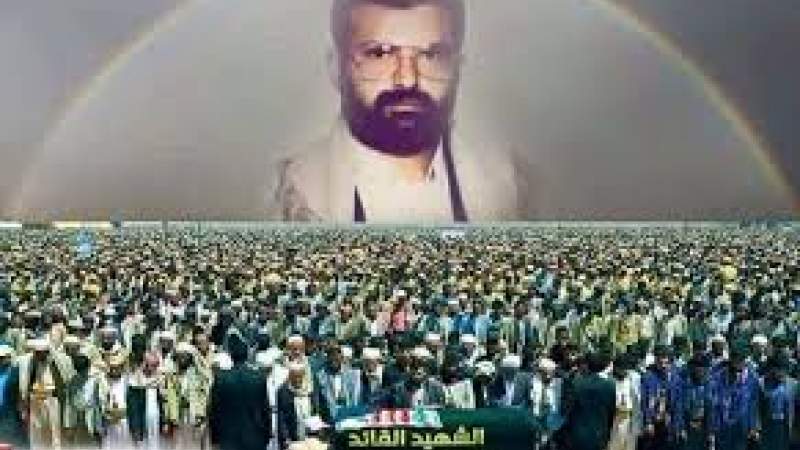
Amid a regional landscape often characterized by political subservience and a perceived sense of defeat within the Arab and Islamic world, Sayyed Abdulmalik al-Houthi, the leader of Yemen’s revolution, recently articulated a diagnosis for this condition and a prescription for its remedy.
This trust, as framed in the speech analyzing the legacy of his brother and Ansarullah founder, Sayyed Hussein Badr al-Din al-Houthi [the Martyr of the Quran], is presented not as passive piety but as the foundational engine for historical change.
Diagnosing the Crisis: A Crisis of Faith as the Mother of All Crises
The speech posits that Sayyed Hussein al-Houthi diagnosed the plight of the Muslim nation with “Quranic clarity.” The primary illness, in this view, is a crisis of trust in God and His promise. This deficient faith is identified as the root cause of political paralysis, receding willpower, and a pervasive “psychological defeat” that precedes any military setback.
The argument follows a clear logic: a nation that doubts divine assurance will falter in its actions. A nation skeptical of the eternal laws of victory, as outlined in scripture, will acquiesce to humiliation and dependency—despite the unambiguous nature of God’s promise. Therefore, Sayyed Hussein al-Houthi’s teachings focused relentlessly on rebuilding this divine trust and reviving certainty in the Quran as a comprehensive guide for reforming the nation’s deplorable state.
The problem, from this perspective, is not a lack of sacred text, but the willful turning away from it in the realm of practical guidance, stances, and choices—reducing it to ritual recitation and empty slogans.
Launching from Weakness: Defying the Balance of Power
Sayyed Hussein al-Houthi launched his project from “point zero”—devoid of military backing, official cover, and under conditions of extreme vulnerability. This occurred at the dawn of the 21st century, a time described as the peak of an assault by the “American-Zionist-British axis” on the identity, religion, and dignity of the Muslim world.
Yet, he moved forward. The speech underscores that his trust in God was greater than the prevailing balance of power and stronger than calculations of fear. While most Arab regimes lived in a state of “comprehensive defeat,” his voice arose as a “different voice”—one that “proclaimed the truth, spoke the Quran,” and acted from a deep sense of religious responsibility. It was not an echo of a defeated reality but a breach of that reality, a direct confrontation with enemies at the height of their power.
Piety and Responsibility: Jihad as a Privilege, Not a Burden
The trust championed is described as “conscious and insightful”—a trust in God’s explicit promise of victory, in His impartial divine laws, and in the Quran’s comprehensive guidance for all challenges and eras.
The speech argues that the inaction of much of the Muslim nation stems from weak faith, which corrodes trust in God’s clear promise. A key hallmark of Sayyed Hussein al-Houthi’s character, as presented, was “piety and a heightened sense of responsibility.”
He is credited with restoring to the Quran its role in reviving this sacred sense of duty through the concepts of Jihad, enjoining good, and forbidding evil. These are framed not as heavy burdens or secondary choices, but as honorable responsibilities and essential articles of faith.
The Grand Lesson: A Three-Pillar Doctrine for Victory
The experience of the “Martyr of the Quran” is summarized as a grand lesson for the nation, forming a three-pillar doctrine for empowerment and victory:
Trust in God is the starting point for resurgence.
The Quran is the compass for liberation.
Religious responsibility is the path to dignity and victory.
The conclusion is absolute and messianic in tone: Whoever comprehends this lesson and acts upon it will not lose his way, will not be broken by storms, and will not be defeated by all the forces of the earth combined. The ultimate guarantee is given: “For whoever truly trusts in God… God is with him, and for whom God is with, there is no victor over him.