
Fourth Ramadan lecture of Sayyed Abdulmalik Badr al-Din al-Houthi 1447 AH
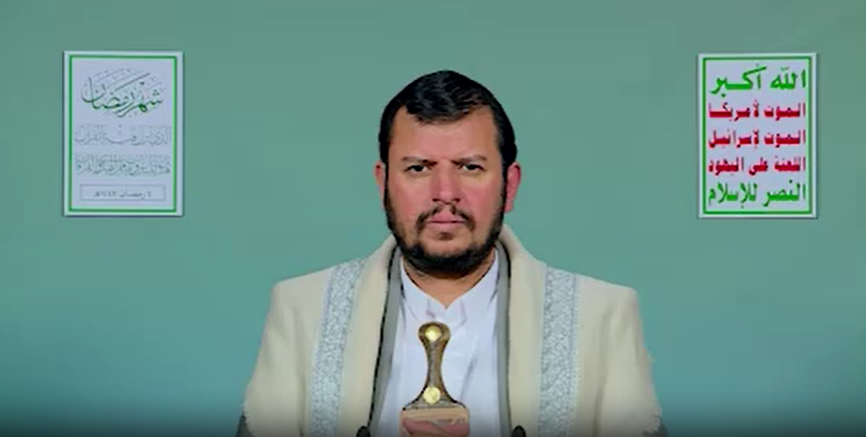
I seek refuge in Allah from Satan, the outcast.
In the name of Allah, the Compassionate, the Merciful.
Praise is to Allah, Lord of the Worlds. I believe that there is no god but Allah, the Sovereign and the Manifest Truth, and that our master Muhammad is His servant, Messenger, and Last Prophet.
O Allah! Confer Your salat and blessings upon Muhammad and the Family of Muhammad as You conferred Your salat and blessings upon Ibrahim and the Family of Ibrahim. You are Owner of Praise, Owner of Glory! And be pleased with Muhammad’s good companions and all Your righteous servants and mujahidin.
O Allah! Guide us and grant us acceptance, for You are the Hearing, the Knowing; accept our repentance, for You are the Relenting, the Merciful.
Brothers and sisters, peace be upon you and the mercy of Allah and His blessings.
In the blessed verses of Surah Al-Qasas, in the story of the Prophet of Allah, Musa (PBUH), we had reached the discussion in light of the words of Allah (Glory be to Him): {‘and to establish them in the land, and through them, We show Firaawn, Haman, and their soldiers [the fulfilment of] what they feared‘}[Al-Qasas 28:6]. This forms part of the clarification that Allah (Glory be to Him) provides in the Holy Quran concerning His will—rooted in His mercy, might, and wisdom—to rescue the oppressed and how He grants them deliverance. It also conveys this extremely important lesson—indeed one of the greatest lessons of history—drawn from the historical events and realities found in the story of the Children of Israel in the time of Firaawn: namely, the will of Allah (Glory be to Him) to rescue them from the tyranny of Firaawn and Haman and to grant them firm establishment in the land after they had endured severe oppression, humiliation, and subjugation.
In the previous lecture, we discussed this blessed verse and reflected upon its implications, and we now continue that discussion. Allah (Glory be to Him) says, {‘And through them, We show Firaawn, Hamân, and their soldiers [the fulfilment of] what they feared‘}[Al-Qasas 28:6]. We explained that this verse highlights a policy often adopted by tyrants and criminals in how they calculate and assess perceived threats—what they anticipate from a particular segment of society—and how, driven by such fears, they perpetrate the gravest forms of injustice and criminality. They even formulate calculations about the future. Some of these calculations rely on reports, signs, dreams, or the claims of astrologers, soothsayers, and the like, as was common in the past. Others arise from fears stemming from observing certain universal patterns in the laws of Allah, or from intelligence assessments derived from the information they gather and analyse. In our own age, such calculations may rely on, for example, the work of research and study centres, forecasts, and other analytical tools.
Consequently, they adopt precautionary measures rooted in injustice, tyranny, and criminality. These measures aim to force the oppressed into a condition in which any movement towards deliverance from their state of oppression, persecution, subjugation, humiliation, and total domination becomes impossible, leaving no possibility of revival. Thus, the measures they regard as precautionary—aiming to secure their lasting dominance or even to drive the oppressed towards extinction—are, in reality, profoundly unjust. Such was the policy of Firaawn and Haman, along with their soldiers, who acted in full obedience to their commands.
They adopted unjust precautionary measures—policies grounded in brutality and tyranny—to the extent of slaughtering every male infant in acts of extreme savagery and appalling criminality. Moreover, they subjected the Children of Israel to severe torment, persecuting them in every possible way. They forced them into harsh and gruelling labour, enforced with such cruelty that some were driven to the point of death, and relegated them to degrading occupations. In short, they subjected them to every form of oppression that existed at the time.
In contrast, the divine plan of Allah (Glory be to Him) intervened. Despite every precaution they had taken, including the slaughter of male infants, Allah’s extraordinary plan swept away all the barriers and obstacles they had constructed.
Thus, we see how the will of Allah (Glory be to Him) is ever-active in bringing about change within human reality. In fact, humanity, this earth, and all that it contains are part of Allah’s vast dominion, subject to His governance. He is the Ever-Living, the Sustainer, and He has not left His servants neglected. This is what tyrants and the arrogant forget. When they attain advanced levels of military power, economic strength, and control over a given situation, they imagine that they can do whatever they wish, that their will is absolute, that none can escape what they plan, and that success is guaranteed in all their designs. Many among the oppressed fall into a similar way of thinking: When their circumstances become extremely difficult, they despair, dwelling on the formidable resources, tight control, and military, economic, intelligence, and security capabilities of their oppressors. Some even reach a state of hopelessness, believing that such a reality cannot change, as if no one has the authority to intervene and alter this reality. Yet Allah is the One Who holds ultimate command—the Sovereign of the heavens and the earth, the Lord of all worlds—and He does not want His servants to be wronged. He says, {‘And Allah wants no injustice to His subjects‘}[Ghafir 40:31], and {‘And Allah wants no injustice to the worlds‘}[Ali ‘Imran 3:108]. In and with His guidance, He provides what repels injustice from people in the first place. Yet people may not respond, nor act within Allah’s instructions that would have protected them from falling into oppression. However, even when they consequently fall into persecution, injustice, and harsh circumstances, Allah prepares for them deliverance and relief—provided they turn sincerely to Him, the Almighty.
For this reason, in the story of the Children of Israel, we find a profound and significant lesson—one which Allah wanted us to comprehend and to apply to our own realities and circumstances, for ourselves and for others across the generations. It is the lesson drawn from their experience during the period of oppression, when they had sunk to their lowest point, followed by great transformations and a decisive shift to the stage described in the Quranic verse: {‘And through them, We show Firaawn, Haman, and their soldiers [the fulfilment of] what they feared‘}[Al-Qasas 28:6]. They had feared that this reality would change— that those oppressed people would rise, act, prevail, liberate themselves, and move from a condition of humiliation, subjugation, and enslavement into one of freedom, dignity, and honour. As we have mentioned, tyrants and the arrogant—as affirmed by the Quranic verses, historical events, and present reality— always harbour fears. However weak the oppressed may appear, tyrants remain fearful of them and consequently resort to measures rooted in injustice, tyranny, and criminality.
As we have said, this promise to the oppressed forms part of an enduring and continuous divine law. It is not merely a reference to a particular instance of divine care, mercy, or intervention in a specific historical period that has since passed. Rather, it is an established law of Allah (Glory be to Him). For this reason, it is essential for all oppressed people, in every age and every land, to direct all their hopes towards Allah (Glory be to Him) and never fall into despair of His mercy—no matter how dominant tyrants, criminals, oppressors, and the arrogant may appear and no matter the extent of their capabilities, their military strength, and their intelligence and security apparatuses, among other such means.
In our present age, we confront Zionist-Jewish arrogance, tyranny, and haughtiness through its global arms. Foremost among these is America, with its immense resources and widespread oppression, together with its allies, supporters, and backers. Alongside stands the Zionist-Jewish instrument—the criminal, unjust, tyrannical, and arrogant Israeli entity, which perpetrates the most heinous and atrocious crimes. Indeed, they possess extensive military, economic, intelligence, and media capabilities, as well as significant political power. However, whatever the scale of their control, whatever the extent of the tyranny and criminality they practise, the divine law of rescuing the oppressed and promising them deliverance remains an established and enduring practice of Allah (Glory be to Him). Therefore, all our hopes must be directed towards Allah with complete faith, firm certainty, and clear insight. We must possess a conviction that pushes us to respond practically and take action in accordance with the teachings of Allah (Glory be to Him). We must also be certain that the extent of tyranny, injustice, and criminality to which those tyrants have reached is itself among the significant causes that hasten their downfall and bring the oppressed closer to deliverance—provided, they turn towards Allah (Glory be to Him) and place their trust in Him.
The condition the oppressed must guard against is that of despair and despondency, which drives them either towards loyalty to tyrants and oppressors—surrendering to them, acting within their bounds, and being pulled into their fold—or towards the complete abandonment of their responsibilities and of the very means of deliverance that they are required to pursue.
When Allah (Glory be to Him) says in this blessed verse, {‘But it was Our will to favour those who were oppressed in the land‘}[Al-Qasas 28:5], that will was not a matter of wishful thinking, nor merely statements of condemnation and denunciation. Rather, it was a concrete divine plan manifested in reality, as the blessed verses make clear. So how did the implementation of that divine will begin? This took place despite the fact that the prevailing situation at the time may have been perceived by some—or even all—of the oppressed as offering no possibility of rising. That is, in their lived reality, there was no capacity to rise or to take action in a way that could liberate or rescue them from their condition, nor any sign of approaching relief. At times, circumstances become so harsh, and the sense of paralysis so complete, that they see no sign of deliverance at all. This is a condition people sometimes experience when confronted with circumstances of extreme severity and hardship.
In this case, we see how the divine will began to unfold. Allah (Glory be to Him) says, {‘We revealed to Musa’s mother, “Nurse him, but when you fear for him, put him then into the river, and do not fear or grieve. We will certainly return him to you and make him one of the messengers”‘}[Al-Qasas 28:7]. It is Allah’s established way in granting deliverance to His servants that it comes through His devoted servants—those who act in accordance with His guidance and teachings. Deliverance is inseparably linked to this divine pattern: relief for people, salvation from the dire circumstances in which they find themselves, comes through the guidance of Allah (Glory be to Him) and through those who act according to His guidance and teachings. Thus, we see how the Will of Allah (Glory be to Him) was directed towards selecting His Prophet Musa for the mission of delivering relief and salvation to the oppressed. When Allah willed to save them, what did He do? He brought into existence a man through whose hands relief and deliverance would be realised. He chose him, prepared him, and brought him into existence specifically for this mission and for this immensely important role—just as He says in the blessed verse, {‘And I have prepared you for Myself ‘}[Taha 20:41]. Indeed, Allah (Glory be to Him) created him, prepared him, chose him, and selected him for this mission: to confront the tyranny of Firaawn and to work for the rescue of the oppressed.
Awareness of this divine law is of critical importance. We must understand Allah’s laws: how He saves His servants and how He delivers them from the dire condition in which they find themselves. He (Glory be to Him) prepares for them a person through whose hands this role is carried out. Allah equips and readies him for it, for it is an immense responsibility requiring exceptional qualities and a specific preparation granted by Allah (Glory be to Him). In other words, this lies beyond the ordinary capacity of human beings to prepare for a role and mission of such magnitude.
Indeed, anyone who reflects on the circumstances of that time will recognise how extraordinarily difficult and complex the mission was. It was surrounded by formidable obstacles. Despite this complexity, Allah’s will was to create a person through whose hands relief and deliverance would come to the oppressed. Firaawn—together with his soldiers and his minister Haman—had already taken precautionary measures by ordering the slaughter of every male child, fearing what astrologers and soothsayers had foretold. But what was Allah’s Will and decree?
For this reason, we must be conscious of the role of the godly leaders who work for the deliverance of the oppressed through guidance from Allah, in accordance with His teachings. To engage with them within the framework of this sacred mission is essential so as to realise true deliverance.
We must also recognise that Allah’s laws and management unfold within human reality and through human hands. There is a divine law concerning causes, and we must understand it. Some may imagine that deliverance and relief come by some other means—means that are detached from action, from fulfilling responsibility, from adopting practical measures, from striving and working within the framework of Allah’s teaching and instructions, and from offering sacrifices in that path.
For example, some people may suppose that the matter could be resolved merely by praying for the destruction of the enemies, expecting Allah to eliminate them in a single moment, even though they do not take any action, fulfil their responsibilities, or take concrete, practical steps.
From this story, we grasp this profound divine law of Allah (Glory be to Him). For the mission of delivering the oppressed Children of Israel, Allah chose a man whom He fashioned and prepared for this very purpose—so that through him deliverance would come to them and the tyranny of Firaawn would be overthrown.
We also see how the beginning of this divine plan unfolded and how it broke through and overcame all the criminal precautionary measures put in place by Firaawn and his soldiers. The divine plan unfolded in a remarkable way, at the hands of the oppressed themselves. Thus, all the precautionary measures they had put in place were completely overcome.
The beginning was the birth of Musa (PBUH) amid those grave dangers. It seems that he was born after his father’s death—a paternal orphan—and the burden of protecting him was a source of great anxiety for his mother. In that stage, under such extremely difficult circumstances, we can see that Allah revealed divine instructions and surrounded him with His wondrous care: {‘We revealed to Musa’s mother, “Nurse him.”‘} Among the matters related to the lives of the Prophets and Messengers of Allah are the extraordinary events that precede their formal mission, which are documented in the prophetic biographies. In other words, events unfold within the decree and providential care of Allah (Glory be to Him), forming part of the divine plan, within the preliminary arrangements that accompany the course of their lives at specific stages. Before their birth, during their birth, after their birth, and throughout their upbringing, care is manifested through many significant matters, which serve as indicators of divine selection and preparation for a particular mission. Indeed, these are extraordinary events that precede their formal mission, and they form part of the divine care through which Allah oversees the lives of His Prophets and Messengers, preparing and safeguarding them for their great and sacred missions.
Here we see how the Quran clearly expresses this in His saying, {‘We revealed to Musa’s mother, “Nurse him..‘} The revelation comes from Allah (Glory be to Him) along with divine teachings. Some scholars who interpret the Quran were confused by this matter, questioning how there can be revelation from Allah to the mother of Moses. This is because they assume that revelation can only be directed to the Prophets (PBUT) and that the matter of revelation is exclusively linked to prophethood. However, the Quran clarifies elsewhere that revelation from Allah (Glory be to Him) may also be granted to others. Although this is connected to prophethood, it remains within the broader framework of the Prophets’ mission (PBUT).
For example, we find in another similar case—in the story of the pure and truthful Mariam (PBUH)—how Allah sent revelation to her and how the angels addressed her and called out to her: {‘And [remember] when the angels said, “O Mariam! Surely Allah has selected you, purified you, and chosen you over all women of the world”‘}[Ali ‘Imran 3:42]. This was a revelation conveyed through the call of the angels (PBUT)—a direct address informing her of her role, her mission, and the distinction with which Allah favoured her.
The same applies to the verse that states, {‘[Remember] when the angels proclaimed, “O Mariam! Allah gives you good news of a Word from Him; his name will be the Messiah, Isa son of Mariam; he is honoured in this world and the Hereafter, and he will be one of those nearest [to Allah]”‘}[Ali ‘Imran 3:45]. Here, in these blessed verses, we observe that Allah gave her glad tidings through the angels—by means of a direct call and revelation conveyed through them—announcing the birth of her son, the Messiah, and clarifying his mission and his role.
In addition, in Surah Mariam, we find the full account when Allah sent Jibrail [Gabriel] (PBUH) to her to call her and clarify for her the matter of her child—before pregnancy, during pregnancy, how she would give birth, and what would follow thereafter. This proves that the matter [regarding Musa’s mother] is indeed real revelation, involving a direct address from one of Allah’s angels (Glory be to Him). At the same time, it occurs within the framework of a mission connected to prophethood. That is to say, she is the mother of a prophet—the Prophet Musa (PBUH)—and the revelation relates to the mission associated with him, just like the story of Mariam (PBUH). Therefore, any confusion is dispelled. The matter does not concern legislative revelation, nor does it involve a prophetic mission entrusted to her. Rather, it concerns a mission connected to that child, who is one of the prophets of Allah (Glory be to Him) and whom Allah would send with a great prophetic message.
The circumstances in which the mother of Musa (PBUH) found herself were extremely difficult and highly complex. The task entrusted to her was of the utmost difficulty, surrounded by significant dangers. Thus, she needed these teachings from Allah (Glory be to Him) and needed to act upon them with complete certainty and full reassurance. For this reason, she was in dire need of divine revelation, which contained these teachings. The first of these teachings concerned caring for him in terms of nursing and the essential early maternal care: breastfeeding, tenderness, affection, and attention to his nourishment. Here, we recognise the value and importance of the role assigned to this woman.
In Allah’s teachings and instructions, we see how this momentous role was entrusted to a woman—in sharp contrast to the practices of Firaawn, Haman, and their state, whose policies degraded women, exploited them for corruption and vice, and treated them in a wholly different manner. In the case of Musa’s mother, we see a profound honouring of women—and indeed of human beings in general, both men and women—within the framework of divine teachings and the great sacred missions in which believing men and women participate, along with those who act in accordance with Allah’s teaching. We see the importance of this role in its prophetic dimension—a matter connected to a mission of prophethood. At the same time, it is part of a major task, bringing about the deliverance and salvation of the oppressed and the ultimate downfall of that tyranny and oppression.
Within the framework of this great mission, we observe that this role—which is fundamentally essential to the execution of the mission—is entrusted by Allah to a believing woman. This constitutes a significant honour. It enables us to truly recognise that the dignity of men and women (of human beings in general) lies in fulfilling a pivotal role—one rooted in faith and manifested through committed spiritual action.
Here, in the revelation to the mother of Musa, we witness the vital role of women and their significant place in Allah’s divine plan and guidance, connected to a major cause and a great, sacred mission. This is something we must deeply understand because the arrogant, misguided forces of tyranny continually strive to distort women’s roles within the faith-based path and rightful divine approach. They aim to mislead women and divert them towards misguided directions that strip them of their dignity and destroy the social fabric of society, falsely presenting their corrupt path as the one that grants women worth. Yet the true human and spiritual value of both men and women lies within the faith-based path, according to the teachings of Allah, the Almighty.
We also find that the proper role of women is inherently connected—naturally and realistically—to family and society; it is not a separate or isolated role. We observe the role of the mother of Musa within the context of his significant mission, which itself has a familial and social dimension tied to the wider community. This is the correct perspective that aligns with human nature and is fully consistent with the reality of people. Therefore, women should perform their role within the context of their family and community, not as a separate entity acting in isolation, as if they were in a world of their own pursuing their own political cause—one that is focused solely on matters of women, as if they were a separate entity, striving for independent and isolated activity, disconnected from their family and community.
This important role is closely linked to life circumstances that impact both the family unit and society at large. We cannot imagine, for instance, a situation in which men are oppressed, humiliated, and subjugated while women enjoy a respected and secure position within the same society—or vice versa. Rather, the condition extends to everyone. We see clear examples of how the Zionist Jewish tyranny, with its criminal arms—America and Israel—targets our societies as a whole. Take, for example, their actions in Palestine? They have killed women, children, the youth, and the elderly—even infants! They target every segment of society and practise all forms of torture against the entire community, including starvation and deprivation of basic necessities.
For this reason, all women must be conscious of these important realities. Part of the enemies’ plan to dismantle our societies across the Islamic world—whether in Arab countries or elsewhere—lies in targeting women. They present the idea that women must follow a path detached from the reality of family and society, a path with its own political slogans and activities designed to entrench separation—from their lived reality, from the family, and from the wider community—as though they were a world unto themselves. This forms part of the broader targeting of society as a whole— its women and its men alike. Thereafter, they steer them towards deviation, corruption, and exploitation. It is, in essence, exploitation implemented by the disbelieving West through its organisations and programmes that actively seek to corrupt and dismantle our society.
In the blessed verses, we see how Musa (PBUH) was born—an orphaned child whose mother alone bore the burden of protecting him despite her weakness and vulnerability. We then witness how the care of Allah (Glory be to Him) came to a child who had no human protector—no father, no clan, no supportive community. Yet events unfolded as Allah willed: divine providence preserved that vulnerable infant even while he was in the grasp and embrace of his enemies. Thus, it becomes unmistakably clear how the will of Allah prevails over the will of tyrants, in one of the most remarkable scenes in history.
We shall conclude our lecture today with this.
We ask Allah (Glory be to Him) to grant us success in seeking what pleases Him. O Allah, have mercy on our virtuous martyrs, heal the wounded among us, set free our captives, and grant us victory. You are the Hearer of Prayer!
Peace be upon you and the mercy of Allah and His blessings.