
Leader of Iran, Sayyed Ali Khamenei, Martyred in US-Israeli Aggression
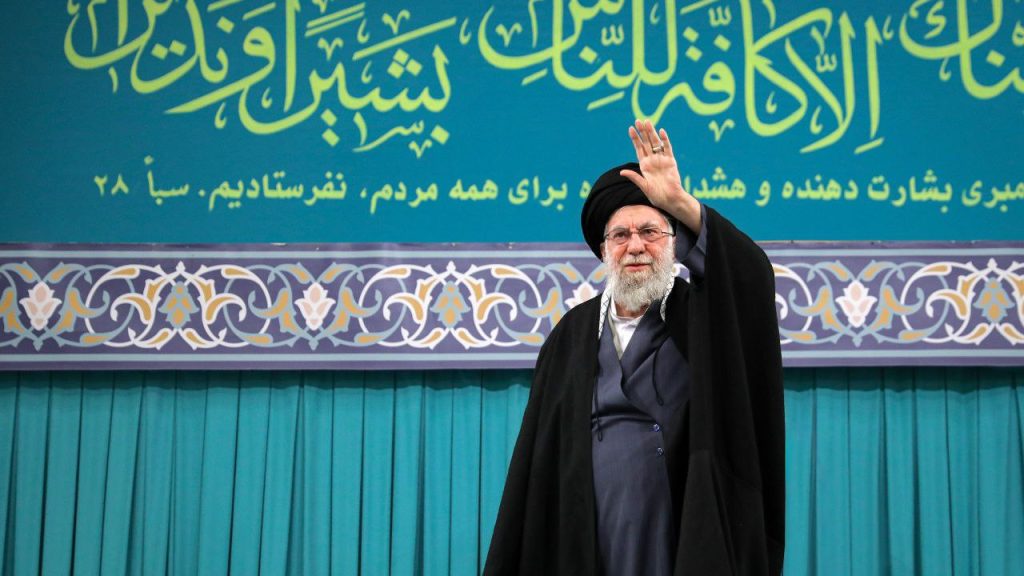
The leader of the Islamic Republic of Iran and the Islamic Revolution, Sayyed Ali Khamenei, has been martyred in the joint US-Israeli aggression on Iran.
Iranian state television reported that the leader of Iran, Sayyed Ali Khamenei, was martyred at his workplace while he was carrying out his duties in his office following the joint US-Israeli attacks in the early hours of Saturday.
According to Iranian state television, Sayyed Khamenei’s martyrdom at his workplace once again refuted claims by “outlets linked to the Israeli regime and regional reactionary currents that the leader was in a secure and undisclosed location,” affirming that he remained present on the frontlines of responsibility among his people.
On Sayyed Khamenei’s legacy
Aged 86, Sayyed Ali Khamenei has guided the Islamic Republic of Iran from the early days of the post-revolutionary era through decades of struggle and transformation. After taking part in the 1979 Revolution that overthrew the oppressive, US-backed Pahlavi monarchy, he served as president throughout much of the 1980s before being appointed as the Leader of Iran in 1989 following the death of Sayyed Ruhollah Khomeini.
In that position, he became the highest authority in Iran’s political and religious system, shaping domestic policy, overseeing national institutions, and directing Iran’s strategic orientation for nearly four decades.
During his leadership, he maintained Iran’s sovereignty in the face of international pressure, steered the country through regional conflicts, and fostered alliances with movements and governments across West Asia.
His tenure also oversaw significant developments in Iran’s nuclear program and the expansion of the Islamic Revolution Guard Corps as a central element of national defense and regional influence, making him one of the most significant figures in contemporary Iranian and regional history.