
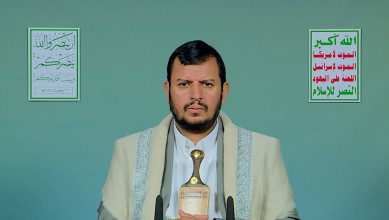
Eleventh ramadan lecture of Sayyed Abdulmalik Badr al-Din al-Houthi 1447 AH
I seek refuge in Allah from Satan, the outcast.
In the name of Allah, the Compassionate, the Merciful.
Praise is to Allah, Lord of the Worlds. I believe that there is no god but Allah, the Sovereign and the Manifest Truth, and that our master Muhammad is His servant, Messenger, and Last Prophet.
O Allah! Confer Your salat and blessings upon Muhammad and the Family of Muhammad as You conferred Your salat and blessings upon Ibrahim and the Family of Ibrahim. You are Owner of Praise, Owner of Glory! And be pleased with Muhammad’s good companions and all Your righteous servants and mujahidin.
O Allah! Guide us and grant us acceptance, for You are the Hearing, the Knowing; accept our repentance, for You are the Relenting, the Merciful.
Brothers and sisters, peace be upon you and the mercy of Allah and His blessings.
In our discussion of the story of Prophet Musa (PBUH) in light of the blessed verses from Surah Al-Qasas, we have come to the verses that shed light on his youth and reveal significant aspects of his life during that stage. These verses reveal one of the most remarkable and important qualities of Prophet Musa (PBUH)—benevolence—and show how Allah blessed him with judgment and knowledge. In these verses, Allah also reveals one of His established laws—which serves as great glad tidings for all the doers of good and indicates one of the greatest reasons for attaining wisdom and knowledge—as He says, {‘This is how We reward the good-doers‘}[Al-Qasas 28:14].
We also discussed, in brief, the importance of benevolence, as it is a theme that is widely discussed, encouraged, and emphasised in the Holy Quran. To recognise its importance, you need look no further than this verse: {‘And do good, for Allah certainly loves the good-doers‘}[Al-Baqarah 2:195]. Indeed, Allah’s love is the greatest badge of honour a believer can earn, and it brings immense benefits in both this life and the Hereafter—unparalleled honour.
Thus, true benevolence is founded on sincere devotion to Allah (Glory be to Him): a pure motive with no exploitative aims, no pursuit of material or social gain from people, and no showing off. It also originates from the purity of the soul; genuine sincerity arises from inner purity.
A person who possesses noble morals and inner purity will love doing good deeds and wishing well for others, while detesting oppression and tyranny. Such a person carries elevated human feelings that are part of the innate nature Allah has instilled in humanity, including empathy for the pain and suffering of others, especially the suffering of the needy, the poor, and the oppressed.
Benevolence occupies a very lofty rank in the scale of faith—among the most elevated acts and great qualities. It serves as a great means of drawing closer to Allah (Glory be to Him), making a person beloved to both Allah and His creation. Of course, what matters is to be loved by Allah, yet people’s affection follows naturally too, as expressed in the hadith: ‘Hearts are predisposed to love someone who does them good and detest someone who does them harm.‘
For this reason, when a person cultivates this quality with sincere devotion to Allah, the Almighty—and because it aligns with the noblest virtues and helps build oneself—he rises in a comprehensive manner along his path of faith. It is a quality that brings together the many strands of noble character, and its impact is immense. Through it, a person attains Allah’s care: He guides him and grants him judgement and knowledge. {‘This is how We reward the good-doers‘}[Al-Qasas 28:14]—this is an established and enduring divine law.
At the same time, as we discussed in the previous lecture, judgement, wisdom, and knowledge are central within this framework. Benevolence itself is a cause for attaining them—that Allah may grant you judgement and knowledge. Yet practising benevolence equally requires wisdom and knowledge. A person must possess sound judgement and inner balance in order to act rightly. This is because the scope of benevolence is vast. It includes not only individual concerns, but also major programmes of action and far-reaching stances and commitments. This is crucial, for the benevolent person begins with what lies within his immediate reach: comforting those who need consolation, and showing genuine concern for the condition of the oppressed and for people more generally, in whatever lies within his capacity. Then he contributes on a wider plane too, participating in broad initiatives, principled collective efforts, and major endeavours alongside fellow believers. In doing so, he moves within a great practical path and an elevated project through which benevolence yields profound and far-reaching outcomes in the life of the Ummah.
Accordingly, we see how Prophet Musa’s benevolence ultimately culminated in a magnificent divine mission that embodied benevolence at the highest levels and produced major, decisive outcomes. What began as individual concerns developed into a great divine divine mission: the Message of Allah (Glory be to Him), in which benevolence appears in all its forms. That benevolence involved striving to guide people, reform and purify their souls, secure their salvation in this world and the Hereafter, as well as to deliver them from injustice and attend to their varied conditions and needs. Such is the trajectory of benevolence—an ascending path that begins with the individual’s personal reality and extends outward into collective concern within a believing community that moves forward on this foundation.
As for Prophet Musa (PBUH), his benevolence and profound concern for the oppressed emerged in extremely difficult and highly complex circumstances, in which he faced serious challenges because of his benevolence. His role came to the fore, and this quality was clearly manifested in his dealings with people—particularly the oppressed. This was before his prophethood, before he was commissioned with the Message. Therefore, he became a beacon of hope for the oppressed; it became widely known within society that he cared deeply about their conditions, their affairs, and their circumstances. This was evident in his actions, activities, and interests. Quranic verses, historical reports, and certain narrations indicate that the Pharaohs had grown resentful of him, for his efforts moved in a direction contrary to their policies. Their policy towards the oppressed was founded upon domination, oppression, injustice, deprivation, and the systematic production of misery—ultimately driving them towards annihilation. By contrast, he turned towards caring for them, attending to their needs, doing good for them, and lifting injustice from them. Maybe, he encountered a variety of daily issues in his practical engagement: At times, benevolence to him meant offering material support or improving their living conditions; at other times, it meant removing injustice and addressing their issues. And all of this was carried out properly and with sincere intent, untainted by exploitation or hidden agendas. It was not like the so-called benevolence of some who cloak their activities under the banner of benevolence, only to seek material gain, extortion, self-serving interests, or personal advantage, nor was it like those who act out of ignorance, employing flawed and improper methods. Indeed, Musa (PBUH) was mature and rightly guided—Allah had granted him judgement and knowledge—and he acted properly.
In general, in the course of his practical mission and daily commitment to the oppressed, and through his various efforts to care for them, he was—as the saying goes—swimming against the tide. In other words, he stood in direct confrontation with the entire Pharaonic policy: its structures, institutions, and instruments of influence across society. This inevitably placed him in a state of conflict, as he operated within a complex and challenging environment.
In some reports and narrations—and as will become clear from these Quranic verses we are reciting—it appears that the Firaawn and his court had reached a clear state of tension with him. According to certain accounts, they had exiled him from the city. That is, they resolved to expel and banish him, as they regarded him as a threat to their authority and as his activities stood in direct opposition to their oppressive and criminal policies.
In the Quranic verse we recite, it becomes clear to us how Musa had already become a source of hope for the oppressed—someone known among them, in whom they placed their hopes, and to whom they turned for help. At the same time, it also shows that he was not living openly among the people in the city. Allah says, {‘[One day] he entered the city at a time he would not be noticed by its people. There he found two men fighting: one of his own people, and the other of his enemies. The man from his people called to him for help against his foe. So Musa punched him, causing his death. Musa cried, “This is from Satan’s handiwork. He is certainly a sworn, misleading enemy”‘}[Al-Qasas 28-15].
In the blessed verses, it becomes clear to us that he had been outside the city and that he entered it at a specific time—a time described in the verse as {‘at a time he would not be noticed by its people‘}. Some interpret this time as midday, when people leave their work and return to their homes to rest, eat, and so on. Others interpret it as the beginning of the night, considering that it is likewise a time when people return to their homes, close their shops, and withdraw from their daily public activities. Both times are regarded as periods of relative inattentiveness—what might be called ‘a moment of inattention‘. And Allah knows best which of these times it actually was.
In general, he entered {‘at a time he would not be noticed by its people‘}. Why did he do that? This may be—and Allah knows best—an indication of what has been mentioned in some historical reports, as we noted earlier, that he had been exiled from the city. Therefore, he chose to enter at that particular time so that the Pharaohs and their henchmen would not notice him. However, when he entered at that hour, at that very moment, he encountered this scene: two men fighting—one from his own side and the other from his enemy. The situation itself is noteworthy. Even the description of the one who belonged to the oppressed group—referred to in the verse as {‘from his people‘} — is significant. He was from the oppressed class, and at the same time, among those who had responded to Musa (PBUH), supporting him, aligning themselves with him, and interacting with him in his efforts. Perhaps, it was partly the result of this growing alignment that the oppressed man dared to confront someone from the arrogant ruling class. This would have been unusual, given the severe condition of subjugation in which the oppressed lived. Under such harsh circumstances, it would not normally be expected that one of them would dare to face—or go so far as to enter into open dispute with—a member of that arrogant class.
The distinction mentioned in the blessed verses—{‘one of his own people, and the other of his enemies‘}—could also indicate the activity practised by the Prophet of Allah Musa (PBUH). It demonstrates that he was deeply active within the public sphere, to the extent that a profound categorisation took shape. That is, he confronted the Pharaohs in open conflict, with evident enmity—they were his enemies in any case—and there are people from among the oppressed who had hopes in him and engaged with his efforts and activities. All of that resulted in this scene, in the fight between two individuals.
In fact, historical reports mention that the man from the arrogant group attempted to force the man from the oppressed group to carry an extremely large bundle of firewood, despite the fact that he was physically unable to lift. So when he had refused to do so, the oppressor struck him, but he resisted that.
{‘The man from his people called to him for help against his foe.‘} He sought assistance and rescue when he saw the Prophet Musa (PBUH). This indicates that Musa was truly a source of hope for the oppressed. Perhaps if it had been anyone other than Musa, he would not have relied on him to help. Musa (PBUH) came because the oppressed person was in a difficult situation, being attacked by someone from the arrogant group. In fact, he was attacking him, empowered by his position and affiliation with the arrogant faction. Hence, the Prophet Musa (PBUH) immediately acted swiftly and decisively to save the oppressed person. And this came after the accumulation of hardships, and perhaps—as we mentioned earlier—the daily situations he experienced, confronted, dealt with, and sought ways to resolve. He confronted the situation in a state of intense anger, provoked by the injustice, tyranny, and criminality unfolding before him. Hence, his intervention occurred in this manner: {‘So Musa punched him.‘} Some linguists explain the term {‘punched him‘} as what we would describe today as a fist strike. That is, he struck him with a closed fist, after curling his fingers into his palm, and hit him with it.
The Prophet Musa (PBUH) was initially of a very strong physical build, yet he was filled with intense anger and deep resentment. This anger built up from the daily occurrences of oppression he witnessed, carried out by those arrogant oppressors. Indeed, his heart was full of wrath and pain, as well as sorrow for the oppressed. Therefore, it was a fatal blow.
{‘So Musa punched him, causing his death‘}[Al-Qasas 28-15]: Indeed, he did not intend to kill him. His goal was to stop him from attacking the oppressed man and to rescue the oppressed man from him. Allah says, {‘So Musa punched him, causing his death. Musa cried, “This is from Satan’s handiwork. He is certainly a sworn, misleading enemy”‘}[Al-Qasas 28-15]. This incident signified what could be described, in contemporary terms, as an explosion of the situation. After this event, the matter entered an entirely new phase in the life of Musa (PBUH) and in his struggle with those arrogant oppressors; it was a grave matter. Under those circumstances, especially given the arrogance and profound malevolence of Firrawn and his people, they would have regarded this as an issue that could never be overlooked, no matter what. Thus, the situation had certainly reached a stage of heated confrontation and volatile eruption and a highly sensitive and critical phase in the life of the Prophet Musa (PBUH)—this occurred even before he was commissioned with the message.
This incident clearly demonstrates the inner character of Prophet Musa (PBUH)—how proactive and driven he was in working to rescue the oppressed. He personally stepped forward to strike the aggressor from the arrogant ruling group, who was trying to compel the oppressed man into forced labour without any legitimate claim and in a manner beyond his capacity. This incident also shows how Musa entered into direct confrontation. Driven by compassion and deep moral anguish, he placed himself directly in the position of the oppressed man. That decisive strike expressed the depth of his anguish, his strong indignation, and his intense anger towards the ongoing injustice committed by those arrogant oppressors in all its forms. At the same time, it demonstrated his profound commitment to the cause of the oppressed.
That incident clearly revealed the strength of his moral sensitivity and sense of justice. As we mentioned, what happened was not what Prophet Musa (PBUH) intended; he did not mean to kill. That critical stage was absolutely not suitable for entering into a conflict in that manner, for he had no popular base that could stand with him—not even for a single moment—to fight. Also, his goal was to change that reality and rescue the oppressed, not to engage in a single isolated clash or a confrontation without the necessary means and capabilities, even at their most basic level. Therefore, acting alone in what could, for example, escalate into an armed confrontation, without any supportive base or anyone to move alongside him, was not at all appropriate. In addition, he wanted his actions to be in accordance with divine instructions—commensurate with the position he had adopted—to align within the framework of divine planning, and to truly serve the cause he was pursuing.
Therefore, the predicament did not lie in the legitimacy of Musa’s action. The action itself was right. The one who was killed belonged to an arrogant and oppressive group—a group that killed, committed horrific crimes, and slaughtered children continuously. That aggressor was one of a criminal, tyrannical elite, and he himself was an active participant in their crimes; therefore, his death was not an instance of unjust killing, nor was Musa’s action one of an arbitrary strike without justification. In essence, his action was perfectly right.
The problem was that the outcome of the action, given the timing, was not suitable for serving the broader cause that Prophet Musa (PBUH) was pursuing—it did not advance the cause. Thus, he realised that a mistake had occurred—what we might call in contemporary terms a tactical error. It was an action taken at the wrong time, in a phase that did not serve the cause he was working for. The resulting death itself was not intended. For that reason, Prophet Musa (PBUH) asked Allah for forgiveness. He was distressed by the outcome: He was not pleased with it, nor comfortable about it. That is why {‘Musa cried, “This is from Satan’s handiwork. He is certainly a sworn, misleading enemy”‘}[Al-Qasas 28-15].
Here, in the initiative taken by the Prophet of Allah, Musa (PBUH)—when the oppressed man cried out to him and he immediately responded, stepping forward to rescue him—we find a profound lesson for every Muslim. This is because the entire Islamic tradition and faith-based upbringing are grounded in seeking guidance from the Holy Quran and in learning from the prophets—from their lives and the accounts Allah has revealed therein. Moreover, among the greatest truths affirmed in the Holy Quran is the imperative to rescue the oppressed, to strive for their deliverance, and to confront injustice, tyranny, and arrogance by encountering tyrants and standing up to unjust and arrogant oppressors.
Today, we are living through a critical historical moment as a Muslim Ummah, in which whole peoples are being crushed—not merely a single oppressed individual crying out alone. At the forefront of the Ummah’s causes stands the Palestinian cause and the injustice endured by the Palestinian people. We are all aware of the anguished cries of the Palestinian people—their oppressed and vulnerable men and women—and of how their pleas and appeals have continued for two full years, and indeed long before that, and persist still. Yet the reality of this vast Ummah, numbering more than two billion Muslims, is that these cries for help are met with neglect, and no one comes to their rescue—despite the immense capabilities and resources at the Ummah’s disposal.
There can be no doubt that the inaction of the Muslim Ummah—despite being one of the largest nations on the earth in terms of population, manpower, military strength, resources, geographical reach, and overall capability—is a grave sin. At the same time, it represents a serious matter of accountability between this Ummah and Allah, both in this life and in the Hereafter. It is also one of the major factors that strongly encourages the escalation of the Jewish tyranny against the Palestinian people, because they commit their crimes with complete reassurance and a sense of impunity. At the same time, they carefully gauge the reaction at each stage, after which they escalate further and take additional steps of an extremely dangerous nature. In other words, their path is one of continuous escalation of tyranny, aggression, and criminality, advancing step by step towards consolidating full control over Palestine, with the reaction assessed after every phase and each new development.
Therefore, if we take the Al-Aqsa Mosque as an example, we see that the course of the Israeli enemy is one of continuous escalation: increasing violations, further desecration of its sanctity, ongoing excavations beneath it, and persistent efforts to Judaise the city of Al-Quds. The Israeli enemy has taken numerous measures, and at every stage, it finds the Ummah’s reaction unchanged—marked by inaction and passive spectatorship, as if the matter were of no concern to it whatsoever.
The same is true when it comes to the atrocities of the Israeli enemy against the Palestinian people. The West Bank and Gaza are among the last remaining strongholds of the Palestinian presence, even though the West Bank is already under occupation in practice. Yet the Israeli enemy’s objective—as described in contemporary history—is ethnic cleansing. In other words, it seeks to eliminate any Palestinian presence in the West Bank and the Gaza Strip. To achieve this, it imposes its control over these areas, seizes and confiscates the lands held by Palestinians, uproots olive trees, demolishes homes, and displaces people from their residences, camps, and villages. Even the Bedouin are pursued, expelled, and forcibly displaced. Livestock—including sheep and sometimes cattle—is seized, and in some cases, large numbers are killed amid looting, theft, and robbery. Vehicles are burned. It commits the most heinous crimes, foremost among them the killing of the Palestinian people. Killings occur daily, accompanied by physical assaults, abductions, and torture in prisons—in the most brutal forms. The criminal Ben-Gvir even visits the prisons to derive pleasure from and take delight in the torture of captives and detainees.
All forms of escalating assaults against the Palestinian people continue unabated, yet the Ummah fails to come to their aid. It does not heed their cries, nor does it give proper attention to their pain and suffering. Moreover, it takes no serious steps to curb these actions—or even to prevent the Israeli enemy from escalating further and pursuing ever more dangerous measures that worsen the situation.
This is a profoundly dangerous state, and Allah (Glory be to Him) has warned against it in the Holy Quran: He says, {‘If you do not march forth, He will afflict you with a painful torment and replace you with other people, and you can do Him no harm at all. And Allah is Most Capable of everything‘}[At-Tawbah 9:39]. He also says, {‘Then wait until Allah executes His command. And Allah does not guide the defiantly disobedient people‘}[At-Tawbah 9:24]. This warning is reiterated in many other verses throughout the Holy Quran.
This is an extremely serious state for the Ummah. It also reveals a profound decline in the spirit of benevolence and faith. It further exposes a deterioration in the human aspect, manifested as a decline in morals, values, and principles. This is not a trivial matter; it lays bare these critical and alarming realities, revealing the terrifying extent of decline in the Ummah’s condition across all levels.
We shall conclude our lecture today with this.
We ask Allah (Glory be to Him) to grant us success in seeking what pleases Him. O Allah, have mercy on our virtuous martyrs, heal the wounded among us, set free our captives, and grant us victory. You are the Hearer of Prayer!
Peace be upon you and the mercy of Allah and His blessings.