
Twentieth ramadan lecture of Sayyed Abdulmalik Badr al-Din al-Houthi 1447 AH
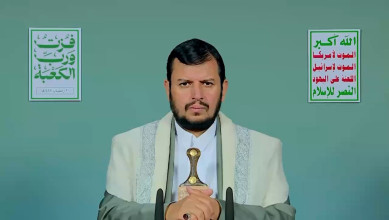
I seek refuge in Allah from Satan, the outcast.
In the name of Allah, the Compassionate, the Merciful.
Praise is to Allah, Lord of the Worlds. I believe that there is no god but Allah, the Sovereign and the Manifest Truth, and that our master Muhammad is His servant, Messenger, and Last Prophet.
O Allah! Confer Your salat and blessings upon Muhammad and the Family of Muhammad as You conferred Your salat and blessings upon Ibrahim and the Family of Ibrahim. You are Owner of Praise, Owner of Glory! And be pleased with Muhammad’s good companions and all Your righteous servants and mujahidin.
O Allah! Guide us and grant us acceptance, for You are the Hearing, the Knowing; accept our repentance, for You are the Relenting, the Merciful.
Brothers and sisters, peace be upon you and the mercy of Allah and His blessings.
The entire month of Ramadan is a month of goodness, mercy, and blessing. During it, Allah opens even more doors for us to attain His grace and generosity. He multiplies the rewards for righteous deeds, acts of worship, and devotions that bring one closer to Him, the Almighty. He also opens wide avenues of goodness for His servants and grants them opportunities for spiritual elevation. Moreover, He offers them a great opportunity to attain piety, which is an immensely valuable gain in terms of character reform, important actions and their outcomes, and strengthening one’s relationship with Allah (Glory be to Him).
Then come the last ten days of this blessed month, which carry great importance—particularly in seeking the night of Qadr, which is more likely to occur within them than at any other time. They also provide an opportunity to make the most of what remains of this noble month. However, by this stage, some people have grown tired or weary and begin to pay less attention to the remaining days of Ramadan. Others become preoccupied with preparations for Eid and what comes after Ramadan, along with other distractions. However, it is well-known in all primary hadith sources of the Ummah that the Messenger of Allah (PBUH&F) paid particular attention to the last ten days in terms of worship, remembrance, supplication, and seeking to draw closer to Allah (Glory be to Him). Therefore, it is important for a person to strive to make the most of what remains of the blessed month of Ramadan and to give more attention to supplication, remembrance of Allah, and righteous deeds, attaining uprightness and piety, and seeking the night of Qadr.
The night of Qadr is a night of immense significance and greatness: It is a night of profound importance in the detailed ordering of human matters, as affirmed in the Holy Quran. It is also a night in which reward is multiplied and many other blessings are bestowed. An entire surah in the Holy Quran is devoted to explaining the greatness of this night, and within that context it highlights the greatness of the Holy Quran itself. Allah (Glory be to Him) says:
{‘In the name of Allah, the Compassionate, the Merciful. Indeed, We sent this [Quran] down on the night of Qadr [Determination]. And what will make you realise what the night of Qadr is? The night of Qadr is better than a thousand months. The angels and the Spirit descend therein by permission of their Lord for every matter. Peace it is till the rising of dawn‘}[Al-Qadr 97:1-5].
Therefore, this night is related to Allah’s decree concerning the affairs of His servants and His management of their circumstances. Every person is in need of Allah and His mercy whether in the course of his life—in his concerns and affairs—and in the broader context of the Ummah. We as Muslims are in dire need of returning to Allah (Glory be to Him) and giving greater attention to supplication, remembrance of Allah, and drawing close to Him, and we, with that, need to focus on all-encompassing prayers:
-This includes the prayer of the godly believers, which Allah mentioned in the Holy Quran: {‘Our Lord! Forgive our sins and excesses, make our steps firm, and grant us victory over the disbelieving people‘}[Ali ‘Imran 3:147]. This is an immensely important prayer, one that the Ummah is in desperate need of.
-There is also the significant prayer of those well-grounded in knowledge who prayed for remaining on the right course, saying, {‘Our Lord, do not let our hearts deviate from the right path after You have given us guidance, and bestow upon us mercy from Your own. Surely, You, and You alone, are the Bestower‘}[Ali ‘Imran 3:8]. This is one of the most important and powerful supplications, as we earnestly need Allah (Glory be to Him) to keep us steadfast on the path of truth and protect us from deviation.
-Likewise, there is the great supplication of the People of the Cave: {‘Our Lord, grant us from Yourself mercy and facilitate for us our affair in the right way‘}[Al-Kahf 18:10]. This supplication carries deep significance and meaning.
-Additionally, there is the comprehensive prayer for goodness in this world and the Hereafter: {‘Our Lord! Grant us good in this world and in the Hereafter and protect us from the torment of the Fire‘}[Al-Baqarah 2:201].
-There are also beneficial collections of prayers, selected from narrations and well-known transmitted prayers.
-One should also focus on well-known transmitted prayers.
- Nevertheless, Quranic prayers are of particular importance, so a person should not overlook them; rather, they should be among the first prayers he turns to.
That is all about how to make the most of the last ten days of the blessed month through giving more attention to remembrance of Allah and supplication, turning earnestly to Allah (Glory be to Him), and seeking righteous deeds in general, including the various acts that fall within the scope of religious obligation, such as jihad in the cause of Allah (Glory be to Him).
The twenty-first of the blessed month of Ramadan is the first of the ten last nights, and it marks the anniversary of the martyrdom of the Commander of the Believers, Ali (PBUH). It was a tremendous tragedy in Islamic history and a terrible and immense loss for the Muslim Ummah. This tragedy was brought about by the Ummah’s most wretched criminal, the accursed Ibn Muljam, who carried out that crime by assassinating the Commander of the Believers, Ali (PBUH), in the Mosque of Kufa as Imam Ali went there for the Fajr prayer in the year 40 after the Hijrah.
Given the serious consequences the Ummah would endure due to this horrific and criminal assassination of the Commander of the Believers, Ali (PBUH), the Messenger of Allah (PBUH&F) described the perpetrator of this crime as the most wretched of the Ummah, and likened him to the man who killed the she-camel of Prophet Salih—the she-camel which Allah made a sign for Thamud. By killing it, that murderer brought misery upon his people. Likewise, the Ummah suffered a catastrophe because of the killer who assassinated the Commander of the Believers (PBUH), which had been plotted by the forces of hypocrisy within the Ummah—and perhaps the Jews also had a role in it. For the forces of hypocrisy, led at that time by the tyrants of the Umayyads, exploited the major opportunity that arose after the martyrdom of the Commander of the Believers, Ali (PBUH), together with the consequences that followed in the Islamic world, and moved to seize control of the Islamic Ummah.
When the forces of hypocrisy, led by the Umayyad tyrants, managed to dominate the Muslim Ummah, they acted as the Messenger of Allah (PBUH&F) warned his Ummah about these forces: ‘They will use the religion of Allah as a means of deception.‘ This was a massive and dangerous crime against the Muslim Ummah, with its effects and harm spanning generations. This is because they struck the Ummah at the greatest and most essential thing it possessed: its religion. They focused on distorting religious concepts, introducing false notions as part of Islam. They even distorted major Islamic concepts and made them appear to belong to Islam, so that those whom they succeeded in misleading would adopt them as religion, and later generations would inherit them accordingly. As a result, this crime led to negative effects on people’s hearts and lives. They deprived the Ummah of the great fruits of Islam that enable the Ummah to become a mighty ummah that upholds justice, possesses guidance to guide others, and fulfils its great role among nations by calling to what is good, enjoining what is right, and forbidding what is wrong. Consequently, they gradually drove the Ummah into decline, step by step, until it reached the state we see today—one of humiliation and subjugation, enabling its enemies, whom Allah has stricken with humiliation and destituteness, to humiliate it. This is a truly terrible loss.
‘They will use the religion of Allah as a means of deception, turn His servants into slaves.‘ They tamed the Ummah and enslaved it. From their position of power and rule, they forged a relationship with the Ummah based on subjugation, confiscating its freedom, its dignity, and its religion. They sought to force it into complete submission to their whims while humiliating it. Indeed, this state of humiliation was one of their established policies.
‘… and divide His wealth among themselves‘—they plundered the Ummah’s wealth and exploited it to the fullest extent. Therefore, this was one of the greatest losses the Ummah has ever suffered, a direct result of the targeting of the Commander of the Believers, Ali (PBUH), during that critical period.
This crime was also extremely grave in view of whom it targeted—the Commander of the Believers, Ali (PBUH)— given his exalted rank as one of Allah’s devotees and as the greatest of the truthful ones, with his lofty spiritual station of faith, and given his vital role in the Ummah and his immense standing in Islam. He was the one about whom the Messenger of Allah (PBUH&F) said, ‘You are to me as Harun was to Musa, except that there is no prophet after me.‘ This status clearly illuminates the role of the Commander of the Believers, Ali (PBUH), within Islam, his importance to the Ummah, his efforts in establishing the religion, and his exalted standing relative to the Messenger of Allah (PBUH&F).
This is also made clear in the noble hadiths that highlight the profound connection between Ali (PBUH) and the Holy Quran and truth: The Prophet (PBUH&F) said, ‘Ali is with the Quran, and the Quran is with Ali,‘ and he also said, ‘Ali is with the truth, and the truth is with Ali.‘
His role within the Ummah—a role of immense importance—is further clarified in the noble hadith of guardianship, famously known as the Hadith of Ghadir. On his return from Mecca, the Messenger of Allah (PBUH&F) stopped at a place called Ghadir Khumm near Al-Juhfah to address the gathered masses of Muslims in a proclamation to the Ummah across all its generations, saying, ‘O people, Allah is my guardian, and I am the guardian of the believers, having greater authority over them than they have over themselves. So for whoever I am his guardian, this (Ali) is his guardian. O Allah, be the ally of whoever allies with him, be the enemy of whoever shows enmity towards him, support whoever supports him, and forsake whoever forsakes him.‘
Thus, we find numerous texts, widely recognised across the Ummah’s various sects and schools of thought, that elucidate the lofty station of the Commander of the Believers, Ali (PBUH), within the Ummah. They reveal his great role in ensuring the continuity of Islam in its pure form, and his immense contribution to establishing this religion, reviving it, and delivering it to subsequent generations. This includes his struggle against the forces of disbelief alongside the Messenger of Allah, and his later fight against the forces of hypocrisy. He was, as the Messenger of Allah (PBUH&F) foretold, the one who fights for the interpretation of the Quran just as the Prophet fought for its revelation. He also fought for its revelation as a soldier and supporter of the Messenger of Allah, and then fought for its interpretation.
Therefore, despite the great crime committed against the Ummah by the forces of hypocrisy in targeting the Commander of the Believers, Ali (PBUH), his immense service to Islam, his efforts and jihad alongside the Messenger of Allah and thereafter, and his paramount role in safeguarding the purity of Islam, all left a profound and enduring legacy. As a result, the truth retained a living continuity across generations, even when it was actively opposed within the Ummah. Indeed, the authentic, pure model of Islam, embodied by the Commander of the Believers (PBUH) through the light of guidance he provided to the Ummah, has persisted. He is the gate to the city of the Prophet’s knowledge, as stated in the noble hadith: ‘I am the city of knowledge, and Ali is its gate.‘ This legacy is also evident in the values, principles, and morals he exemplified. He was a true manifestation of the greatness of Islam, as Islam was demonstrated in him—in his reality, knowledge, wisdom, refined human perfection, and spiritual and moral excellence, as well as throughout the course of his life and in his immense contributions.
In tonight’s lecture, we will briefly reflect on this great school—a comprehensive school of Islam—from which we will draw some of the wise sayings and precious counsels of the Commander of the Believers (PBUH). That is, these are only a few limited examples, for what he left to the Ummah is a great legacy of guidance, light, and wisdom.
Among these is the occasion when the Prophet (PBUH&F) gave him glad tidings of martyrdom, informing him that His life would ultimately end in martyrdom. For the Commander of the Believers, Ali (PBUH), this was glad tidings, one he aspired to, sought, and strove for. The Messenger of Allah (PBUH&F) asked him, ‘So how will you show patience then?‘ He replied, ‘O Messenger of Allah, this is not a matter that requires patience; rather it is a cause for rejoicing and gratitude.‘ Such was his perspective on martyrdom in the cause of Allah, as he embarked on his life journey guided by the words of Allah (Glory be to Him), {‘Say, “My prayer, my offering, my life, and my death are for Allah, the Lord of all the worlds”‘}[Al-An’am 6:162]. He strove to dedicate his entire life to Allah and to make his death a martyrdom in the cause of Allah; thus, he regarded this as one of the greatest glad tidings, for which he thanked Allah both when it was foretold to him and even when it came to pass.
On another occasion, the Prophet told him, ‘This will be dyed with this,‘ pointing to Imam Ali’s beard and noble head. Then Imam Ali (PBUH) asked, ‘While faithful to my religion, O Messenger of Allah?‘ He replied, ‘Yes.’ So Ali said, ‘Then, it is not a big matter.‘ This, in fact, represents a profound and extremely important lesson, which the Martyr of the Quran addressed in sufficient detail.
Indeed, one of the most important matters on which every Muslim should focus is remaining faithful to his religion, regardless of the risks or challenges involved. When waves of trials surge and storms of dangers rage, the most crucial concern for any person in his decisions and deliberations must be the integrity of his religion. Then how can one remain faithful to his religion—even in the position he adopts? It is by adopting the position that accords with his religion, its principles, and its values.
It is also the position that preserves the integrity and proper establishment of this religion in the reality of life. If a person loses the integrity of his religion, it is a loss that nothing can ever compensate for—even if he were to gain the world in its entirety. All of it would amount to nothing in comparison with such a tremendous loss. Whatever a person may attain in this worldly life is but a small, fleeting, and perishable enjoyment. Unfortunately, when this Ummah turned its priorities towards safeguarding its worldly life rather than the integrity of its religion, it lost both its worldly well-being and its religion. Thus, it lost them both, and this is the ultimate consequence. Indeed, religion is the source of the Ummah’s dignity, its righteousness, its honour, the very life of the people, and their protection, and thus the preservation of their worldly life. In this way, they can fulfil their role in this life as Allah’s vicegerents on the earth, in accordance with His guidance, His teachings, and His religion. By doing so, they embody an exemplary and elevated civilisational model. However, if they neglect their religion, they lose everything: their worldly life, their Hereafter, and their faith—resulting in an extremely grave loss.
In fact, the Commander of the Believers, Ali (PBUH), was the disciple of the Messenger of Allah (PBUH&F)—the greatest disciple in history, across all the prophetic missions, including all who were guided by their teachings and enlightened by their light. The Commander of the Believers, Ali (PBUH), is the Gate of the City of Knowledge and the Conscious Ear—the first exemplar of the Conscious Ear. In this way, he fully comprehended this profound concept. At the same time, through his spiritual upbringing and devotion to Allah, he embodied—even in his emotions and inner disposition—a remarkable concern for the integrity of the religion.
Imam Ali (PBUH) was struck at the dawn of the nineteenth night of the month of Ramadan in a treacherous assassination carried out by the accursed Ibn Muljam and his accomplices. This took place on the night of the nineteenth of Ramadan, and he returned to his Lord as a blessed martyr on the night of the twenty-first of Ramadan. At the very moment he was struck, he uttered his famous and profound words that history has recorded, ‘I have succeeded, by the Lord of the Kaaba.‘ This great statement came at an extremely sensitive moment—a moment when most people may consider that they have lost their lives and everything they possessed in this world, and would be preoccupied with their own condition and injury. However, the Commander of the Believers, Ali (PBUH), performed great deeds and possessed a distinguished record of faith, especially through his striving in the cause of Allah at the highest and noblest level alongside the Messenger of Allah (PBUH&F). He also took great and enduring positions that history has recorded in the biography of the Messenger of Allah, reflecting the breadth and magnitude of his efforts. These included supporting and standing alongside the Messenger of Allah, serving Islam and the Muslims, and performing great deeds that brought him closer to Allah (Glory be to Him). Foremost among these was his precedence in devotion to Allah (Glory be to Him), as the first in this path and an elevated and distinguished example—a supreme model of faith and righteous action.
Nonetheless, he regarded martyrdom as a lofty status despite all that he had accomplished. He viewed martyrdom as a great rank to which he aspired and hoped to attain. Therefore, he considered martyrdom to be a great triumph, and when he attained it, he saw it as achieving that tremendous victory and reaching a noble and elevated status.
Furthermore, he was victorious, his life culminating in martyrdom as he walked a path that leads to true success for those who follow it. Indeed, he had lived his entire life for Allah—striving in His cause and drawing nearer to Him through the greatest of deeds.
Among his sayings (PBUH) regarding striving in the cause of Allah, he said in one of his sermons, ‘Striving in the cause of Allah is indeed one of the gates of Jannah which Allah has opened for His chosen devotees.‘ This was his view of striving in the cause of Allah—a view that reflects the perspective of the Holy Quran. It is a great perspective that holds striving in the cause of Allah in high esteem, recognising all its great outcomes and its immense gains.
How do some people view striving in the cause of Allah? The majority of people see only its hardships and dangers, and as a result, negative feelings arise: dislike of striving in the cause of Allah, aversion to it, and resentment towards it. However, the one who recognises its importance, its necessity, its place among the deeds that bring one closer to Allah, and its great gains and tremendous outcomes—such a person is drawn to it and longs for it.
Thus, Imam Ali presents the true image of striving in the cause of Allah, its greatness, and its importance: ‘one of the gates of Paradise‘. Indeed, Allah (Glory be to Him) affirms this reality in the Holy Quran affirms this reality, to the extent that He says, {‘Do you think you will enter Jannah without Allah proving which of you [truly] struggled [for His cause] and patiently endured‘}[Ali ‘Imran 3:142]. Therefore, turning towards striving in the cause of Allah is a movement towards Jannah. It is a movement towards a great gate among the gates of Jannah, ‘which Allah has opened for His chosen devotees‘, as the Commander of the Believers said. In fact, the believing person is concerned with performing deeds that draw him closer to Allah and serve as a means to attain the great success of Allah’s Jannah and its eternal, magnificent bliss.
Imam Ali added, ‘And it is the garment of piety.‘ Striving in the path of Allah leads to the realisation of piety, since it is part of the comprehensive system of Islam. At the same time, through it, the community can remain upright, establish the command of Allah, uphold the religion of Allah, and adhere to the teachings of Allah (Glory be to Him). In this sense, jihad serves as a garment of piety—with immense significance. Moreover, by its very nature, jihad represents one of the highest forms of piety and constitutes one of its most important dimensions.
‘And the strong shield of Allah, and His unyielding armour‘—but to whom does Allah give this shield? Is it for Allah Himself? Allah is All-Sufficient, Praiseworthy. Rather, it is Allah’s shield, granted to His servants—a shield through which the Muslim Ummah fortifies itself. Through it, the Ummah gains protection, defence, and honour in the face of its enemies.
The Ummah must act on the basis of jihad in the cause of Allah, striving to adopt the means that lead to victory and preparing whatever strength within its capacity, as these are among the practical requirements of jihad. The practical requirements of jihad include preparing all the strength it can command across every field, adopting the means that lead to victory, and engaging in practical efforts to advance and to build its capabilities in all domains. If the Ummah fulfils that, it will become strong and dignified. It will also command respect in the eyes of its enemies as they begin to view it differently, recognising it as a courageous and powerful nation—one that is ready to confront its enemies, face dangers and challenges, and stand firmly and resolutely against them.
There is a profound difference in how the enemies themselves perceive the Ummah when it is submissive, compliant, humiliated, and miserable—embracing weakness and the factors that produce it, stripping itself of every element of strength, and moving in a direction that enables its enemies to dominate it and subject it even further to their control. Such a condition only encourages its enemies to covet it, for they are indeed evil enemies. Foremost among these enemies are the Jews: {‘You will surely find the most serious of mankind in enmity to the believers to be the Jews‘}[Al-Ma’idah 5:82]. The disbelievers and those who align with them are our enemies, and they are marked by every form of evil, malice, malevolence, criminality, tyranny, and greed. Consequently, they grow increasingly bold against the Ummah when they see it in a state of humiliation, submission, and subjugation. Thus, jihad is Allah’s fortified shield for His servants—for the believers, the Muslims, and the Ummah.
‘And His unyielding armour‘—it represents a defensive armour for the protection of the Ummah. ‘So whoever abandons it out of aversion to it,‘—as he rejects it and detests it—’Allah will clothe him in a garment of humiliation; affliction will encompass him; and he will be overtaken by abasement and degradation.‘ Indeed, this is an extremely grave condition. The expression ‘Allah will clothe him in a garment of humiliation‘ is a striking and powerful phrase. That is because when the Ummah abandons jihad, it becomes a humiliated nation. A state of humiliation comes to dominate and envelop it completely, until it sinks to the lowest depths of humiliation—losing courage, honour, and manly dignity. It becomes a humiliated nation in every sense of the word: in its psychological condition, in its practical conduct, and in its positions—in everything. This is a truly dreadful state. It does not even remain safe, for ‘affliction will encompass him‘: On the one hand, the evil of its enemies comes upon it, and on the other hand, Allah permits domination over it.
‘And he will be overtaken by abasement and degradation.‘ He becomes contemptible, base, and humiliated—without standing, influence, strength, or dignity. It is a dreadful state. This is the condition in which much of the Muslim Ummah now finds itself in relation to its enemies. Indeed, it is precisely this condition: a profoundly disgraceful state of humiliation.
‘He is struck upon the heart with prolongation‘—and in some sources, ‘He is struck upon the heart with restraints.‘ This is among the most severe punishments. Indeed, all of this constitutes a catalogue of punishments for the Ummah and for those who shirk jihad in the cause of Allah. Foremost among them is humiliation; Allah punishes them with humiliation, which is an extremely severe penalty. He robs them, both inwardly and outwardly, of courage, pride, and dignity. They then replace honour, pride, chivalry, zeal, manliness, and all meanings of dignity with humiliation, adopting it as the dominant trait evident in their lives. Moreover, as a punishment from Allah, He allows their enemies to prevail over them: ‘Affliction will encompass him.‘ They become without standing, without influence, and without value; their enemies crush them, scorn them, humiliate them, enslave them, and subjugate them.
‘He is struck upon the heart with prolongation.’ If using the word ‘prolongation‘, it means that a person becomes ineffective in life, with no meaningful role. He may, for instance, talk at length without benefit, or remain on the margins, contributing nothing important, useful, or impactful. As for ‘restraints‘, the meaning is clear. In either case, he becomes someone lacking understanding or awareness. This is the condition of many who shrink from jihad: They are deprived of divine success and stripped of awareness. As a result, they fall into a dreadful state described in the Holy Quran in Allah’s words, {‘They preferred to be with [the women], who remain behind [at home], and their hearts have been sealed; so they do not understand‘}[At-Tawbah 9:87]. Their understanding of events themselves fades—their gravity, their significance, and the stance required towards them. Thus, they become devoid of understanding, awareness, and insight; their perception becomes distorted, their grasp of matters becomes inverted, and their view of issues profoundly mistaken.
‘Truth will be taken away from him through the neglect of jihad.‘ Indeed, truth always has its supporters and defenders—those who act within its framework. Yet whoever falters distances himself from the truth: He is no longer counted among those who uphold it, adhere to it, and remain steadfast upon it. Truth will always find those who support it, but the one who abandons it leaves the sphere of truth and retains no share in it. ‘To be subjected to degrading subjugation‘ means being forced to endure hardship, oppression, humiliation, and severe distress.
‘To be denied justice‘ means that he will find no fairness or redress. Indeed, our Islamic Ummah has neglected jihad in the path of Allah. Have the United Nations and the Security Council done justice to its causes? Some of these causes have endured for decades—eighty years, a hundred years, fifty years, forty years—major causes affecting entire nations, existential issues that have received no justice whatsoever.
Among what He (PBUH) said is this: ‘Verily, Satan has gathered his party.‘ The movement of the allies of Satan is a dangerous movement for the Ummah, for they are aligned with Satan and advance with their evil, misguidance, corruption, and tyranny. Such a movement must be met with a movement of the believers—one marked by awareness, insight, responsibility, and an active role in life. However, if those who are supposed to confront this satanic movement shrink back, evade their responsibilities, and neglect their duties, then this indicates a serious deficiency within them: both in their insight and awareness and in the level of their faith, their trust in Allah (Glory be to Him), and their attachment to Him. Otherwise, how could the allies of Satan be more concerned, more active, and more energetic in serving their falsehood and misguidance than those who consider themselves among the Muslims, the believers, and the allies of Allah?
He (PBUH) said, ‘Verily, Satan has gathered his party and summoned his cavalry and his infantry. Indeed, with me is my insight: I have neither confused matters for myself nor has anything been made confusing to me. By Allah‘—this is an oath—’I shall surely prepare for them a basin from which I myself will give drink; they shall not depart from it, nor shall they return thereto.‘ This means that he would rise to confront them with profound insight, keen awareness, sound understanding, and a guiding vision—founded upon the Book of Allah, the guidance of Allah, and the instructions of Allah (Glory be to Him). This is what the Ummah needs in confronting its enemies: the Jews, the Christians, and their supporters.
On another occasion, when the enemies seized control of the water, he addressed his companions: ‘They have demanded combat from you.‘ For they had taken control of the water in the battlefield in order to pressure the army of the Commander of the Believers, hoping to weaken them with thirst and compel them either to surrender or withdraw from the battle.
He said, ‘They have demanded combat from you; therefore, either accept humiliation and withdraw from your rightful standing, or sate your swords with blood so that you may be sated with water. For death resides within your lives as the vanquished, and life resides within your deaths as the conquerors.‘ With these words, he was urging them to reclaim the water from the hands of the enemy.
The Ummah must grasp these profound words: ‘Death resides within your lives as the vanquished.‘ What value does life hold for a nation that lives under oppression and humiliation, especially at the hands of its worst, most malicious, and most hostile enemies?
Among his sayings are these words: ‘Indeed, the most honourable death is being killed [for the sake of Allah].‘ In other words, death is an inevitable reality for all people: All will die. Allah (Glory be to Him) says, {‘Every soul will taste death‘}[Ali ‘Imran 3:185] and {‘Everyone upon it [the earth] will perish‘}[Ar-Rahman 55:26]. Yet the one who possesses awareness and insight strives to make the most honourable use of this end that awaits every human being, dedicating it to the most sacred cause—in the path of Allah (Glory be to Him)—and making it a means of drawing closer to Allah through being killed in His path. Another saying is ‘By the One in Whose hand is the soul of Ibn Abi Talib‘—this is an oath by Allah—’a thousand blows of the sword are easier for me than dying on a bed.‘ This reflects his deep awareness of the importance of jihad and the honour of martyrdom in the path of Allah.
Among the supplications offered by him is a great prayer, profound in meaning, expressive, and deeply moving: ‘O Allah! Indeed, You are the greatest Consoler to Your devoted servants, and the most sufficient for those who place their trust in You.‘ The people who experience the greatest tranquillity are the devoted servants of Allah, through their closeness to Him. No source of comfort can sustain a person through every hardship, every loneliness, every difficulty, and every danger like this great source—Allah (Glory be to Him)—through remembering Him and turning to Him. The same is true of relying on Allah (Glory be to Him): Who else could suffice you, who could support you, strengthen you, and aid you as Allah does for the one who places his trust in Him and depends upon Him.
‘You observe them in their most hidden secrets; You are aware of them within their inner selves, and You know the extent of their insight. Thus, their secrets are laid bare before You, and their hearts are yearning intensely towards You.‘ For this reason, the devoted servants of Allah converse with Him even within their hearts—in their feelings and inner selves— along with the supplications they utter with their tongues. Allah knows what lies within their souls—indeed, He knows the full extent of what they contain.
‘If loneliness makes them feel estranged, Your remembrance brings them comfort; and if calamities befall them, they resort to seeking refuge in You.‘ Even when facing the hardships of this life—its dangers, challenges, problems, difficulties, and afflictions—they turn to Allah and seek refuge in Him.
‘For they know that the reins of all affairs are in Your hand and that their origins come from Your decree. O Allah! If I fail to express my request, or if I lose sight of what I should ask for‘—that is, if I am unable to clearly state what I ask and hope for from You, or if I do not know what to focus on in my supplication, what to prioritise in my concerns, and what to seek from You—’then guide me to what is best for me and lead my heart to what is right. Such guidance is nothing unusual from You, nor is such care beyond Your grace.‘ In other words, given the vastness of Your grace, it is not at all strange that You guide people to what is good for them and provide for them what they need. He added, ‘You are the Guardian of every good‘: You are the source of every blessing—the Beneficent, the Bestower of Favour, the Great and Noble, the Most Generous of the generous and the Most Merciful of the merciful.’O Allah, treat me with Your pardon and do not deal with me according to Your justice.‘
Imam Ali said in his final testament to Imam Al-Hassan and Imam Al-Hussein (PBUT), after he was struck by Ibn Muljam (May Allah curse him) with the sword, ‘I advise you both to fear Allah and not to pursue this world even if it pursues you.‘ In other words, worldly life should not become your goal or the focus of your concern. This world, in its entirety, is merely a means and not an end. Therefore, one should turn towards Allah (Glory be to Him), towards what pleases Him and what is with Him, for in His hand lie both this world and the Hereafter. He also said, ‘Do not grieve over anything of it that is taken away from you, and always speak the truth‘—that is, alongside being mindful of Allah, they should always remain committed to speaking the truth. Speaking the truth in critical times, difficult circumstances, and major matters is of great importance. Some people may speak the truth in ordinary situations, yet fall silent when issues become serious, situations sensitive, and times difficult.
He also said, ‘And act in hope of reward‘—that is, in seeking nearness to Allah (Glory be to Him) and hoping for what is with Him. ‘Be an adversary to the oppressor and a helper of the oppressed.‘ This is among the most important counsels that the Ummah needs throughout every stage of its history, particularly in our present time.
He added, ‘I advise you both, all my children, my family, and to whom this letter of mine reaches, to fear Allah, to keep your affairs well-ordered, and to set right your relations among yourselves, for I have heard your grandfather, the Messenger of Allah (PBUH&F) say, “Reconciliation between people is better than the abundant prayer and fasting.”‘ Setting right relations among people is part of piety—indeed, one of the most important aspects of mindfulness of Allah. For this reason, Allah says in the Holy Quran, {‘So, fear Allah and amend that which is between you‘}[Al-Anfal 8:1]. This is because it is essential for establishing the brotherhood of faith. This brotherhood is the foundation upon which the believing Ummah can fulfil its great responsibilities—such as striving in the path of Allah, enjoining what is right, and forbidding what is wrong. Indeed, all major collective responsibilities that depend upon cooperation—cooperation in righteousness and piety—require harmony, brotherhood, mutual understanding, and cooperation.
He also said, ‘Be mindful of Allah regarding the orphans: Do not let them starve‘—that is, care for them by providing attention, nourishment, and proper support—’and do not allow them to be neglected while you are present among them.‘ This includes caring for them in various aspects of their lives.
He further said, ‘Be mindful of Allah in your dealings with your neighbours‘—that is, show them kindness, do good to them, and treat them with benevolence—’because the Prophet repeatedly advised good treatment of them and emphasised their rights so strongly that we thought he might even give them a share in inheritance.‘
‘Be mindful of Allah regarding the Quran; let no one excel you in acting upon it.‘ Notice that his counsel regarding the Quran is specifically connected to putting it into practice. This highlights the gap in the Ummah’s current relationship with the Holy Quran: While many focus on reciting and reading it, a serious deficiency exists in acting upon it—even in the gravest and most critical responsibilities.
‘Be mindful of Allah regarding prayer‘—that is, one should give it proper attention, establish it, perform it correctly, and preserve it—’for it is the pillar of your religion.‘ This is a strong emphasis. Beginning with the words ‘Be mindful of Allah’ is a powerful call to awareness: to remain aware of His watchfulness, to feel His oversight, and to cultivate reverence and modesty before Him.
He also said, ‘Be mindful of Allah regarding the House of your Lord—do not abandon it as long as you live.‘ This means that the House of Allah should remain active with worship through Hajj, ‘Umrah, prayer, supplication, and ensuring that it continues to fulfil the great role Allah intended for it. Here, the emphasis is especially on Hajj and ‘Umrah. He added, ‘For if it is abandoned, you will not be granted respite.’
‘Be mindful of Allah regarding jihad in the path of Allah with your wealth, your lives, and your tongues.‘ This emphasises that striving in the path of Allah should be comprehensive—through one’s life, wealth, and speech. ‘Maintain your ties with one another and show generosity among yourselves.’ This is because maintaining ties, showing kindness, and doing good for others strengthen the spirit of brotherhood and cooperation and firmly establish the brotherhood of faith. As mentioned earlier, this is of great importance in fostering harmony among believers so that they may cooperate in their collective responsibilities of faith. ‘And beware of turning away from one another and severing relations,‘ for this leads to division, disagreement, conflict, and fragmentation, resulting in the neglect of major responsibilities and allowing the enemies to gain the upper hand.
‘Do not abandon enjoining what is right and forbidding what is wrong,’ for it is among the most important responsibilities in maintaining the soundness and well-being of society. ‘Otherwise, the worst among you will rule over you; then you will supplicate, but your supplication will not be answered.‘ When the obligation of enjoining good and forbidding evil is neglected, the wicked gain control of the community and impose their evil upon people. At that point, supplication for deliverance from their wrongdoing will be of no benefit, because such a situation arises from negligence that allowed them to gain power in the first place.
That concludes our lecture for today.
We ask Allah (Glory be to Him) to grant us success in seeking what pleases Him. O Allah, have mercy on our virtuous martyrs, heal the wounded among us, set free our captives, and grant us victory. You are the Hearer of Prayer!
Peace be upon you and the mercy of Allah and His blessings.