
Twenty-second ramadan lecture of Sayyed Abdulmalik Badr al-Din al-Houthi 1447 AH
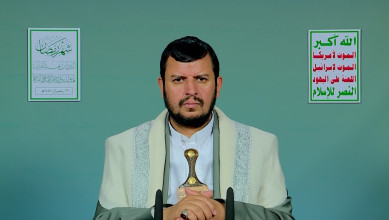
I seek refuge in Allah from Satan, the outcast.
In the name of Allah, the Compassionate, the Merciful.
Praise is to Allah, Lord of the Worlds. I believe that there is no god but Allah, the Sovereign and the Manifest Truth, and that our master Muhammad is His servant, Messenger, and Last Prophet.
O Allah! Confer Your salat and blessings upon Muhammad and the Family of Muhammad as You conferred Your salat and blessings upon Ibrahim and the Family of Ibrahim. You are Owner of Praise, Owner of Glory! And be pleased with Muhammad’s good companions and all Your righteous servants and mujahidin.
O Allah! Guide us and grant us acceptance, for You are the Hearing, the Knowing; accept our repentance, for You are the Relenting, the Merciful.
Brothers and sisters, peace be upon you and the mercy of Allah and His blessings.
In yesterday’s lecture, we discussed the story of Prophet Musa (PBUH) in light of the blessed verses from Surah Taha, Surah An-Naml, and Surah Al-Qasas. We reflected on some blessed verses: {‘So when he came to it, he was called, “O Musa, it is Me, your Lord, so remove your shoes; you are in the sacred valley of Tuwa‘}[Taha 20:11-12]; {‘in the blessed spot to the side of the auspicious valley‘}[Al-Qasas 28:30]; {‘Blessed is whoever is in the fire and whoever is around it ‘}[An-Naml 27:8]. Upon that reflection, we spoke about the sanctity of sacred places—particularly Islamic landmarks and historical Islamic sites—and the importance of this Quranic religious concept. This concept is specifically distorted by the enemies of Islam, who focus heavily on targeting Islamic holy sites and landmarks in an attempt to erase them. They do so because of their religious importance, their emotional and spiritual impact, and the profound religious significance they hold. The enemies realise the significance of these places as sacred rites and landmarks, intrinsically linked to people’s feelings and their worship activities, drawing them closer to Allah, and strengthening bonds of faith among them.
Allah has made rituals and landmarks an essential part of our worship as human beings on this earth. For example, Allah has honoured the Sacred Kaaba, placing it at the top of the list among sacred sites. He has linked it to the direction of prayer and to the rituals of Hajj and Umrah, including the circumambulation [tawaf] around it. Acts of worship carry special merit when they are performed there. Prayer in that place carries immense reward and special merit, and this applies to other acts of worship, supplication, and righteous deeds. This not to mention the acceptance of prayers and other significant blessings associated with this holy site. Likewise, there are many other Islamic landmarks connected to Hajj and Umrah. Some are shared between the two, while others are specific to Hajj. Most of them are sacred locations—specific places and sites—such as Al-Safa, Al-Marwah, and the Station of Ibrahim (PBUH), the stone bearing the imprint of his feet. There are also other locations that pilgrims visit as part of the rituals of Hajj, such as standing at Arafat, spending the night in Muzdalifah, and going to Mina, among other rituals. Beyond these, there are many other Islamic landmarks. We previously spoke about the Al-Aqsa Mosque, highlighting the immense importance and blessing it holds and the great position it occupies among Islamic sacred sites. There is also the Mosque of the Messenger of Allah (PBUH&F), along with his noble and sacred resting place in Medina. Indeed, Islamic landmarks and historical sites of religious significance are numerous throughout the Muslim lands.
In those blessed verses, we see that the concept of sacred places is deeply rooted in the divine messages throughout history. It appears in the story of Prophet Ibrahim (PBUH) and Ismail (PBUH), and it also appears here in the story of Prophet Musa (PBUH). These places are described as sacred places in the Holy Quran—such as describing the sacred valley as ‘auspicious‘ and referring to blessed locations, like the ‘blessed spot‘. We also encounter the concept of veneration in Surah Al-Hajj: {‘If one venerates the symbols of Allah, then such things emanate from the piety of the hearts‘}[Al-Hajj 22:32]. Yet the takfiris claim that using the very word ‘veneration’ with anything other than Allah constitutes shirk and apostasy, and they even go so far as to say that anyone who uses such language or acts upon it deserves to be killed ‘from vein to vein’. As we explained earlier, the Jews are behind this phenomenon—it is part of a scheme that Britain played a leading role in advancing, and which Zionist forces later actively supported.
Thus, Islamic landmarks and sacred places possess profound importance for several reasons. First, they derive their significance from the closeness to Allah associated with them and from the sanctity that Allah has bestowed upon them—as we mentioned regarding the Noble Kaaba, the Station of Ibrahim, Al-Safa and Al-Marwah, and others; these are prominent examples, not an exhaustive list. They are also important because they create a deep emotional connection with our past—linking us to the great figures of the past and to the long journey of the religion itself. This is a great journey that stretches across time, beginning with the start of human existence with Adam (PBUH), who was a prophet. These places connect us with landmarks, prominent figures, messengers, prophets, and the guided servants of Allah. The emotional impact is undeniable: A person is deeply affected in his feelings when visiting these places, when remembering what is associated with them—connections to prophets, messengers, and the righteous servants of Allah, reminding us of the unity of the religious mission as one continuous path across history. They also play an important role in strengthening the bonds within the Ummah. Moreover, they carry blessings—through the goodness and divine favour that Allah grants in them, and through the special merit associated with acts of obedience performed in such places.
All of this demonstrates their significance. Human beings fundamentally need rituals, clear landmarks on the earth. This forms part of the divine design, and the natural disposition of human beings is in harmony with it. In fact, there is hardly any nation on earth—even outside Islam—that does not possess certain places or landmarks which it regards as sacred, honours, and venerates, and to which it is spiritually and emotionally attached. Each has its own particular outlook towards them. Many of these may involve deviations or distortions, yet they nevertheless illustrate how the original human disposition naturally inclines towards such things.
We also discussed, in light of Allah’s saying—in His call to His servant and prophet Musa (PBUH)—{‘I have chosen you, so listen to what is revealed‘}[Taha 20:13]. This clarifies that Allah (the Almighty) alone chooses the messengers and prophets and prepares them for their mission. This is because it is a sacred and monumental mission that cannot be achieved through human training. In other words, there is no school, for instance, that a person can join to graduate as a messenger or a prophet; people have no ability to prepare someone for such a grand mission. Therefore, the selection, preparation, and qualification come directly from Allah. We reflected on Allah’s statement about Musa (PBUH): {‘And I have prepared you for Myself‘}[Taha 20:41]. This serves as a powerful reminder to him of the immense favour Allah bestowed upon him. This is because it is a tremendous blessing upon the messengers and prophets that Allah (Glory be to Him) chose them for this grand and sacred duty—the divine message. It is a truly great honour. Some people might view this matter from a different angle, focusing on the severe hardships prophets endure and the dangers they confront—such that many messengers and prophets were martyred. Given the nature of the circumstances they face, some may perceive this matter as a burden upon them. However, it is, in fact, an immense honour for them and a profound favour bestowed by Allah upon them. Thus, this serves as both a reminder of Allah’s great favour upon him and a reminder of the inherent responsibility that accompanies it.
{‘So listen to what is revealed‘}[Taha 20:13]. We consider how he is commanded to listen attentively, even though the very nature of that extraordinary moment would already have made him fully focused on the divine call, with his mind and heart wholly engaged. This offers us a profound insight and a crucial understanding of the sanctity, greatness, and paramount importance of the guidance of Allah (the Almighty), as well as the need for a person to listen attentively to divine guidance, recognising its immense value and importance. There is a strong emphasis on this point. That is, when it comes to Allah’s prophets and messengers, we find them being urged by Allah to listen despite their deep care and reverence for His guidance. Take, for example, this directive given to Prophet Musa (PBUH): {‘I have chosen you, so listen to what is revealed‘}[Taha 20:13].
Similarly, Allah (the Almighty) addressed His Messenger Muhammad (PBUH&F) with many reminders about the greatness of the guidance being given to him, as in His words: {‘We are going to send down to you a weighty discourse‘}[Al-Muzzammil 73:5]. It is a great and important statement that carries profound spiritual importance—supreme significance in both content and substance.
This, therefore, is a lesson for us in our relationship with the guidance of Allah (Glory be to Him). {‘So listen to what is revealed‘}[Taha 20:13]. Revelation comes from Allah (Glory be to Him), and the prophets and messengers were entirely connected to the revelation of Allah and to His teachings at the level of knowledge. All the knowledge related to their prophetic mission depended entirely upon divine revelation and the teachings of Allah. They were also connected to the revelation in the way they attentively received it—through careful listening, deep concentration, and great reverence for it. They were connected to it at the level of guidance, being guided and enlightened by the divine revelation. They were likewise connected to it in their mission with the message, as was the case with all prophets: conveying it, clarifying it, presenting the teachings of Allah through His guidance and revelation, delivering Allah’s guidance to people, and striving to guide humanity.
The relationship with the Divine Revelation is a relationship of guidance, commitment, following, and firm adherence. For this reason, in the Holy Quran, with regard to the Messenger of Allah Muhammad (PBUH&F), the Seal of the prophets, there is repeated emphasis on this matter: {‘I only follow what is revealed to me‘}[Al-Ahqaf 46:9], {‘Follow what has been revealed to you‘}[Al-An’am 6:106], and {‘Follow what is revealed to you‘}[Yunus 10:109]. Thus, the Quran strongly emphasises this connection to revelation, particularly in the sense of following it and acting in accordance with it. This is a matter of the utmost importance.
The messengers and prophets served as a link between people and Allah (Glory be to Him). They conveyed the Books of Allah, His teachings, and His guidance to humanity. Indeed, the revelation is directed to people, and it was conveyed to them by the prophets and messengers, through the fundamental teachings contained in the Books of Allah (Glory be to Him) and through what the prophets and messengers delivered to them.
We must truly appreciate the importance and greatness of this matter and recognise it as a great blessing. In fact, this was fundamentally the primary duty of the messengers and prophets: to connect people with the guidance of Allah. Their prophetic duty was to convey the message, and throughout the course of life, they strove to establish Allah’s guidance and religion within people’s lives. Furthermore, they themselves presented the model and example in adhering to it, holding firmly to it, acting upon its basis, and being guided by it. For this reason, their role is both essential and fundamental.
In addition, when recognising the importance of this matter, we find that the prophets and messengers (PBUT) themselves were—from the very beginning—connected to the guidance of Allah (Glory be to Him) through Divine Revelation. They received the teachings from Allah (Glory be to Him) within a state characterised by clarity, in which there was no doubt, no confusion, and no ambiguity. Within such a reality, they attained certainty, and they moved forward with complete faith and full confidence. In other words, everything surrounding the process of their mission regarding the divine message—the atmosphere accompanying it, the manner in which revelation descended upon them, and the signs and miracles that accompanied it—was at a level that enabled them to set forth in their prophetic duties with absolute certainty, complete confidence, and profound reassurance. This is a great and extremely important principle that we must understand and be fully convinced of. It is a principle that the disbelievers fight against, cast doubt on, and raise suspicions about, and they exploit fabricated or false narrations—as well as the erroneous concepts that arise from them—to undermine it. Moreover, they attempt to portray the atmosphere of the commissioning with the divine message as one surrounded by confusion, doubt, suspicion, ambiguity, and strange, negative, and obscure elements that do not produce certainty.
In their duty, when Allah (Glory be to Him) sent them with revelation and prophecy, the matter of the prophets and the messengers (PBUT) was inseparably linked to their own faith. They are the first Muslims and the first believers, and they moved forward with complete certainty. For example, in the Quranic description of the Prophet Muhammad (PBUH&F), we find the words of Allah concerning him, {‘And I am the first one to submit‘}[Al-An’am 6:163], {‘And I am the first of the believers‘}[Al-A’raf 7:143], {‘The Messenger has believed in what was revealed to him from his Lord‘}[Al-Baqarah 2:285], and even, {‘As for the one who has come with the truth and believed it to be true‘}[Az-Zumar 39:33]. We see how He (Glory be to Him) safeguarded the prophets, revealing many signs that increase their certainty, even regarding their prophetic mission—its principles, the success of that mission, its execution, and the burdens it entailed—taking into account the difficulties, challenges, and dangers they faced. It is of utmost importance that we fully grasp this matter.
What, then, was the content of that revelation, which Allah revealed to Prophet Musa at the beginning, when He said, {‘So listen to what is revealed‘}[Taha 20:13]. What was the content of this divine revelation?
Allah (Glory be to Him) says, {‘It is truly I. I am Allah! There is no god [worthy of worship] except Me. So worship Me [alone], and establish prayer for My remembrance. The Hour is sure to come—though My Will is to keep it hidden—so that every soul may be rewarded according to their efforts. So the one who does not believe in it and follows his desires must not make you neglectful of it, otherwise you will perish‘}[Taha 20:14-16]. This model shows us how revelation began in terms of its essence and content: the first principles and concepts that the messengers received at the beginning of their commission with the divine message, the subjects presented to them at the outset, and the fundamental themes that Allah revealed to them at the beginning of revelation—at the start of their charge with the message and their prophetic mission. This is also an important matter for us, because—as we have mentioned—it is among the subjects that have been affected by considerable distortion, including many fabricated and erroneous narrations.
Within this content, we find first and foremost the principle of monotheism and worshiping only Allah (Glory be to Him): {‘It is truly I. I am Allah! There is no god [worthy of worship] except Me.‘}[Taha 20:14]. It speaks about the divinity of Allah (Glory be to Him), affirming that He alone is the true God to whom worship rightfully belongs and commanding that worship be devoted solely to Him. It then addresses the establishment of prayer, followed by references to the Hour and the Resurrection, along with human accountability for their deeds and the ensuing recompense. This is a brief summary of what has been mentioned, and we will discuss it with some detail, though concisely, Allah willing.
As we said, this model is extremely significant. According to divine wisdom, it is expected to appear at the forefront of what was revealed to the messengers and prophets of Allah during their commissioning with the divine message. That is, the revelation focuses on the major foundational principles that encompasses the details of the religion—in other words, comprehensive themes that form the basis upon which the entire religion is built.
For this reason, the Family of the Prophet Muhammad (PBUT)—along with many Quranic interpreters, historians, and scholars of the Islamic Ummah—have emphasised that the first revelation of the Quran was Surah Al-Fatihah. This Surah presents general, comprehensive themes and major foundational concepts, which are further elaborated in detail throughout the remaining surahs of the Quran. In fact, the topics presented at the outset and the themes with which revelation began in the prophetic mission are the fundamental themes—the major and essential principles upon which the entire religion is established.
Here, for instance, these headings include the Oneness of Allah, placing it first here as a practical principle. In fact, it is not merely an intellectual belief, detached from action and life itself. Rather, we find that it is presented here as a practical principle, from which true worship naturally follows—worship that embodies complete submission to Allah (Glory be to Him), based on the understanding that we are His servants and that we are subject to His command and decree, and thus we follow His guidance and adhere to His instructions throughout the course of our lives. This is because we, the earth, and all that exists—every creature and being—belong to Allah (Glory be to Him). He is the Lord, the God, the Creator, and the Owner. Thus, His command, {‘Worship Me [alone]‘}, is firmly grounded in the principle of the Oneness of Allah—that we worship Him alone and dedicate ourselves to Him by following His guidance and adhering to His instructions. This noble principle is the very foundation upon which the entire divine message rests.
The way of the prophets (PBUT) in their understanding of worship was founded on this principle: that the entire course of life, in all its details, should be built upon the teachings and instructions of Allah and lived according to His guidance. This is the true meaning of worship of Allah. The erroneous conception that worship consists merely of limited religious rituals—such as praying in mosques or performing certain spiritual acts—while proceeding through life according to one’s own desires, or the desires of others, even the desires of disbelievers, the misguided, and criminals, represents a profound misguidance; it deprives a person of the true benefit of belonging to the divine message and the true religion of Allah. For this reason, we see how the prophets liberated those who believed with them from servitude to anything other than Allah (Glory be to Him), and guided them through the diverse domains of life in accordance with the instructions and guidance of Allah (Glory be to Him).
{‘And establish prayer for My remembrance‘}[Taha 20:14]: Prayer is a great act of worship, and it holds immense importance in all the messages sent by Allah and even in the concern shown by His prophets throughout history. Here, we observe the phrase {‘establish prayer,‘} rather than simply ‘pray’. This wording emphasises the proper establishment of prayer in its complete and meaningful form. It stands at the forefront of the divine legislation. In other words, in what Allah prescribes for His servants in every message and with every messenger He sends, the obligation of prayer comes first, accompanied by great emphasis and encouragement, and accorded a prominent place among the obligatory acts of worship and the divine instructions that people must adhere to. This clearly demonstrates its immense importance. Indeed, prayer plays a vital role in the cultivation of the human being, the purification of the self, and the cleansing of the soul, the heart, the conscience, and the emotions.
In fact, the very essence of prayer—what grants it such profound significance—is the mentioning and remembrance of Allah. This is why Allah states in the Holy Quran, {‘And establish prayer for My remembrance‘}[Taha 20:14]. Prayer is filled with various forms of dhikr. In Islamic practice, these include the declaration of Allah’s greatness, the glorification and praise of Allah, and the recitation of the Holy Quran. From beginning to end, the prayer consists entirely of forms of dhikr and of remembrance of Allah. These forms of dhikr are of a diverse nature, yet they must be performed in accordance with what Allah has prescribed; a person is not free to devise his own forms of remembrance within the prayer. Rather, it must be performed exactly as Allah (Glory be to Him) has prescribed.
Thus, the essence of properly established prayer lies in mentioning and remembering Allah. This holds immense significance in drawing a person closer to Allah, in nurturing reverence for Him, and in bringing the believer out of a state of heedlessness. In reality, a person may easily become distracted amid the myriad worries, predicaments, pressures, and events of life, as well as its various concerns. However, because prayer occurs at prescribed times throughout the day and night, it repeatedly reminds the believer of Allah and draws him back to Him. Among the most important matters a person should be attentive to in prayer—and which help one derive great benefit from it—are understanding the meanings of its various forms of dhikr and internalising these meanings with every prayer.
This, in fact, holds immense significance. For example, we observe that one of the most significant forms of dhikr in prayer is declaring Allah’s greatness: ‘Allah is Greater.’ This begins with the opening takbir by which we enter the prayer and continues with the takbir that accompanies the transitions within it. This profound concept has a powerful effect in liberating us from every form of glorification or submission directed towards anything other than Allah (Glory be to Him). In this life, there are those who present themselves as though they were other gods. They seek to impose a sense of their greatness above every other greatness, to make fear of them surpass all else, to draw people’s attachment to them above everything else, and to demand complete submission. Thus, this sublime concept—’Allah is Greater’—liberates us from fear and from submission to tyrants, oppressors, the arrogant, and the unjust. The same applies to the other forms of dhikr in prayer, each of which carries profound significance. There is a very beneficial Fascicle by the Martyr of the Quran, entitled ‘Establish Prayer for My Remembrance.’ This Fascicle contains very valuable explanations concerning the meanings of the various forms of dhikr in the prayer.
Here, we find a strong emphasis on establishing the prayer at the forefront of the themes that marked the beginning of prophethood mission—the first concepts and the major themes that formed the starting point of Allah’s message to His servant, His prophet, and His messenger Musa (PBUH).
Then we find the words of Allah (Glory be to Him): {‘The Hour is sure to come—though My Will is to keep it hidden‘}[Taha 20:15]. This emphasises the certainty of the Hour and the necessity of believing in the Resurrection, which will surely come and is, in reality, near. People may imagine it to be very distant, yet it is in fact near. Nevertheless, it will come suddenly, overtaking people at a time they do not expect. For this reason, Allah says, {‘though My Will is to keep it hidden‘}[Taha 20:15], referring to the concealment of its exact time, for it will come upon people suddenly.
Belief in the Hour holds immense importance. A person’s belief in reckoning, recompense, and the Hereafter—as Allah (Glory be to Him) has described it in His scriptures and conveyed through His messengers, along with their descriptions and explanations about the Hereafter—is of tremendous significance. It is an essential part of faith in Allah (Glory be to Him), encompassing belief in His justice, His might, and His wisdom, and in His establishment of justice among His servants. It also includes the belief that He distinguishes between the one who does good and the one who does evil, between the obedient and the disobedient, and that He recompenses each accordingly.
Believing in the Hereafter also carries immense importance for a person’s uprightness in this worldly life. In other words, it is among the strongest motivations that drive a person towards righteousness in this life and enable him to recognise the magnitude of responsibility attached to his actions. Allah says, {‘So that every soul may be rewarded according to their efforts‘}[Taha 20:15]. One must believe that recompense is inevitable: Good will be rewarded with good and evil with evil.
Thus, we find here the fundamental principle, the return, and human responsibility for one’s actions, along with the path set for salvation and success: worship of Allah (Glory be to Him).
{‘So the one who does not believe in it and follows his desires must not make you neglectful of it, otherwise you will perish‘}[Taha 20:16]—that is, do not allow those who disbelieve in the Hereafter divert you from believing in it, fearing it, preparing for it, and taking it fully into account. Those who do not believe in the Hereafter take no account of it; they move through life heedlessly, without a sense of responsibility for their deeds or awareness of their consequences, following their own desires.
One of the greatest factors that prevents a person from preparing for the Hereafter and from living uprightly is when he becomes a follower of his own desires. This is a dangerous state for a person—one far removed from sound judgment, wisdom, responsibility, and moral integrity. For a person to follow his own desires—pursuing whatever his self inclines towards, acting upon it, and allowing himself to be led by it—is a state far removed from sound judgment, wisdom, and goodness. This is because a person, when governed by his desires, may incline towards what is forbidden, what is false, what is deviant, what is corrupt, and even what is beneath his human dignity and worth.
A person should never allow the desires of the self to determine what he follows. The matter of what one chooses to follow is extremely important and must be based on a sound foundation and a sense of responsibility. A person must recognise the consequences of his deeds, his positions, and his actions. For this reason, the course of a person’s life must be properly regulated so that it remains upright: He must restrain his own desires and not become a follower of them.
{‘Otherwise you will perish‘}[Taha 20:16]—for the outcome is inevitable destruction. Following one’s desires is among the greatest factors that prevent a person from preparing for the Hereafter. It drives a person to neglect responsibility and to deviate from the guidance of Allah, and the inevitable result of this is destruction—Allah forbid.
That concludes our lecture for today.
We ask Allah (Glory be to Him) to grant us success in seeking what pleases Him. O Allah, have mercy on our virtuous martyrs, heal the wounded among us, set free our captives, and grant us victory. You are the Hearer of Prayer!
Peace be upon you and the mercy of Allah and His blessings.