
Twenty-third ramadan lecture of Sayyed Abdulmalik Badr al-Din al-Houthi 1447 AH
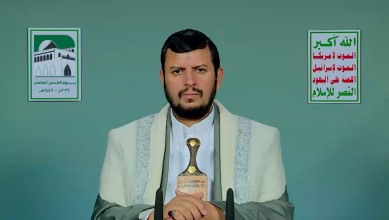
I seek refuge in Allah from Satan, the outcast.
In the name of Allah, the Compassionate, the Merciful.
Praise is to Allah, Lord of the Worlds. I believe that there is no god but Allah, the Sovereign and the Manifest Truth, and that our master Muhammad is His servant, Messenger, and Last Prophet.
O Allah! Confer Your salat and blessings upon Muhammad and the Family of Muhammad as You conferred Your salat and blessings upon Ibrahim and the Family of Ibrahim. You are Owner of Praise, Owner of Glory! And be pleased with Muhammad’s good companions and all Your righteous servants and mujahidin.
O Allah! Guide us and grant us acceptance, for You are the Hearing, the Knowing; accept our repentance, for You are the Relenting, the Merciful.
Brothers and sisters, peace be upon you and the mercy of Allah and His blessings.
In the context of the blessed verses concerning the commissioning of Musa (PBUH) with the divine message, we discussed several important points, which can be summarised in relation to this topic as follows:
From earlier lessons, beginning with the opening of the story, we saw how Allah (Glory be to Him) prepares the way for the divine mission of His prophets and messengers (PBUT) through significant preliminary signs even before their creation. We also saw, in the story of Prophet Musa (PBUH), how Allah informed Musa’s mother and gave her glad tidings that He would make him one of the messengers: {‘We will certainly return him to you and make him one of the messengers‘}[Al-Qasas 28:7].
We also knew that the prophets and messengers (PBUT) receive a special divine preparation for their great sacred mission. This preparation begins from the moment of their creation, continues through their upbringing, and accompanies them throughout the course of their lives until the time arrives for them to carry out their mission. When that moment comes, they are granted even greater divine care and assistance.
They receive special divine care in their upbringing and preparation—intellectually, psychologically, and physically. They attain exceptional purity of character and sound judgement due to their special upbringing. They are protected and guided in ways that safeguard them from anything that might compromise their mission. They are also shielded from harmful influences within their societies and environments, receiving the intellectual and psychological preparation necessary for their great mission.
Therefore, when Allah commissions a person as His messenger, this occurs only after prior arrangements and intellectual and psychological preparation. Indeed, it follows the kind of preparation we have explained and summarised in light of the blessed verses.
At that great and momentous encounter of Prophet Musa (PBUH), when he was commissioned with the message, we read in the blessed verses the content of that revelation at the beginning of his mission: its major themes and the foundational principles with which the prophetic mission begins. We discussed this in the previous lecture.
It is clear that the divine message begins with certain major themes and comprehensive principles. After that, the mission itself becomes a continuing journey in which the messengers and prophets remain connected to revelation. In other words, they keep receiving divine guidance as part of their prophetic mission and in accordance with the divine plan. Some of it relates to practical stages and practical directives, and some of it relates to the divinely appointed timing of laws, commands, and prohibitions. Thus, revelation accompanies the course of their lives from the moment of commissioning until death, regularly providing guidance. Here, for example, at the moment of receiving the mission, a set of essential themes was given, and these themes were sufficient for that stage. However, this would be followed by numerous additional revelations on different occasions and under various circumstances concerning divine laws and instructions, aimed at guiding them in specific situations. The divine message, then, is a journey of guidance: It begins with revealed instruction and continues with the messengers of Allah throughout their lives.
After Allah (Glory be to Him) had informed Prophet Musa of his prophetic mission and the initial content of revelation, with its major themes and important principles, He addressed him, saying, {‘And what is that in your right hand, O Musa? He said, “It is my staff. I lean on it, and I beat down branches with it for my sheep, and I have many other uses for it”‘}[Taha 20:17-18].
We have also discussed how the prophets and messengers (PBUT), upon being commissioned with their message, witness miracles and signs that solidify their certainty, reassure them, and enable them to proceed with clear proof and complete confidence in their tasks of prophethood. Here, Musa (PBUH) witnessed the wondrous signs that he would use in carrying out his prophetic mission—miracles that decisively prove the truth of his prophethood and message.
This question might have been surprising for Prophet Musa (PBUH). In fact, this is a type of question asked for affirmation; in other words, it is not a question for inquiry, but rather to establish a particular point. For example, here he has a staff in his hand, and the matter is obvious. Allah (Glory be to Him) is the Knower of the unseen and the witnessed; nothing is hidden from Him, and He does not need to ask about anything in order to know it. He is the One Who knows everything. However, here, within the context of this great and momentous mission, and in the face of the challenges Musa (PBUH) would face, there appears this wondrous sign of this staff with its many roles: It is at once a sign, a miracle, an effective weapon, and ultimately even a means of deliverance, as we will see in the story of the Children of Israel when they reached the sea.
The purpose of this question for Musa (PBUH) was to draw his attention and prepare him psychologically for the extraordinary miracle in which Allah would turn the staff in his hand into a serpent, bringing it to life and making it move swiftly. The question at the outset thus first focused his attention and prepared him inwardly for this astonishing miracle. It also established within him, when he saw the staff brought to life by Allah (Glory be to Him) and made into a serpent in motion, that it was indeed the very same staff that had been in his hands and not something else. It further prepared him to realise that it would take on other extraordinary roles, far beyond the earlier uses he had made of it. In this way, the question draws his attention to all of that.
{‘He said, “It is my staff. I lean on it”‘}[Taha 20:18]. That is, he supports himself with it while walking. A staff is commonly used for support, even in youth; it is not limited to old age. It is useful in work, on travel over short and long distances, and in many other ways. {‘And I beat down branches with it for my sheep‘}[Taha 20:18]. He used it to strike the branches of trees with it to make leaves fall so his sheep could eat them. {‘And I have many other uses for it‘}[Taha 20:18]. He also used it for other things, which he left unspecified out of politeness, and perhaps because he was taken aback by the question in that context.
{‘He said, “Throw it down O Musa.” So, he threw it down}—and here came the astonishing moment—{and suddenly it was a snake, running around‘}[Taha 20:19-20]. Allah brought it to life instantly. As soon as Musa threw it, Allah turned it into {‘a snake, running around‘}[Taha 20:20]—it was moving quickly. This surprised Prophet Musa (PBUH). In another verse from Surah Al-Qasas, Allah says, {‘So when he saw it moving as if it were a snake‘}[Al-Qasas 28:31], describing its quick and light movements, like some snakes that wriggle rapidly. {‘He turned back in retreat‘}[Al-Qasas 28:31]—that is, he fled in fear, startled by the sight. He ran away and did not look back, as Allah says, {‘He turned back in retreat and did not look back‘}[Al-Qasas 28:31]: He did not even glance behind him or return.
Musa (PBUH) cannot be blamed in that situation, as it was an incredibly unexpected situation: The staff he used to lean on and herd his sheep with was turned into a snake—suddenly appeared before him as {‘a snake, running around‘}, with movements that were swift, light, and terrifying. As Musa (PBUH) was fleeing, Allah called out to him to reassure him: {‘[Allah said to him,] “O Musa, come forward and do not be scared; you are one of those who are secure”‘}[Al-Qasas 28:31]. In Surah Al-Qasas, Allah called him by his name: {‘O Musa‘}. He calmed him down, telling him to {‘come forward }—that is, to return—{and do not be scared‘}. Allah reassured him that there was no danger. {‘You are one of those who are secure‘}[Al-Qasas 28:31], emphasising that he is among those whom Allah grants safety, and this was glad tidings for him. Thus, in this call, Allah (Glory be to Him) reassured Musa that the setting of divine revelation is one of mercy, honour, and safety, so he should feel at ease and return to the place. He also gave him glad tidings of being among those who are secure, as he was one of Allah’s messengers and prophets.
Musa (PBUH) returned to that place, and he felt reassured following the call from Allah, the Almighty. When he arrived at the place, calm and composed, he saw the staff was still a snake—still in the state Allah had transformed it into: {‘a snake, running around‘}[Taha 20:20]. Allah then gave him a clear command, as stated in the blessed verse from Surah Ta-Ha: {‘He said, “Pick it up, and do not be scared. We shall restore it to its former state”‘}[Taha 20:21]. Musa was instructed to pick it up while it was still a living snake. The moment he picked it up, Allah transformed it instantly back into its original form—a rigid wooden staff, with its previous uses—a staff he could lean on and use as before.
At this point, a question may arise: Why did Allah not inform Musa beforehand that the staff would, by His power, be transformed into a moving snake, so that he would not be startled by it? Perhaps one of the important lessons is that he would personally live through the experience—the experience of sudden surprise when Allah transformed that staff, making it a moving snake. What would that surprise be like? There is a great difference between actually experiencing such a surprise—living it as a direct experience—and not experiencing it at all, but merely knowing beforehand that Allah would make it a moving serpent. In that case, the matter would be far less powerful in terms of psychological impact and emotional reaction. Thus, when he truly lived through the experience and was himself startled—when he personally witnessed that sudden transformation—he would clearly understand the effect it would have on others. With this in mind, he must have had some idea of how great the shock would be for Firaawn upon seeing the staff turn into a moving serpent by the command of Allah. Indeed, Allah made it a tremendous serpent. Imagine how overwhelming that surprise would be!
In fact, there is a great difference between experiencing something firsthand and merely knowing about it beforehand, which diminishes one’s ability to fully grasp the importance, impact, and magnitude of the surprise. This was beneficial for Musa; he became reassured, and the barrier before this extraordinary sign was broken for him. Thus afterward, the matter would become familiar to him, and he would not be startled by it before Firaawn, when facing the magicians, or in any other situation.
{‘He said, “Pick it up, and do not be scared. We shall restore it to its former state”‘}[Taha 20:21]: Here lies a profound lesson regarding this extraordinary sign and the miracle that Allah (Glory be to Him) chose for Musa (PBUH) in confronting the tyranny of one of history’s worst and most criminal oppressors: Firaawn. Firaawn wielded vast military, economic, and political power, with the entire state under his control, and all obeyed his orders and decrees. Yet Musa (PBUH) was to confront this tyrant—who possessed such power and resources—armed only with that staff, which he had previously used for very limited purposes: striking down leaves for his sheep, leaning on it, and other normal uses.
This is a very important lesson in placing trust in Allah (Glory be to Him). The Martyr of the Quran (May Allah be pleased with him) says, ‘Musa (PBUH), a humble man who possessed none of the weapons or resources that Firaawn had, nor the army that was under Firaawn’s command, held only a staff in his hand. He was heading to Egypt with his wife, his sheep, and his livestock. Allah said to him, {‘And what is that in your right hand, O Musa? He said, “It is my staff. I lean on it, and I beat down leaves with it for my sheep, and I have many other uses for it”’}—it had no greater role than this, as far as Musa thought. In fact, Allah intended to make that staff a source of power that would terrify Firaawn and his people. Indeed, those who place complete trust in Allah (Glory be to Him), when they reach a state of unwavering reliance on Him, will witness that even the simplest of things can have great efficacy.‘ Indeed, this lesson shows that Allah (Glory be to Him) grants even the simplest things great influence, only when the believers place their trust in Him, rely upon Him, respond to Him, and act according to His guidance and teachings.
He also says, in a condensed form, ‘Musa’s staff terrified Firaawn; it could transform into a living serpent and strike fear into all the Pharaohs. It nullified all the deceit and tricks employed by the magicians. It served as a weapon and as a means of deliverance, fulfilling multiple roles. All of Firaawn’s power, arrogance, armies, military equipment, and fortresses were rendered powerless before that staff, which Musa described by saying, {“I lean on it, and I beat down leaves with it for my sheep”}[Taha 20:18].‘ This is a brief extract from some of the words of the Martyr of the Quran (May Allah be pleased with him).
Thus, it is an extraordinary miracle, and the lesson drawn from it is that Allah (Glory be to Him) grants even the simplest things a tremendous impact when the believers act with trust in Him, place their reliance upon Him, and move in accordance with His guidance and instructions. Allah also opens vast horizons of His grace and mercy for them, preparing the way for them and guiding them towards it, until they reach great stages and lofty levels.
The miracle of the staff was the first and greatest miracle of Musa (PBUH). Then He added another miracle to it. Allah said to him, {‘And draw in your hand to your side, and it will come out white without any disease, as another sign, so that We may show you some of Our great signs‘}[Taha 20:22-23]. This sign is also a great and astonishing miracle. Allah commanded him to draw his hand to his side: to insert it inside his garment. In another verse, for example, in Surah An-Naml He says, {‘And put your hand into your cloak, and it will come out white without any disease‘}[An-Naml 27:12]. And in Surah Al-Qasas, He commanded Him saying, {‘Insert your hand into your cloak, and it will come out white without any disease, and press your arm to your side for removing fear‘}[Al-Qasas 28:32]. From these blessed verses, we understand that he would insert his hand through the opening of the shirt he was wearing. In Yemen, this is called ‘al-fiqrah.’ He would place his hand there towards his side. The side of a person is called in Arabic a wing because it corresponds to the place of a bird’s wing—that is, the area of a person’s ribs along the side of the body. Thus, he would place his hand over the side where the heart is, insert it, and then withdraw it. When he did so, it would emerge radiant white, as white as light, extraordinarily bright and pure. Then afterward, it would return to its natural appearance—its normal colour, like the rest of his body as it had been before. This sign too was an astonishing miracle: when he brought his hand out, it would shine with pure whiteness and light: {‘white without any disease, as another sign‘}[Taha 20:22]. The fabricated text found among some Jewish traditions distorts this miracle, claiming that when he brought it out, it was vitiliginous like snow. The Quran clarifies the truth: It was not like that at all. Rather, it was a beautiful, luminous sign, radiant with the whiteness of light.
The phrase {‘as another sign‘}[Taha 20:22] means that it was an additional miracle to the miracle of the staff. {‘So that We may show you some of Our great signs‘}[Taha 20:22-23]: First and foremost, these were signs for Musa (PBUH), through which his faith would increase and his confidence would grow, enabling him to proceed with a strong sense of certainty in the strength of his proof and argument. They were also of great importance even on the moral level, especially in the face of the challenges, difficulties, and propaganda he would encounter, so that he would not be affected by any of them.
As we explained previously, the prophets and messengers (PBUT) witnessed signs and miracles that firmly established their certainty and granted them a very high level of confidence, so that they would experience no confusion, doubts, or anything of that sort.
Here, we also speak about the signs and miracles shown to the prophets themselves briefly. This was previously indicated in the statement of Allah (Glory be to Him), {‘We also showed Ibrahim the kingdom of the heavens and the earth, so he would be sure in faith‘}[Al-An’am 6:75]. We also find, regarding the Messenger of Allah Muhammad (PBUH&F), that Allah has said about him, {‘He has indeed seen a part of the biggest signs of your Lord‘}[An-Najm 53:18]. Likewise, in the story of the Night Journey to Al-Aqsa Mosque, Allah says, {‘Glory be to the One Who took His servant by night from the Sacred Mosque to the Al-Aqsa Mosque whose surroundings We have blessed, so that We may show him some of Our signs‘}[Al-Isra 17:1]. Thus, Allah showed them signs that increased their certainty, reassurance, confidence, and spiritual strength in facing the challenges, hardships, denial, rejection, disbelief, and doubts they encountered.
Allah also supported them with miracles that proved the truthfulness of their prophethood and message, confirming that they were truthful when they said that Allah had sent them with revelation and prophethood. The miracles granted to the messengers varied according to their duties, circumstances, the nature of the challenges they faced, and other considerations. In other words, the miracle might differ from one messenger or prophet to another, and this is evident in the types of miracles given to Musa (PBUH), to Isa (PBUH), and to the Seal of the Prophets, the Messenger of Allah Muhammad (PBUH&F). For instance, the greatest miracle of the Seal of the Prophets, the Messenger of Allah Muhammad (PBUH&F), is a distinctive and everlasting miracle. It is unique as its benefit is continuous: It provides guidance and remains for all generations. Every generation lives with it and witnesses it. This miracle is the Holy Quran, about which Allah (Glory be to Him) says, {‘Say, “If all humans and jinn join together to produce anything like this Quran, they will not come up with anything like it, even if they assist one another”‘}[Al-Isra 17:88]. The Holy Quran is the great miracle; Allah (Glory be to Him) also says about it, {‘Then bring a surah similar to this‘}[Al-Baqarah 2:23]. And He also says in the Holy Quran, {‘It is certainly We Who have sent down the Dhikr [the Quran], and We will certainly preserve it‘}[Al-Hijr 15:9].
We now return to the story of Musa (PBUH). After Allah showed him the two miraculous signs—so that he himself would attain firm certainty, complete confidence, deep reassurance, and elevated morale—Allah made his prophetic mission clear to him: {‘Go to Firaawn. He has really exceeded all bounds‘}[Taha 20:24]. This means, go to Firaawn as a messenger from Allah, the Lord of the worlds, bearing the divine message. For he had exceeded the limits proper to a servant of Allah. He exercised tyranny in every sphere: oppressing people, leading them astray, and spreading corruption among them—corruption that extended across every aspect of life. He enslaved the servants of Allah and displayed arrogance towards them. All forms of crime, corruption, and wrongdoing fell under one overarching title: tyranny. Firaawn exercised this tyranny at a dreadful and terrifying level, exceeding every limit.
Tyranny is therefore a comprehensive concept. It reflects the direction taken by the forces of taghut when they marshal their resources and capacities to exercise it. That is, the greater their resources, the more dangerous they become when they use them to spread corruption and wrongdoing. To illustrate, when a powerful nation possessing immense capabilities turns towards oppression, corruption on the earth, the service of falsehood, the misguidance of people, and their enslavement, the ensuing danger escalates to a critical threshold, because it deploys the totality of its resources and capabilities for that purpose. The same applies to an empire, a state, or a tyrant who possesses power and resources and mobilises them in the service of crime, corruption, misguidance, falsehood, wrongdoing, and the enslavement of people. Their tyranny reaches the point at which every limit is exceeded. The consequences for people in their daily lives then become extremely grave, because the source of such oppression, corruption, crime, and misguidance is an entrenched and powerful force that has deployed every means, resource, and capability at its disposal. For this reason, tyranny represents an extremely dangerous condition within human societies.
Therefore, one of the great missions of the divine message is to confront tyranny and strive to dismantle it. Indeed, Allah (Glory be to Him) is ever watchful against tyrants, as He says, {‘Did you not see how your Lord dealt with ‘Aad of Iram, who had lofty pillars, the likes of whom had never been created in the land; with Thamud who carved [their homes into] the rocks in the [Stone] Valley; and with the Firaawn of mighty structures? They [all] transgressed throughout the land and spread much corruption there. So your Lord unleashed on them a scourge of punishment. Indeed, your Lord is in observation‘}[Al-Fajr 89:6-14]. Allah always lies in wait for tyrants—this is one of His established laws—because tyranny drives human society to extremely dangerous conditions. In other words, it represents a grave threat to the continuation of life in human communities, strips human society of its human dignity, and damages every aspect of life. Tyrants grow increasingly arrogant as their power expands; when societies submit to them, their arrogance only intensifies. Yet the divine law of Allah stands in wait for them.
In this story, we clearly see the central role of the divine message in confronting tyranny: {‘Go to Firaawn. He has really exceeded all bounds‘}[Taha 20:24]—that is, with Allah’s message, you will confront his tyranny and work to bring it to an end.
Musa (PBUH) accepted this mission without hesitation, despite its immense magnitude, for he would be confronting the greatest tyrant of his time—perhaps one of the greatest tyrants in human history. Yet what would he ask from Allah to help him carry out this mission and face the tyrant and his people? He turned to Allah with supplication: {‘My Lord, put my heart at peace for me‘}[Taha 20:25]. This supplication was a response to Allah’s command, yet it also reflected his human reality—as a servant who needs Allah in everything. Therefore, he asked Allah (Glory be to Him) for the help he needed in carrying out this great mission.
{‘He said, “My Lord, put my heart at peace for me, and make my task easy for me‘}[Taha 20:25-26]. At the forefront of his supplication was his request that Allah put his heart at peace for him. This in itself reveals profound awareness and great insight, because the first requirement of such a mission is precisely that. Even with clear guidance and a manifest miracle, he would inevitably face denial, obstruction, and organised propaganda campaigns, among other challenges.
From Firaawn and his people, he would encounter much that could anger him, grieve him, and provoke him, and he would face many insults and threats. Such emotional pressures—anger, agitation, sorrow, resentment, and the like —naturally affect a person, and at times they can influence both the manner in which one performs a task and the level of that performance. For this reason, he asked Allah (Glory be to Him) to put his heart at peace, because he needed breadth of heart to free himself from distress and to possess tremendous psychological endurance. In this way, he would be able to withstand the rejection, denial, insults, and provocations he would face with strength, without allowing them to affect his performance in carrying out his great and sacred mission.
This is a very important lesson about the need for breadth of heart in calling people to Allah, in every position of responsibility, and in carrying out significant duties. A person needs such breadth of heart and psychological endurance so that his performance remains sound and is not affected by emotional reactions arising from inner distress, agitation, or any other influence—whether something that causes him sorrow, provokes his anger, or gives rise to feelings of resentment and agitation, and the like.
A person must be aware of the importance of this principle when entrusted with responsibility. At any level of responsibility, one needs breadth of heart. For this reason, the Commander of the Believers, Ali (PBUH), said, ‘The essence of leadership is having a big heart.‘ Leadership here means leadership at any level. It does not refer only to a president or a head of state; rather, whenever a person leads any task or assumes responsibility for any work or mission, he needs breadth of heart. He must deal with matters on that basis—showing forbearance towards what provokes him, troubles him, angers him, or stirs feelings of resentment and agitation within him—so that his performance remains sound and free from emotional reactions arising merely from being provoked, angered, saddened, or otherwise stirred. In other words, a person’s actions should remain focused solely on what serves the task itself and what is appropriate to it, rather than going beyond what suits the task to express his emotional state. If a person’s actions become governed by his emotions rather than by the requirements of proper performance, this will inevitably affect his performance negatively: Instead of serving the task entrusted to him, he begins to act in ways that satisfy his resentment, release his anger, and merely vent his agitation. In this way, he ends up serving his emotional state rather than the task for which he bears responsibility.
This is an important matter, and it is something for which a person should supplicate, asking Allah with the supplication: {‘My Lord, put my heart at peace for me‘}[Taha 20:25]. A person must also be cautious of states of constriction, agitation, and impulsiveness in his responsibilities, ensuring that such states do not dominate him or control his conduct. For such states have a negative impact on practical responsibilities, sometimes even to the extent of undermining one’s performance and driving people away from him. They can also have harmful effects on a person’s sound judgment, the purity of his soul, and his relationships with others. For the opposite of breadth of heart is constriction, agitation, and rashness—states that lead a person to adopt positions and behaviours that are neither wise, nor sound, nor befitting the responsibility he carries.
Rashness may develop into a serious negative influence on one’s responsibilities. Concerning harsh and sharp temper, Imam Ali (PBUH) said, ‘Rage is a kind of madness—that is, it is a state in which a person is no longer acting with sound judgment—because the victim to it regrets it afterwards. If he does not regret, then his madness has become ingrained.‘ In other words, if a person remains satisfied with what he has done as a result of his harshness, agitation, and impulsiveness, then his madness has taken firm hold of him; he has moved far from sound judgment, reason, understanding, and wisdom, and he acts recklessly and irrationally under the sway of his emotions, merely venting his anger and agitation. This is a very important lesson for anyone in a position of responsibility and in every practical task. A person needs to turn to Allah (Glory be to Him) and seek His help.
Such inner strength and psychological endurance enable a person to act according to what his responsibility requires—doing what best serves that responsibility and what is appropriate for the proper fulfilment of the duty and the task entrusted to him.
That concludes our lecture for today.
We ask Allah (Glory be to Him) to grant us success in seeking what pleases Him. O Allah, have mercy on our virtuous martyrs, heal the wounded among us, set free our captives, and grant us victory. You are the Hearer of Prayer!
Peace be upon you and the mercy of Allah and His blessings.