
Closure of Sana’a Int’l Airport.. Yemen’s patients between death & lack of medicine
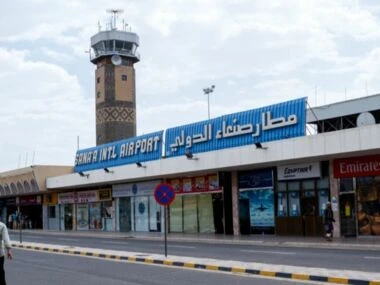
Airports are considered a lifeline for any healthcare system, especially in countries suffering from limited medical resources.
In Yemen, Sana’a International Airport serves as the main air gateway for patients traveling abroad for treatment, in addition to its vital role in bringing in life-saving medicines and medical supplies.
When the airport is closed or flights are suspended, not only does travel stop, but so does the entry of life-saving medicines and medical supplies, particularly those related to kidney transplants, cancer treatment, open-heart surgeries, medications for cancer and chronic diseases on which patients continuously depend.
The continued closure of the airport has severe health and humanitarian consequences, most notably the delay of critical surgeries, threatening the lives of many patients and increasing the likelihood of death. Cancer patients also face difficulty obtaining treatment protocols unavailable locally, such as immunotherapy and targeted therapy. In addition, patients and their families endure growing psychological suffering under the fear of worsening health conditions, which further intensifies depression and anxiety among those with chronic illnesses.
The closure also prevents the entry of medicines and medical supplies, causing shortages of drugs for chronic diseases such as insulin, blood pressure medications, heart disease treatments, kidney failure medications, epilepsy drugs, and asthma treatments. Interruptions in these medications can lead to diabetic coma, strokes, acute kidney failure, and epileptic seizures. Cancer medications are also affected, as chemotherapy is highly sensitive to temperature , timing, and delays of several weeks can reduce its effectiveness by 40–60 percent, according to World Health Organization protocols. All of this increases pressure on local hospitals, which are forced to receive cases that were supposed to be treated abroad, leading to higher mortality rates in intensive care units.
In this regard, The Health and Environment Minister Dr. Ali Shaiban renewed his assertion that the continued disruption of Sana’a International Airport is a crime against humanity , a blatant violation of humanitarian , international laws and conventions.
Dr. Shaiban told the Yemeni News Agency (Saba) that the closure of Sana’a Airport, which was targeted by the Zionist enemy, has caused severe shortages and unavailability of most medicines and medical supplies that require special transportation conditions, particularly refrigeration.
He stressed that the blockade and closure of the airport have deprived thousands of patients of essential medicines, including drugs for kidney transplant patients, blood derivatives, hormonal and immunosuppressive medications, resuscitation and anesthesia drugs, anticoagulants, and certain diagnostic solutions, among others. He called on the United Nations and its agencies not to turn a blind eye to this catastrophic tragedy, which has claimed the lives of thousands of patients and continues to take the lives of thousands more.
Dr. Shaiban pointed out that the aggression forces show no humanitarian or moral consideration regarding the suffocating blockade imposed on the Yemeni people, describing it as unprecedented in human history amid shameful international and UN silence.
Regarding the direct health impacts, a report issued by the Ministry of Health and Environment, a copy of which was obtained by the Yemeni News Agency (Saba), explained that the continued closure of the airport has led to shortages of medicines and medical supplies, including life-saving drugs, anesthesia medications, blood derivatives, medicines for genetic diseases, cancer, chronic illnesses, kidney transplant patients, dialysis sessions, targeted therapies, and laboratory and diagnostic solutions. The report also noted the suspension of operations at several local pharmaceutical factories due to the ban on the entry of raw materials and the arbitrary measures imposed by the aggression’s mercenaries, which obstructed the smooth entry of medicines and vital supplies.
The report further stated that hundreds of thousands of patients have been denied the opportunity to travel abroad for specialized treatment, particularly for cancer and heart surgery cases, in addition to preventing foreign medical missions — which had expressed readiness to perform complex surgeries — from entering the country. It noted that more than 90 percent of patients are unable to travel due to economic conditions and arbitrary procedures imposed on patients at airports controlled by the aggression’s proxies.
According to the report, around 8,000 dialysis patients are struggling for survival due to shortages of their medications, confirming that 5,000 dialysis patients have died as a result of the blockade , the prevention of dialysis solutions and blood filtration equipment from entering the country.
The report also indicated that 100,000 cancer patients are battling the disease under blockade conditions that have caused the depletion of ten major types of medicines and a 60 percent shortage in their required treatments. In addition, more than 40,000 patients suffering from thalassemia and hereditary hemolytic anemia face the risk of death because of medicine shortages and the ban on importing their treatments through Sana’a International Airport, including iron-chelating drugs and specialized medical solutions. It confirmed the deaths of 684 patients out of 8,430 who continue receiving treatment at the Yemeni Thalassemia Patients Association Treatment Center.
The report noted that pharmaceutical imports have declined by 60 percent due to arbitrary measures, while more than 83 importers — who previously supplied over 1,329 types of medicines — have stopped importing. It also highlighted severe shortages of hemophilia and leukemia medications, with a deficit reaching 30 percent. Furthermore, the report stated that 600 leukemia patients are currently undergoing treatment, including 200 cases that require travel abroad for bone marrow transplants.
According to the report, there were more than 8,685 cases that could not be treated in the country between 2021 and 2025. It also stated that 77,412 patients needed to travel abroad for treatment between 2018 and 2025, while 15,482 patients were unable to travel due to financial hardship, and 12,251 others were prevented from traveling because of the blockade and closure of Sana’a Airport.
Regarding patients requiring treatment abroad in 2025, the report noted that 1,154 patients needed nuclear medicine scans, 117 suffered from congenital heart defects, 65 required corneal transplants, 109 suffered from liver failure, and three patients needed bone marrow transplants.
Patients have the right to life, while healthcare, food, and medicine are fundamental human rights that must not be violated under any political or military pretext.
The closure of the airport has direct consequences on people’s lives. Preventing patients from traveling and blocking the entry of medicines effectively amounts to “a slow death sentence” for thousands of cases.
The solution begins with separating humanitarian issues from political disputes and establishing a permanent humanitarian air corridor for patients and medical supplies, in accordance with United Nations resolutions and international humanitarian principles. The right to treatment and medicine is a fundamental right that cannot be denied.