
Censored Israeli Data Admits 5,500 Wounded from Iranian Strikes
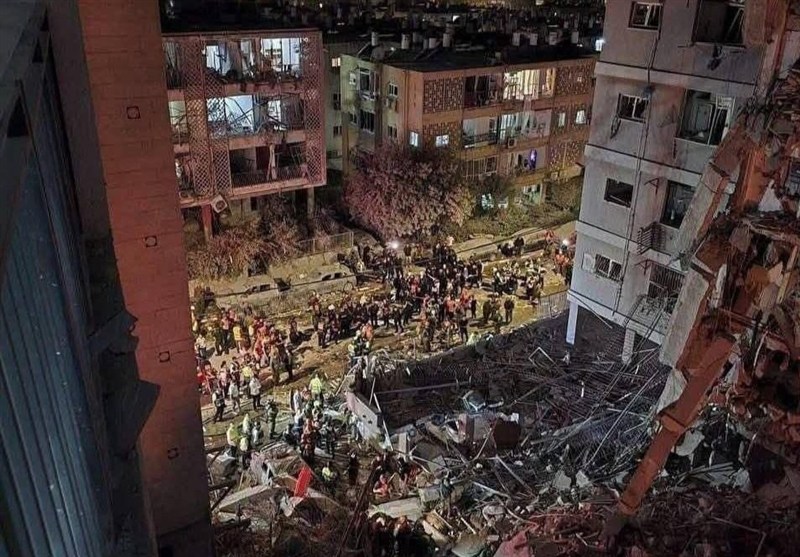
The Israeli regime acknowledged in tightly controlled statistics that nearly 5,500 settlers have been injured in retaliatory missile attacks launched by Iran from February 28 to March 25, 2026.
The figures come as Israel continues to restrict disclosure of casualty data during its ongoing war against Iran, raising questions about the true scale of losses.
The Israeli health ministry said 5,473 Israelis were wounded during the reporting period, including 149 injuries recorded on March 25 alone.
It added that a total of 80,594 wounded settlers had been admitted to hospitals since the start of the war on Oct. 7, 2023.
However, the figures are widely seen as incomplete, as Israeli authorities impose strict military censorship on reporting wartime losses.
Analysts and research centers have suggested that fatalities may be significantly higher than officially acknowledged, pointing to discrepancies between official statements and field evidence.
Meanwhile, the war has visibly disrupted daily life across Israel’s home front, with the education ministry keeping schools closed in large areas, including northern regions and the Tel Aviv area, while remote learning continues elsewhere.
In a related development, Israeli websites were targeted by cyberattacks, causing disruptions, as widespread alerts and social media speculation warned of potential escalation in missile strikes from Iran or Lebanon.
Separately, domestic criticism has intensified, with factions inside Israel accusing Prime Minister Benjamin Netanyahu’s cabinet of exploiting wartime conditions to advance internal political agendas.
The government is seeking to pass budget amendments that include a sharp increase in security spending to 38 billion shekels, alongside billions more allocated to ultra-Orthodox institutions and coalition-linked projects, as well as additional funding for settlements.
Opponents argue these measures are aimed at consolidating Netanyahu’s political coalition and advancing stalled initiatives, particularly as he continues to face corruption trials.
At the same time, Israeli officials acknowledge the vulnerability of the home front, as Iran and Hezbollah possess advanced missiles and drones capable of reaching across the territory, targeting critical infrastructure and strategic sites.
Such capabilities have already demonstrated the ability to disrupt daily life and place sustained pressure on decision-makers, raising concerns over the trajectory of the conflict.
Despite official rhetoric about resilience, growing public unease suggests the Israeli leadership faces mounting pressure to maintain domestic support as the war drags on.
The spread of information through social media has further weakened the government’s ability to control the narrative, amplifying scrutiny of its handling of the conflict.
Although Israel benefits from extensive Western and US support, a strong military, and a developed economy, repeated missile strikes, air raid sirens, and prolonged sheltering have created a persistent sense of instability among residents.
If the war continues for an extended period, it could pose additional challenges, particularly as key sectors such as technology, tourism, and foreign investment remain highly sensitive to security conditions.
Meanwhile, reports indicate that some Israelis have taken to the streets since the early days of the conflict, calling for an end to the war following waves of intense Iranian retaliation.
Images circulating online showing civilians living in shelters underscore the strain on daily life, marking a shift for a society unaccustomed to sustained conflict within its own territory.
Israeli media have also acknowledged that strict military censorship limits the publication of accurate casualty figures, with reported data often conflicting with hospital accounts and on-the-ground observations.
According to Hebrew-language sources, one of the Israeli military’s primary measures has been tightening restrictions on publishing any information or images related to missile impact sites.
Discussion of strikes on sensitive military or security facilities by Iran or Hezbollah is also prohibited.
Journalists have faced significant obstacles in accessing precise casualty data from hospitals, while censored media reports indicate that more than 1,000 Israelis have been treated since the start of the war with Iran, with some still hospitalized.
The scope of censorship has also extended to reports of voluntary evacuations from multiple settlements in northern areas toward central and southern regions.