
Gaza Cancer Center Warns: 11,000 Patients face slow death amid healthcare system collapse
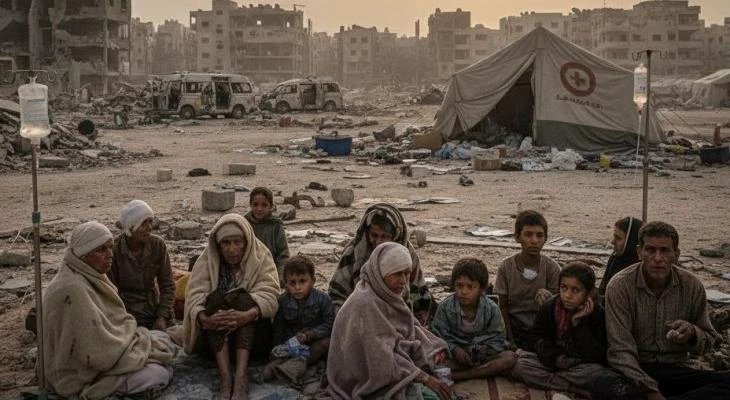
This coincides with World Cancer Day, observed on the fourth of February each year, which aims to raise awareness about the severity of this disease and the necessity of providing immediate treatment.
In a statement to the “Sind” news agency, Abu Nada confirmed that more than 11,000 cancer patients in the Strip are suffering from a severe shortage of basic medical services. Among them, about 4,000 patients need treatment referrals outside the Strip, while between 300 and 400 cases require urgent medical evacuation due to the critical nature of their health conditions.
He pointed out that suffering is exacerbated by the absence of comprehensive chemotherapy and accurate diagnosis, in addition to the complete lack of radiotherapy treatment, which increases the difficulty of treatment and raises mortality rates.
He noted that cancer detection often occurs in late stages due to the ongoing war conditions, reducing opportunities for early treatment and increasing the spread of the disease.
The Medical Director of the Gaza Cancer Center explained that the halt in patient movement since the outbreak of the Zionist genocidal war in October 2023 until the end of July 2024 led to an unprecedented accumulation of cases. Furthermore, the complete destruction of the health infrastructure, including the Turkish Friendship Hospital, which has become inoperable, has worsened the crisis.
Regarding the reasons for the increasing number of patients, Abu Nada did not rule out a possible link between prolonged exposure to explosives and toxic materials dropped by the Israeli enemy army on the Gaza Strip and the rise in cancer rates, emphasizing that the matter requires long-term scientific studies.
He added that the Strip records about 2,000 new cases annually, stressing that the continued closure or limited operation of the Rafah crossing poses a direct threat to patients’ lives, and that each day of delay in opening the crossing constitutes a “death sentence” for the patients.
He mentioned temporary efforts to alleviate the crisis by receiving patients at the Gaza Cancer Center in the Nasser complex and a monitoring point at Al-Helou Hospital, with a future plan to provide a monitoring point at Al-Shifa Hospital.
In an official statement today, the Ministry of Health in the Gaza Strip confirmed that 64% of cancer drugs are unavailable, while the Strip lacks early diagnostic devices such as MRI and mammogram machines, further endangering patients’ health and complicating treatment opportunities.
A ceasefire agreement in the Gaza Strip entered into force on the 10th of October last, after a two-year continuous Zionist genocidal war; however, the Israeli enemy army commits daily violations of the agreement and continues to prevent the majority of humanitarian aid from entering the Strip.