
Intelligence Report: US-Israeli Aggression Fails to Break Iran’s Resilience
US intelligence assessment has concluded that even a “large-scale” American-led assault on Iran is improbable to dismantle the nation’s leadership, as reported by The Washington Post.
The evaluation casts doubt on the Trump administration’s claim that the war could end in four to six weeks, the Post noted, referencing three anonymous individuals acquainted with the intelligence document’s details.
The document was finalized merely a week following the joint attack by the US and the Israeli regime on Iran dated February 28, which resulted in the assassination of Leader of the Islamic Revolution Ayatollah Seyed Ali Khamenei during the initial phase of the aggression.
It further indicated that the chance of Iran’s divided opposition assuming authority over the nation remains “unlikely”.
In a related development, concerns arise regarding the political viability of the war for Trump as midterm elections approach.
Paul Musgrave, an associate professor of government at Georgetown University in Qatar, discussed the escalating economic burden of the war.
“The US is a very wealthy country and can afford a lot of expensive mistakes,” he said.
“The question is actually whether this is politically sustainable,” Musgrave told Al Jazeera, pointing to whether the US public and groups in the country believe that “this war is worth the candle”.
Meanwhile, the US and the Israeli regime persist in their assaults on Iran, targeting oil storage sites and processing plants in Tehran for the first instance, igniting major blazes throughout the capital.
The United States and the Zionist regime launched a large-scale military campaign against Iran following the assassination of Ayatollah Khamenei, along with several senior military commanders and civilians on February 28.
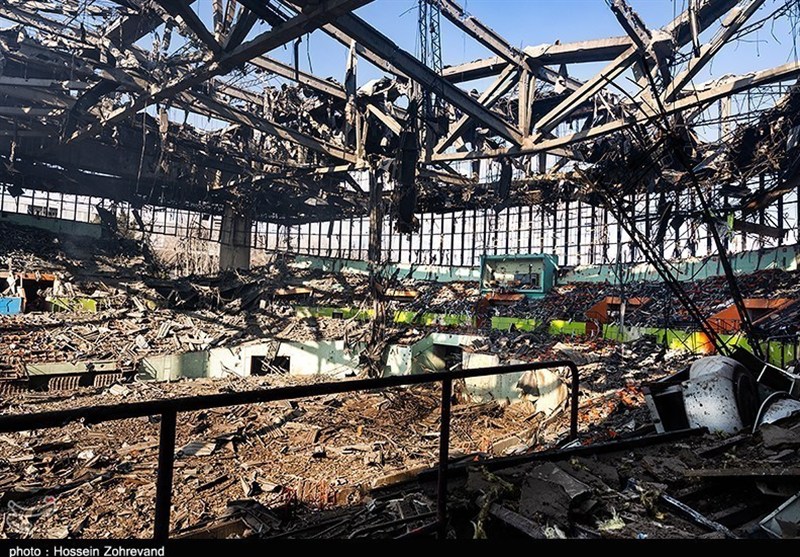
The attacks have involved extensive aerial strikes on both military and civilian locations across Iran, causing significant casualties and widespread damage to infrastructure.
In response, the Iranian Armed Forces have carried out retaliatory operations, targeting American and Israeli positions in the occupied territories and at regional bases with waves of missiles and drones.