
Prisoners Committee: Release of 600 Detainees, 2,612 Freed Under Amnesty Initiatives
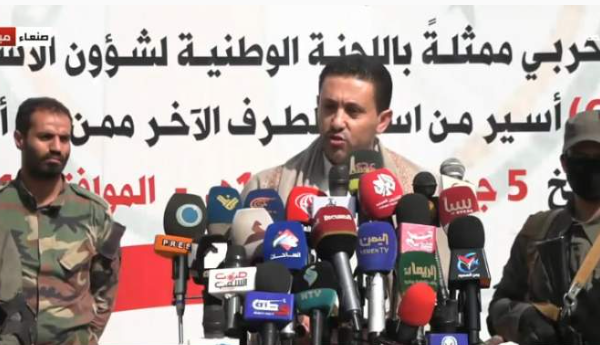
Yemen’s National Committee for Prisoners’ Affairs announced on Sunday the release of 600 detainees held from among the Saudi enemy’s affiliated forces, in the largest unilateral amnesty and release operation since the aggression against Yemen began on March 26, 2015. The announcement was made at a press conference in Sana’a attended by representatives of the International Committee of the Red Cross (ICRC).
Committee Chairman Abdulqader Al-Murtadha said the latest release brings the total number of beneficiaries of Sana’a’s unilateral amnesty initiatives to 2,612, all released without exchange or compensation. He said the latest group marks the eighth amnesty initiative issued by the Leader of the Revolution over the past years.
Al-Murtadha explained that those released had been captured on various battlefronts, particularly along the border. Many had spent years in detention, while the group included elderly detainees and people suffering from illnesses.
He said five previous releases had covered around 1,200 long-term detainees, while two other batches included 482 people captured in recent events after voluntarily surrendering. Partial releases had also benefited another 450 detainees.
In contrast, Al-Murtadha accused the Saudi enemy and its affiliated forces of exploiting the prisoners’ file and worsening the suffering of Yemenis, saying they had not undertaken any unilateral humanitarian release initiative throughout the confrontation.
He said the committee had documented more than 100 cases of prisoners being executed in combat zones and the physical and psychological torture of more than 4,000 detainees in the Saudi-backed side’s prisons since the beginning of the aggression. He also accused the opposing forces of abducting civilians from roads, homes and workplaces on the basis of their political or sectarian affiliations, places of origin or family names, then holding them for years without charges or trial.
Al-Murtadha cited the killing of several prisoners near Dhubab weeks ago, saying they were shot and run over by US-made armored vehicles. He said such practices would not secure military gains or undermine the morale of Yemenis and their fighters.
Call for Detainees to Return Home
Addressing those released, Al-Murtadha urged them to regard the amnesty as an opportunity to correct their course and return to their country and communities. He said their years in captivity had shown that the side under whose banner they had fought had abandoned them.
He expressed hope that recent changes in areas previously controlled by Saudi-backed forces would create better conditions for the released detainees to return home and resume normal lives.
Sana’a Reaffirms Readiness to Implement Prisoner-swap Agreement
Al-Murtadha reaffirmed Sana’a’s readiness to implement the prisoner-exchange agreement signed in Amman in mid-May under UN and ICRC auspices, stressing that military developments should not affect the file, which he said a humanitarian issue independent of political, security and military calculations.
He said Sana’a had carried out hundreds of local and international prisoner exchanges during previous years, including periods of more intense fighting, and therefore saw no reason to halt implementation under current circumstances.
He attributed delays to two factors: the Saudi-backed side’s failure to honor agreed commitments and the UN envoy’s office abruptly suspending consultations that had been preparing the ground for implementation following the latest escalation.
Al-Murtadha did not rule out Saudi involvement in the suspension, saying information available to the committee indicated that Saudi Arabia had instructed its affiliated forces and the United Nations to halt progress on the prisoners’ file. He warned that continued obstruction would only prolong the suffering of thousands of detainees and their families.
He concluded by assuring prisoners’ families that the committee would continue working through all available means to secure the release of their relatives. He also thanked the ICRC, state officials, journalists and activists who helped facilitate the latest release.
The prisoner exchange has remained a major humanitarian issue throughout the conflict in Yemen, which began with the Saudi-led aggression in March 2015.
Previous negotiations and exchange agreements have faced repeated delays amid Saudi intransigence. Sana’a has consistently called for the file to be handled on humanitarian grounds, separate from military and political considerations, while the United Nations has not urged the Saudi-backed side to implement its commitment.