
Saudi Occupation Forces Leave Aden Suddenly After Airspace Closure and Suspension of Flights
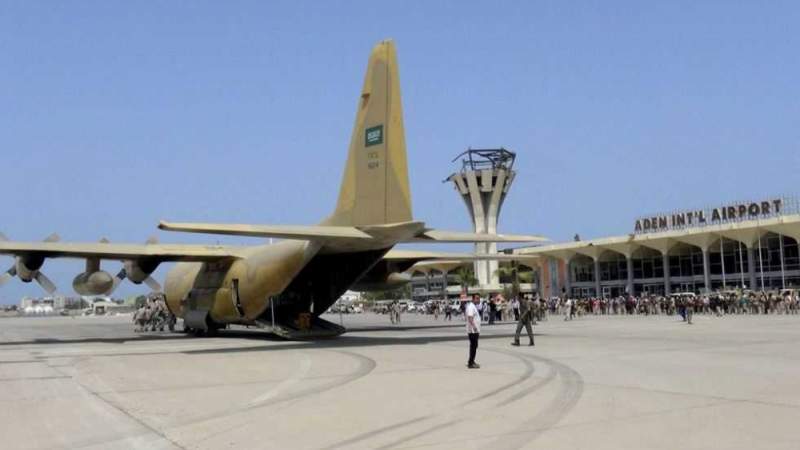
In an unexpected escalatory move, Saudi occupation forces abruptly departed Aden on Monday aboard a military cargo aircraft, coinciding with a controversial decision to halt all civil aviation permits and freeze air traffic to and from Aden International Airport.
Media sources, citing officials at Aden Airport, confirmed that a Saudi military cargo plane evacuated dozens of soldiers who had been stationed in facilities and camps belonging to the so-called Coalition leadership in the city.
Parallel to the evacuation, a source in the puppet government reported that the Saudi-led occupation coalition issued a decision to fully close Yemeni airspace, prohibiting the issuance of permits for any civilian flights to or from Yemeni territory.
Political observers noted that this Saudi escalation is a clear and deliberate reaction to recent actions taken by the so-called Southern Transitional Council (STC)—particularly its moves in the eastern provinces of Hadhramawt and al-Mahrah—which Riyadh considered a breach of red lines and a challenge to its influence.
The decision to close the airspace and withdraw occupation troops is viewed as a major pressure tactic used by Riyadh against its own proxies in the southern provinces, signaling its rejection of the STC’s attempts to expand its authority beyond previously agreed-upon understandings.
Riyadh views the STC’s recent moves in the east—especially its attempts to seize strategic facilities and assert unilateral control—as a direct challenge to Saudi influence in the region. These developments have revived deep disagreements between Saudi Arabia and the UAE over the management of southern Yemen, with both occupying powers supporting competing factions and agendas.
In recent weeks, the STC has intensified deployments in Hadhramawt and al-Mahrah, prompting Saudi warnings and heightened military alerts. Meanwhile, Aden has witnessed political turmoil, competing security claims, and escalating disputes over authority, airspace control, and port management.