
Sayyed Ali Khamenei: The Leader of the Islamic Revolution Who Challenged Hegemony & Global Arrogance
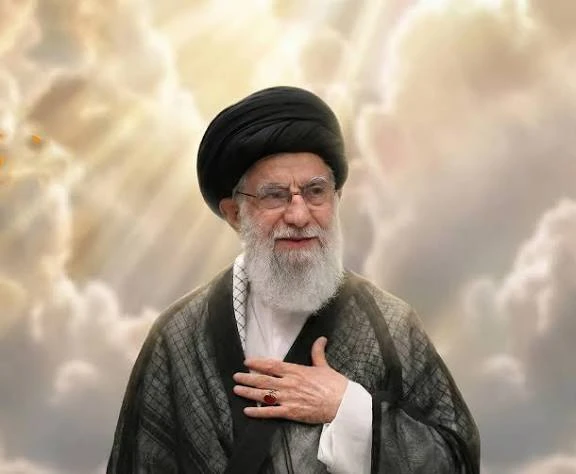
The Leader of the Islamic Revolution in Iran, Grand Ayatollah Sayyed Ali Khamenei, was martyred on Saturday, February 28, 2026, during the joint aggression launched by the United States and the Zionist entity against Iran.
At four o’clock in the early hours of Sunday, March 1, 2026, Iranian television broadcast the obituary of “the Leader,” who was targeted in what was described as the most extensive aggression against Iran since the victory of the Islamic Revolution in 1979.
Thus, the Supreme Leader of the Islamic Revolution in Iran, Sayyed Ali Khamenei, was martyred. In his case, martyrdom is portrayed as the fitting conclusion for a man who spent most of his life confronting American dominance and resisting the forces of global arrogance.
According to his biography published on his official website, he was born in 1939 in the holy city of Mashhad into a respected scholarly family.
His father was Ayatollah Hajj Sayyed Javad Khamenei, one of the respected mujtahids and scholars of Mashhad. For many years he led congregational prayers at the Goharshad Mosque in the morning and at the Bazaar Mosque in Mashhad at noon and in the evening. He was also known as a prominent religious preacher. He passed away in Dhu al-Qi’dah 1406 AH at the age of ninety-three.
His grandfather was Ayatollah Sayyed Hussein Khamenei, a scholar from Azerbaijan. He lived in the Khiyaban district of Tabriz before migrating to Najaf, where he settled and devoted himself to teaching and scholarly research. He was known for his piety, modesty, and ascetic lifestyle.
Grand Ayatollah Sayyed Khamenei spent his childhood under the care of his father, who was very attentive to the upbringing and education of his children while remaining affectionate and compassionate toward them. He also grew up under the care of his mother, who was even more tender and caring. His family lived in severe hardship, as he once recalled:
“I spent my childhood in severe poverty, especially compared to the wartime years. Although Mashhad was outside the war zone and goods were more available and cheaper than in other cities, our financial situation was such that we could not afford wheat bread. We usually ate barley bread, sometimes mixed barley and wheat bread, and only rarely wheat bread. I remember nights in my childhood when there was nothing in the house for dinner. My mother would take coins that my grandmother sometimes gave me or one of my siblings and buy milk or raisins to eat with bread. The house where I was born and lived for about five years measured between 60 and 70 square meters in a poor neighborhood of Mashhad. It had only one room and a dark, narrow basement.”
Studies and Writings
Khamenei began his education at the age of five when he and his older brother, Sayyed Mohammad, attended traditional religious schools to learn the Qur’an. Later they were enrolled in a religious elementary school known as Dar al-Ta’lim al-Dini.
These schools were established by believers after the period of repression imposed during the rule of Reza Khan, with the aim of focusing primarily on religious education.
After completing primary studies there, he attended evening classes at a government school and obtained his intermediate certificate. He later completed secondary education within two years and earned his high school diploma.
In 1962 the religious seminary in Qom rose up when Imam Ruhollah Khomeini called for resistance against the Shah. Scholars and students spread the Imam’s messages and directives across Iran with dedication and courage, printing and distributing announcements with the support of popular religious groups. The movement soon spread to other seminaries and religious communities, including the prominent and steadfast seminary of Mashhad.
Alongside his activities in Qom, Khamenei strengthened his connections with scholars and students in Mashhad and worked, together with other scholars of Khorasan, to better organize religious students. His activities were influential and notable. In 1963 he was sent by Imam Khomeini to Mashhad to deliver three important messages regarding the month of Muharram, during which the uprising of June 5, 1963 took place.
The first message was directed to scholars, preachers, and leaders of religious organizations regarding criticism of Israel and the Fayziyeh incident, while the second and third messages were addressed to Grand Ayatollah Milani and another scholar in Mashhad regarding the launch of public struggle beginning on the seventh of Muharram.
These messages strengthened the movement in the province of Khorasan.
Khamenei began writing in 1963 and produced several works, some unpublished, including:
Istifta’at (two volumes), Faith, Monotheism, Prophethood, Imamate, Wilayah, A Study in Islamic Thought, Lessons in Understanding Islam, Lessons in Islamic Thought, and The Correct Understanding of Islam.
Formation of Secret Cells
Imam Khomeini held meetings in Qom with several revolutionary scholars, including Ayatollah Meshkini, Ayatollah Quddusi, Ayatollah Rabbani Amolshi, Ayatollah Rabbani Shirazi, Sheikh Hashemi Rafsanjani, Ayatollah Misbah Yazdi, Ayatollah Azari Qomi, and Ayatollah Amini Najafabadi. During these meetings they discussed forming organized secret cells aimed at planning and coordinating activities within the Qom seminary and advancing the revolutionary movement.
The group began operating secretly after drafting its charter and membership requirements. Ayatollah Misbah Yazdi served as secretary of the meetings and recorded the minutes in a script resembling ancient prayer manuscripts so that if they were discovered by the Shah’s intelligence service (SAVAK), they would appear to be religious texts or talismans.
However, in 1965 these secret networks were exposed after Ayatollah Azari Qomi was arrested for another reason. SAVAK discovered the charter in his home and subjected him to torture. Some members were arrested while others fled, including Khamenei, Rafsanjani, and Misbah Yazdi. Khamenei went into hiding for nearly a year.
Revolutionary Leadership Council
The Revolutionary Leadership Council played a central role in the success of the Islamic Revolution and its administration afterward. According to martyr Ayatollah Beheshti, its original core consisted of Hashemi Rafsanjani, Morteza Motahhari, himself, Sayyed Mousavi Ardebili, and Mohammad Javad Bahonar.
Later, according to Rafsanjani, Imam Khomeini appointed six individuals while he was in Paris to prepare for the coming government, and Khamenei later joined them while he was in Mashhad.
First Article Broadcast on Islamic Radio
After the fall of the Shah’s regime and the takeover of the national radio station by the revolutionaries on February 11, 1979, the first Islamic article broadcast on the radio was written by Khamenei and titled “After the First Victory.”
Assassination Attempt
On June 27, 1981, Khamenei survived an assassination attempt carried out by members of the Mujahedin-e Khalq while he was delivering a speech at Abu Dharr Mosque in southern Tehran. He was seriously injured and hospitalized but later recovered and resumed his activities.
Government Positions
In 1979 he was appointed a member of the Defense Council representing the Revolutionary Leadership Council and later served as deputy minister of defense. He also served as commander of the Islamic Revolutionary Guard Corps during a period of internal disputes within the organization.
In 1980 he became Imam Khomeini’s representative in the Supreme Defense Council.
Friday Prayer Leader of Tehran
After the death of Ayatollah Taleghani in 1980, Imam Khomeini appointed Khamenei as the Friday Prayer Leader of Tehran, citing his distinguished record and qualifications.
Presidency
Following the assassination of President Mohammad Ali Rajai and Prime Minister Mohammad Javad Bahonar, Khamenei was nominated for the presidency and elected on October 5, 1981, as the third president of the Islamic Republic with an overwhelming majority.
He assumed office during extremely difficult conditions, including internal instability, political assassinations, bombings, economic pressure, and the ongoing war with Iraq.
In 1988 Imam Khomeini approved the establishment of the Expediency Discernment Council after disagreements between the parliament and the Guardian Council over legislation. Khamenei became the first chairman of the council and remained in the position until the end of his presidency.
Appointment as Supreme Leader
Following the death of Imam Khomeini on June 3, 1989, the Assembly of Experts convened the next morning and, within less than twenty hours, elected Ayatollah Khamenei as the Leader of the Islamic Revolution with 60 votes out of 74 members present.
Support for the Oppressed
The Lebanese newspaper Al-Akhbar wrote that Khamenei’s intellectual and political discourse emphasized the concept of “supporting the oppressed” as a religious and ethical principle rooted in Islamic teachings and the Qur’anic call to stand with the oppressed against arrogance and domination.
This principle, according to the newspaper, extends beyond geographic borders to include supporting peoples facing occupation or political and economic pressure, while emphasizing national independence and rejecting dependence on major powers.
Khamenei was seen as a religious and political figure who combined deep seminary scholarship with long experience in state leadership, often linking spiritual values with public governance and the building of strong institutions.
On the international stage, he emphasized national sovereignty, rejection of foreign interference, and the importance of balanced relations based on mutual respect.
The same source notes that Khamenei is widely regarded as one of the most influential figures in the history of the Islamic Republic of Iran, closely associated with major stages in the development of the state and its institutions and shaping its political and regional direction for decades.
Al-Akhbar also noted that the phrase “Death to America,” frequently used in his speeches, symbolized the fear he instilled among American officials over the decades, reflecting his consistent criticism of U.S. influence in the region.
Rejection of Zionist Domination
In a statement on Khamenei’s martyrdom, the Leader of the Revolution, Sayyed Abdulmalik Badr al-Din al-Houthi, said that the Iranian leader rejected Zionist domination and supported the Palestinian cause and the peoples of the region.
He described Khamenei’s martyrdom as a real loss for the Islamic world and said that his assassination aimed to eliminate his role in confronting American and Israeli policies and thwarting their plans.
He added that targeting Khamenei aimed to remove a leader committed to just causes and the legitimate rights of the Islamic nation, especially the Palestinian cause, and to break the will of the Iranian people and weaken their morale.
Positions and Policies
Writer Firas Ilyas wrote on the Noon Post website that the exceptional nature of the news of Khamenei’s martyrdom stems from his exceptional role in the history of the Islamic Republic. He argued that Khamenei played a crucial role in stabilizing the state after the death of its founder, Imam Khomeini, and led Iran’s confrontation with the United States and Israel for nearly four decades.
The Duality of Revolution and Resistance
Ali Qassem Miqdad wrote that Khamenei lived through major historical transformations including war, economic sanctions, international pressure, and military threats. Despite these challenges, he maintained support for resistance movements, arguing that the strength of nations lies in their ability to defend their dignity.
He emphasized that the concept of the oppressed was central in Khamenei’s thought, extending beyond geography to include all peoples deprived of the right to determine their destiny.
According to Miqdad, Khamenei represented a continuation of the revolutionary path established by Imam Khomeini while adapting its tools to modern challenges, recognizing that struggle was not only military but also media-based, cultural, and economic.
For many observers, Miqdad concluded, Khamenei’s legacy will remain closely associated with the dual concepts of revolution and resistance, and with the belief that supporting the oppressed is not merely a slogan but a strategic choice that transcends time and place.