
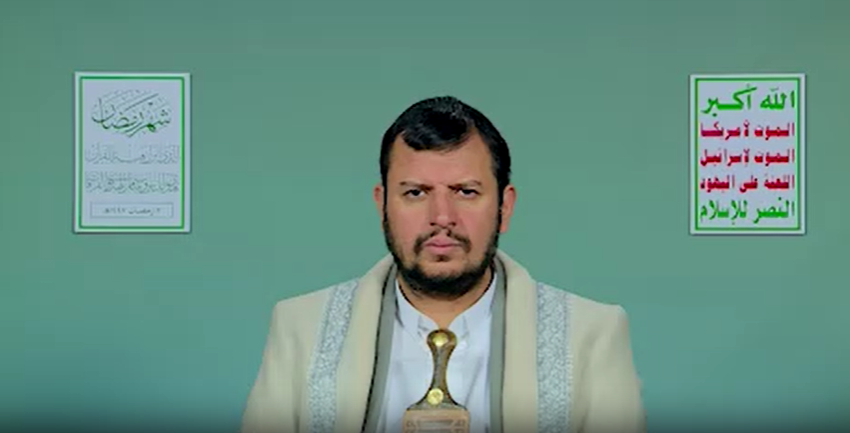
Seventh ramadan lecture of Sayyed Abdulmalik Badr al-Din al-Houthi 1447 AH
I seek refuge in Allah from Satan, the outcast.
In the name of Allah, the Compassionate, the Merciful.
Praise is to Allah, Lord of the Worlds. I believe that there is no god but Allah, the Sovereign and the Manifest Truth, and that our master Muhammad is His servant, Messenger, and Last Prophet.
O Allah! Confer Your salat and blessings upon Muhammad and the Family of Muhammad as You conferred Your salat and blessings upon Ibrahim and the Family of Ibrahim. You are Owner of Praise, Owner of Glory! And be pleased with Muhammad’s good companions and all Your righteous servants and mujahidin.
O Allah! Guide us and grant us acceptance, for You are the Hearing, the Knowing; accept our repentance, for You are the Relenting, the Merciful.
Brothers and sisters, peace be upon you and the mercy of Allah and His blessings.
In our previous lecture, as we continued reflecting on the story of Prophet Musa (PBUH) in light of the blessed verses of Surah Al-Qasas, we came to the verse: {‘Firaawn’s wife said [to him], “[This baby is] a source of joy for me and you. Do not kill him. Perhaps he may be useful to us, or we may adopt him as a son.” They were unaware [of what was to come]‘}[Al-Qasas 28:9]. We concluded by reflecting on this verse, which highlights the important role of Firaawn’s wife—whom the Quran even praises for her later stance after Musa’s mission, when she believed in him. The Holy Quran even presents her as an elevated model among believing women. When Musa’s chest reached Firaawn’s palace and she saw him—after Allah had cast love upon him—she loved him deeply, and a strong tenderness and compassion arose within her towards him. She pleaded on his behalf, and Firaawn accepted her plea for that newborn child, though they did not know who he was or to which family he belonged. As the verses indicate, this acceptance itself occurred by Allah’s intervention (Glory be to Him).
On the other side, we have Musa’s mother after carrying out her task. She succeeded in it out of faith in Allah’s true promise. Otherwise, it would be too difficult for a tender, believing, upright mother to place her nursing infant in a small wooden chest and cast him into the sea, among its waves. Yet, relying on Allah’s promise—when Allah revealed to her, reassured her, and commanded her to do so—she carried out her task from a motive of faith, despite all the hardship inherent in motherhood.
After she had carried out the task, she knew where the chest was headed, for Allah had told her that through revelation. Yet once it slipped out of sight, she no longer knew what followed. She knew it would head towards the shore—specifically Firaawn’s palace—that Firaawn’s people would take him in, and that Allah would protect him. But she wanted to know what happened after carrying out her task: Did the chest reach safely? Was he taken in by Firaawn’s people? What was his condition? She was supposed to return home; yet, as a mother, with all the tenderness and compassion of motherhood, she was seized by intense worry and deep agitation over her infant’s fate. She was looking for some details: Had he reached them or not, and was he still in danger? The Holy Quran captures this crushing pressure in Allah’s words (Glory be to Him): {‘And the heart of Musa’s mother ached so much that she was about to disclose his case, had We not reassured her heart in order for her to be among the believers‘}[Al-Qasas 28:10]. She carried out the task successfully, yet she did not know what had become of him.
After she returned home, as expected, these anxieties remained with her. The last thing she had seen was her infant upon the waves, as he drifted beyond her view. So, upon returning home—still unaware of what had happened to her child—she lived in a state of acute anxiety, inner turmoil, and fear for him, to the point that she could no longer feel any calm or reassurance. It was intense strain and heavy anxiety—something entirely natural for a mother. After carrying out her task and returning home, unaware of what had become of her infant whom she had placed in his chest and cast into the river, she lived in a state of intense anxiety, emotional turmoil, and fear. She felt no sense of calm or reassurance; rather, she was under severe psychological strain—entirely natural for a mother in such circumstances. The blessed verses make clear that Prophet Musa (PBUH) had already survived the most immediate threats—drowning and being killed. Yet she still needed detailed reassurance about her infant’s condition.
Allah says, {‘She was about to disclose his case‘}[Al-Qasas 28:10]. Her grief, anxiety and fear had reached such intensity that she nearly revealed the whole matter. She was on the verge of crying out in anguish, exposing her secret and making known the truth about her son, so overwhelming was the pressure upon her. Yet strict secrecy was essential to the plan and to its success within the framework of divine decree. Indeed, this was a very important matter. Had she disclosed that the child cast upon the waves was her own, and had Firaawn’speople come to know this, the situation would have changed drastically, placing the infant in grave danger.
Here we see how divine care manifests in moments of severe trial that affect a person’s inner state. The pressure upon a mother in such a situation would be immense: profound anxiety, deep sorrow and acute fear for her child. She had cast him into the sea; his survival from drowning meant he might reach Firaawn’speople, where the threat of slaughter still loomed. She was under crushing strain. Therefore, Allah (Glory be to Him) extends His great care in times of hardship—provided that one responds to Him, relies upon Him, seeks refuge in Him, and fulfils the duties of faith in obedience to His command. That is why Allah (the Almighty) said, {‘Had We not reassured her heart in order for her to be among the believers‘}[Al-Qasas 28:10].
Here, we observe that the divine care in strengthening hearts is among the most important forms of care that Allah grants to His believing servants—both men and women—who respond to Him by fulfilling the faith-based responsibilities in which they face intense psychological pressures and profound fears. The Quran provides other examples of this, such as in the story of the Companions of the Cave: {‘And We strengthened their hearts when they stood up and declared, “Our Lord is the Lord of the heavens and the earth”‘}[Al-Kahf 18:14]. Similarly, the Quran highlights other encounters where Allah strengthens hearts and grants tranquillity to His servants.
Humans have a limited capacity in terms of their emotions and their ability to endure—whether in relation to fear, anger, or other psychological states that a person may experience. Sometimes, a person may feel fear, sometimes anger, or other diverse emotions. These emotions have certain limits, and under severe pressure, they may affect a person’s condition, stance, and even actions. For this reason, a person needs Allah’s assistance even to regulate these emotions, as they can influence his faith-based mission. One of the greatest forms of care that Allah (the Almighty) grants His believing servants—both men and women—is strengthening their hearts in times of severe hardship, when their psychological state is on the verge of collapse. Mental pressure, whether caused by fear or other emotions, can weigh heavily on a person—varying according to the circumstances and situation. However, in these moments, divine intervention takes place, providing what supports and steadies that person. Strengthening the heart is a form of moral support granted by Allah (the Almighty) that helps a person feel reassured and remain steadfast. This is one of the greatest forms of care that Allah grants to His believing servants, both men and women.
Regarding Musa’s mother, Allah (Glory be to Him) extended this care to her because she placed her trust in Him, responded to Him, and was undertaking a profound, sacred, faith-based duty. In addition, through this duty, Allah nurtured her belief. Here we encounter the words of Allah (Glory be to Him), {‘to be among the believers‘}. As for her son, she had already received Allah’s promise of his safety, his return to her, and the supreme glad tidings that He would make him one of the Messengers: {‘We will certainly return him to you and make him one of the messengers‘}[Al-Qasas 28:7]. Nonetheless, she was overwhelmed by anxiety, intense maternal tenderness, and a deep-seated fear for her infant, especially since he was still a nursing child placed in an extraordinary situation: cast into the river inside a small chest and exposed to the threat of slaughter. In these harrowing moments, she was in dire need of reassurance.
- She needed to remember Allah’s promise and be certain that it would be fulfilled, for He had assured her of his safety and his return.
- She had to place her trust in Allah’s promise (Glory be to Him), remain confident in it, and exercise patience.
- She had to maintain strict secrecy, for—as we have said—this was an essential part of the plan and fundamental to its success.
Here, in the light of these blessed verses, we draw attention to the importance of maintaining secrecy where required in practical planning—particularly within the framework of striving in the cause of Allah, confronting tyrants and the arrogant, and carrying out significant tasks that demand confidentiality.
At times, practical plans in the path of Allah—especially in jihad and other significant endeavours—depend for their success upon strict confidentiality. The disclosure of such matters can pose serious danger, potentially leading either to the failure of a particular objective or to granting the enemy a strategic advantage.
Here, we observe how confidentiality was extremely important to the success of this plan, and how the psychological state could become a threat to preserving its secrecy. At times, a person’s psychological state may undermine his ability to remain discreet about an important matter of a confidential nature. For this reason, a person must remain attentive even to his own psychological state, turn to Allah (Glory be to Him), rely upon Him, and firmly establish within himself a sense of responsibility before Allah (Glory be to Him) in practical tasks that are linked to faith and striving in the path of Allah. This is a very important issue—a significant lesson in this extremely important domain.
After Allah had strengthened the heart of Musa’s mother, she became reassured, composed herself, got her psychological state stabilised, and began to act correctly. Indeed, among the dangers of intense emotional turmoil and severe anxiety is that a person may behave improperly—sometimes recklessly, and sometimes in ways that lead to negative consequences—undermining an important task or a critical matter that falls within the framework of faith-based or jihad-related duties. Therefore, she needed to return to a state of psychological stability—to calm down and to feel reassured—and then continue her work calmly and correctly, because there were still tasks she needed to complete. As we have noted, we see how the divine plan unfolds in the lived reality of people’s lives when they walk in the path of Allah (Glory be to Him). It even extends to the reality of enemies—shaping their emotions and influencing their decisions. In the lives of believing men and women, the divine plan unfolds through their actions: Through their hands, Allah brings about remarkable and significant outcomes.
When her psychological state stabilised, she began to act correctly, within the framework of the divine plan. Here, an important and essential role in the plan emerges—a role carried out by another woman. As we have emphasised, we see the significant role of women when exercised within the scope of faith-based responsibilities—not in a manner detached from the family, society, or major causes, nor in a way that subjects them to exploitation. Firaawn used to degrade women, and his policy—as we mentioned—was based on feminising the oppressed community in a way that involved humiliation and targeted that society itself. In contrast, Allah’s guidance, in every time and place, uplifts both men and women, within the scope of great and sacred responsibilities, while preserving honour, dignity, chastity, modesty, and moral reserve. Thus, it operates within a protected framework that safeguards women, protecting their dignity, purity, honour, values, and morals.
The role of Musa’s mother became apparent, as did the role of Firaawn’s wife. However, another role emerged—a third and highly significant role—undertaken by another woman. She was trustworthy with the secret, reliable in guarding it, and careful regarding the matter. In other words, she would never reveal the secret once she became aware of it. She was Musa’s sister, and her mother entrusted her with this mission, as Allah says, {‘And she said to his sister, “Keep track of him”‘}[Al-Qasas 28:11]! Her mother tasked her with searching for him. {‘Keep track of him!`} means that she had to trace his steps, find out about his news, and make discreet inquiries so as to learn about his condition and situation, while also reporting back to her mother. As we mentioned earlier based on the guidance of the blessed verses, Musa’s mother knew that the destination [of her son] would be the shore, and from the shore, he would be taken by Firaawn and his court. But she also needed to know if he had arrived there yet and what his condition was. She needed to be reassured about the details.
Accordingly, she was to search for him quietly and without drawing attention, seeking to ascertain his circumstances while taking care not to alert their enemies. Indeed, she carried out the mission successfully and correctly, in a manner that revealed nothing—neither that she was searching for him nor that she was from his family. {‘So she watched him from a distance, while they were unaware‘}[Al-Qasas 28:11]. By Allah’s facilitation, Musa’s sister completed her task successfully, without the Pharaohs realising that she was seeking information about him and monitoring his situation and condition. In fact, she did see him from a vantage point that was aside from his actual location and learned of his condition without their awareness.
In fact, this is a lesson in successful execution because she carried out her mission effectively and without drawing attention, despite the sensitivity and danger of the situation. Nevertheless, Allah’s care and guidance (Glory be to Him) accompanied that execution, which is marked by success and care. This was because both of them carefully took into account how their action would be executed in a way that would not draw the notice of the enemies. When the mother said to her daughter, {‘Keep track of him!‘}, she meant to suitably track his course in order to obtain news of him and details of his condition. Regarding the daughter, {‘She watched him from a distance, while they were unaware‘}: That means observing him from a hidden vantage point and acting discreetly, so as to remain unnoticed by them. In fact, this is an example of a successful security operation—{‘while they were unaware‘}, so they did not notice it.
Here we see how crucial it was that his sister fulfilled this role rather than his mother. Owing to a mother’s immense tenderness, profound compassion, and anxious concern, had Musa’s mother gone herself to discover what had become of him, she might not have been able to maintain her composure under certain circumstances. In other words, had she witnessed the details that his sister witnessed, her maternal natural tenderness, emotional depth, and inner state might well have overcome her, causing her to lose her composure and impulsively intervene in a way that could have exposed her, aroused suspicion, or led to other consequences.
By carrying out the task, the sister of Musa (PBUH) learned of his condition and was reassured that he had been saved from drowning and spared the danger of being slaughtered. She came to know of the decision of Firaawn, his wife, and his people: that instead of slaughtering him, they would care for him, nurture him, protect him, and show concern for him. Thus, she gained detailed knowledge of his situation.
To some extent, this detailed knowledge became a source of reassurance for his mother: that he had indeed been saved from drowning, as Allah had promised her; that he had been spared slaughter; and that a decision had been taken to care for him, raise him, and preserve him.
Nonetheless, Allah—the Merciful, the Mighty, the Generous—promised Musa’s mother something even greater than merely his safety and care. Rather, He promised her that He would return him to her, so that she herself would undertake his nurturing, care, and upbringing. In doing so, Allah took her emotional and psychological state into account, granting her complete reassurance. This would necessarily require that her son be returned to her in a way entirely free of danger, so that she might care for and nurture him, fully assured that he had passed beyond the threat to his life—slaughter.
What was this extraordinary divine arrangement by which Musa was restored to his mother—for her nurturing and maternal care—while being protected and fully delivered from the threat of slaughter? Allah explained that to us in this blessed verse: {‘And We had caused him to refuse all wet-nurses at first‘}[Al-Qasas 28:12]. Nursing is one of the most fundamental needs of life for an infant—the nourishment through which he grows and by which his life is sustained. It is essential to his survival and cannot be delayed for long. A newborn child, particularly in the earliest stages of life, requires immediate and enduring nursing. From the moment Musa reached the shore and was taken up by the people of Firaawn, he refused every wet nurse; whenever they brought a woman to nurse him, he would refuse to suckle from her. In truth, his refusal was not a legal prohibition in the juridical sense, but rather a divinely imposed prevention.
{‘All wet-nurses‘}[Al-Qasas 28:12]—he would not accept nursing from any of them. Whenever they brought a woman to breastfeed him, he would not suckle, though the peril to his life grew with each passing moment. As is well known, when an infant is hungry, he cries—and Musa was in precisely that state. At the same time, Allah had already cast love for him into their hearts, and Firaawn’s wife, in particular, felt deep affection for him and rejoiced in him greatly. Therefore, they were in a genuine crisis, uncertain how to save him, as he rejected every nurse brought to him and continued to cry without ceasing. The cry of an infant is profoundly distressing: It stirs compassion, touches the heart, and prompts an urgent desire to relieve his suffering—especially among women, though it affects all who hear it. Thus, they were in a serious predicament, for the child continued to cry, his life was at risk, and every attempt to find a wet nurse proved unsuccessful.
In that moment of crisis, as they searched anxiously for a solution, his sister seized the opportunity to intervene at precisely the right time: {‘So his sister suggested, “Shall I direct you to a family who will bring him up for you and take good care of him?”‘}[Al-Qasas 28:12]. Her intervention was carefully timed: She did not speak at the outset, but waited until they were in urgent need of help—when they were desperate for someone to resolve their dilemma and guide them to a family who could assume responsibility for the child, one from whom he would finally accept nourishment. Thus, she provided them the very solution to their dilemma: {‘a family who will bring him up for you and take good care of him‘}[Al-Qasas 28:12]. She directed them to a family who would bring him up for them and take good care of him—that is, a family that would protect him, care for him, breastfeed him, and raise him, relieving them of the burden by faithfully undertaking his care on their behalf.
{‘And take good care of him?‘}[Al-Qasas 28:12]—this was a matter of real importance to Firaawn’s wife and to the people of Firaawn. They were deeply concerned for the child and attentive to his welfare, eager to ensure that those entrusted with him would be sincere and diligent, showing no negligence in their care. For Firaawn’s wife in particular, ensuring his proper upbringing and care was a pressing priority and a dire necessity. His sister therefore sought to reassure them on this matter, fully aware that such assurance was essential to securing their trust.
{‘And take good care of him?‘}[Al-Qasas 28:12]—that is, be reassured: They would neither neglect his care nor fail in safeguarding him, but they would fulfil their responsibility towards him with sincerity, diligence, and devoted attention. Eventually, Firaawn’s wife and his people agreed at once, especially when Musa’s mother was brought to the palace—it is likely that his sister accompanied some of them to fetch her. When his mother arrived, he accepted nursing from her, and they were greatly relieved. The dilemma that had so troubled them was resolved, and they rejoiced at the outcome. Here Allah restored Musa to his mother to comfort and care for her: {‘This is how We returned him to his mother so that her heart would be put at ease, and not grieve, and that she would know that Allah’s promise is [always] true. But most people do not know‘}[Al-Qasas 28:13].
We shall conclude our lecture today with this.
We ask Allah (Glory be to Him) to grant us success in seeking what pleases Him. O Allah, have mercy on our virtuous martyrs, heal the wounded among us, set free our captives, and grant us victory. You are the Hearer of Prayer! May Allah (Glory be to Him) accept our fasting, night prayers, and good deeds!
Peace be upon you and the mercy of Allah and His blessings.