
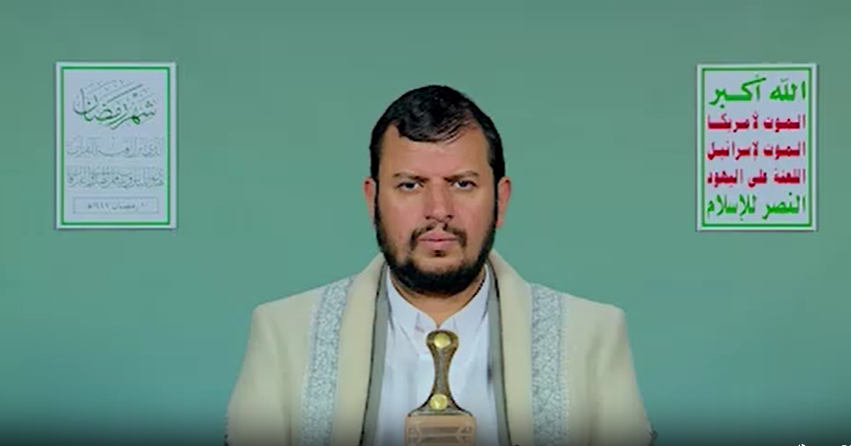
tenth ramadan lecture of Sayyed Abdulmalik Badr al-Din al-Houthi 1447 AH
I seek refuge in Allah from Satan, the outcast.
In the name of Allah, the Compassionate, the Merciful.
Praise is to Allah, Lord of the Worlds. I believe that there is no god but Allah, the Sovereign and the Manifest Truth, and that our master Muhammad is His servant, Messenger, and Last Prophet.
O Allah! Confer Your salat and blessings upon Muhammad and the Family of Muhammad as You conferred Your salat and blessings upon Ibrahim and the Family of Ibrahim. You are Owner of Praise, Owner of Glory! And be pleased with Muhammad’s good companions and all Your righteous servants and mujahidin.
O Allah! Guide us and grant us acceptance, for You are the Hearing, the Knowing; accept our repentance, for You are the Relenting, the Merciful.
Brothers and sisters, peace be upon you and the mercy of Allah and His blessings.
In our discussion of the account of Prophet Musa (PBUH), as presented in the blessed verses from Surah Al-Qasas, we have come to the verse: {‘And when he reached full strength and was ripe, We gave him judgment and knowledge. This is how We reward the good-doers‘}[Al-Qasas 28:14]. In this noble verse and in those that follow, we see how Prophet Musa (PBUH) was in his youth, prior to being commissioned with the divine message.
When he reached the stage of youth, in which his physical, intellectual, and psychological faculties were fully developed, as implied in the verse, {‘And when he reached full strength and was ripe}—reaching a perfect state, in which his mental and inner faculties became fully developed through divine preparation—{We gave him judgement and knowledge‘}[Al-Qasas 28:14]. Thus, upon reaching this stage of youth and the development of his faculties, Allah (Glory be to Him) granted him judgement and knowledge from Himself. This was despite the fact that he lived in an environment incapable of nurturing such divine qualities. He could not have derived them from the Pharaohs, nor from the oppressed people, whose condition had deteriorated to the lowest depths in every respect.
However, Allah (Glory be to Him) prepared him and made him ready; it was He Who granted him this from His own bounty. Among the greatest gifts of Allah (Glory be to Him) was that He granted him judgement. Judgement here means clear insight and sound thinking, psychological balance, and intellectual maturity in the way one views matters and deals with them in a manner that accords with wisdom and justice. It is for a person to have wisdom and, with it, an inner faculty that enables him to weigh matters correctly—by the scales of wisdom and justice. This is an immense and exceptionally important gift because it is among the greatest and most essential qualifications for a person. It perfects him in his humanity on the one hand, and equips him for his practical tasks and responsibilities in life on the other. Although responsibilities vary in degree from one person to another, it remains one of the greatest and most necessary endowments a person needs in his course of life and in his practical responsibilities—especially when these responsibilities are momentous and sacred.
This gift is immense and profoundly important because we all need it. Indeed, one of the most defining qualities in a person is precisely this: to be mature in thought, balanced and disciplined within oneself, to carry clear insight and sound judgement, and to possess the inner faculty that supports uprightness in one’s work, conduct, stances, and outlook.
For example, if a person possesses knowledge and the ability to understand and distinguish between right and wrong actions or between right and wrong positions, yet lacks psychological balance, competence, and the ability to deal based on that, he will not gain any real benefit from it. Such knowledge will remain merely information in his mind, useful for answering a school exam or responding to someone’s question. However, its impact on his inner self, actions, stances, or behaviour is completely absent, with no real effect.
When a person has judgement, he is wise in his knowledge, understanding, and ability to distinguish between things. He is also wise in how he deals with situations, in his psychological reality, and in his actions. He is self-disciplined and upright, acting in a manner that reflects both wisdom and justice. This blessing that Allah bestowed upon Prophet Musa (PBUH) gave him a high level of qualification and capability in his practical path, pursuits, and tasks.
Allah (the Almighty) speaks about wisdom as one of His magnificent gifts. To attain such a blessing, a person is in need of Allah, for one cannot be among those who possess wisdom, sound judgment, and self-discipline unless Allah grants it. It is not something acquired through schooling or human educational training; rather, one also needs Allah (Glory be to Him) for it. We benefit from the wise teachings and guidance Allah has provided, yet even the inward faculty required to live by that guidance is something we need Allah (Glory be to Him) to grant. This is why Allah (Glory be to Him) says in the Holy Quran, informing us of this truth, {‘Allah grants wisdom to whoever He wills. And whoever is granted wisdom is certainly been given much good. But none will be mindful [of this] except people of reason‘}[Al-Baqarah 2:269]. A person is in need of wisdom. If Allah grants you wisdom, it is truly a tremendous gift. It is an essential matter, profoundly important to a person’s human maturity, moral integrity, and right-mindedness, as well as to the way he perceives and handles affairs. This is a profoundly important matter.
This divine gift carries great importance in a person’s practical life and in the significant roles he undertakes. Prophet Musa (PBUH), throughout his life, was directed within a framework of divine preparation towards fulfilling momentous and far-reaching tasks. From childhood to youth, he was under constant divine preparation: Allah was preparing him, shaping him, and fashioning him for an exceptionally great mission. This highlights our need for Allah in such matters; it is an exceedingly important lesson. When we say that one must turn to Allah in order to attain judgement and wisdom, we must also take the means that Allah has established for acquiring them so that He may grant us this favour, for it is part of His vast divine bounty. Although the extent of this gift varies among those to whom Allah grants it, the means of attaining it remain essential, as we will discuss, Allah willing.
{‘We gave him judgement and knowledge‘}[Al-Qasas 28:14]. Musa (PBUH) lived in an ignorant environment, one in which beneficial knowledge and sound understanding could not be readily obtained—neither from the Pharaohs, whose teachings amounted to disbelief and manifest misguidance, nor from the oppressed community, which was entirely subjugated and incapable of offering meaningful intellectual or moral development. At most, within his family circle, he may have gained only limited and basic religious knowledge.
Despite that, Allah granted him knowledge. This encompasses wide-ranging and profound understanding related to his relationship with Allah, his mission, and the realities of life around him. Such knowledge is an essential qualification for what a person requires in life, for the fulfilment of his duties, and for the responsibilities he bears, at whatever level. Without knowledge, a person acts in ignorance, and action born of ignorance leads to serious mistakes, deviations, and harmful conduct.
At the end of this blessed verse, Allah declares, {‘This is how We reward the good-doers‘}[Al-Qasas 28:14]. Here, a constant and enduring divine principle is made clear—an immensely important lesson. {‘This is how We reward the good-doers.‘}. From this passage, we gain insight into the character of Prophet Musa (PBUH). One of his most defining qualities was benevolence—he was among the doers of good. This is a quality of immense spiritual, moral, and human value, and it plays an important role in fulfilling duties and responsibilities.
Benevolence is a vast and comprehensive concept. Among its most significant manifestations in the life of the Prophet of Allah, Musa (PBUH), was his profound concern for the oppressed servants of Allah. He showed immense care for the oppressed and for others as well, and was deeply committed to rescuing them, relieving their distress, doing good for them, removing injustice from them, and attending to their affairs, ensuring their welfare and well-being. This was a remarkably prominent characteristic in the personality of the Prophet Musa (PBUH). We shall speak in greater detail about benevolence, for it encompasses many dimensions of noble character. In order to embody benevolence, a person must possess a number of qualities and exemplify various virtues. We must also consider its roots within the human soul—how these roots are established—for this too is an essential part to consider.
Benevolence was the most prominent characteristic of the Prophet Musa (PBUH) during his youth and at the full maturity of his strength. This demonstrates that he remained unaffected by the environment shaped by Firrawn’s rule. Although he was raised under the care of the royal palace, in a setting saturated with domination, tyranny, oppression, cruelty, and brutality—where Firrawn’s oppression defined the general character of life in Egypt at the time—he stood apart with a completely different quality: benevolence. He showed profound concern for the oppressed, deep compassion towards them, and a determined commitment to repelling injustice against them and providing assistance. He strove, to the best of his ability, to establish justice and uphold truth despite extremely difficult and complex circumstances in which such a role was challenging to fulfil, given the cruelty, severity, and despotism of Firrawn, his people, their governmental apparatus, and their deliberate oppressive policies. His spirit—entirely shaped by benevolence—was not merely an inner emotional state confined within himself, but one that translated it into action. He directed this spirit of benevolence towards the oppressed people in society—the downtrodden, persecuted, and subjugated—actively attending to their needs and striving earnestly to ward injustice off them through decisive and meaningful efforts. He exerted effort and did all that was within his capacity to lift the oppression from them, to address their concerns, to deliver goodness to them, and to alleviate their suffering. Thus, the spirit of benevolence found clear practical expression in his concerns, his conduct, and his actions: He turned towards society, specifically towards the oppressed segment, to care for them and attend to their affairs. Yet, as we previously explained, this took place under extremely complex conditions. Firrawn’s governmental apparatus was founded upon brutality, domination, cruelty, the absence of mercy, and unchecked authority. There was neither responsiveness nor mutual understanding. In such a context, he faced immense hardship and profound difficulty.
The Holy Quran presents to us the profound concept of benevolence and describes the Prophet Musa (PBUH) as one of the good-doers, a defining feature of his character. This attribute encompasses numerous dimensions and aspects. It also represents an entire phase of Musa’s life—a quality that grew, deepened, and became firmly established after his commissioning with the message. This quality persisted in the same way, as is the case with the prophets, who meet Allah at the peak of their spiritual, human, and moral perfection.
When Allah granted him the perfection of his strength—even his physical constitution was remarkably powerful, being strong in body, energy, and physical capability—and bestowed upon him maturity, knowledge, and wisdom, he devoted every faculty and every gift Allah (Glory be to Him) had placed within him to the service of the oppressed. He likewise turned every advantage his circumstances afforded him to their service, for having been raised under the care of the palace of Firaawn, he lived in favourable conditions, occupied a high position, and enjoyed a measure of protection. He did so with great care, dedication, eagerness, attentiveness, and resolute readiness to act. Thus, he was one who excelled in goodness; benevolence was his defining quality.
We also observe that even in this role he consistently demonstrated benevolence and sincere concern for the oppressed in many ways: by doing good to them; offering relief; providing various forms of service; striving to remove injustice from them; addressing their issues, problems, and concerns; and, more broadly, caring for them in every possible way.
From all of this, we discern how vital judgement and knowledge are even in the practice of benevolence. While benevolence itself is a means by which a person attains judgement and knowledge from Allah (Glory be to Him)—for He bestows such gifts upon those who excel in goodness, as He says, {‘This is how We reward the good-doers‘}[Al-Qasas 28:14]—these very endowments are, in turn, indispensable to the proper fulfilment of benevolence itself. In other words, through wisdom, knowledge, and sound judgement in its broader sense, a person is empowered to carry out acts of benevolence on a greater, more meaningful, and more beneficial scale, performing them with utmost correctness and effectiveness. This is a matter of great importance.
Therefore, judgement—encompassing maturity, wisdom, and psychological balance—and knowledge are indispensable even for performing acts of benevolence correctly. In other words, a person who lacks these qualities and acts on the basis of flawed foundations or ignorance may fall into error, particularly in matters about which he has no background knowledge; though he may intervene with the best of intentions, or under the banner of benevolence, his actions can still go astray.
Here we are speaking about benevolence as one of the most prominent qualities of the Prophets of Allah—not only the Prophet Musa (PBUH), but the Prophets in general. It is also an essential quality for all believers. One cannot truly be a believer without embodying benevolence, without being among the benevolent. Indeed, the Quran repeatedly mentions this. Believers are also described as benevolent, though at varying degrees. That is, the rank of the Prophets in their benevolence is supremely elevated—extraordinarily great. Even among the Prophets themselves, there may be distinctions in the degree to which benevolence is manifested in their lives. Among believers as well, there are varying degrees in the levels of benevolence. Benevolence is regarded as one of the foremost noble morals because it encompasses many other forms of noble morals; numerous virtues fall within its scope. Its roots lie within the human being when the motivation is grounded in faith—when it arises from purity of soul and humane feeling—and above all, when it is for the sake of Allah (Glory be to Him) and out of devotion and inward attachment to Him. Furthermore, it holds central importance in one’s spiritual standing and in one’s relationship with Allah (Glory be to Him).
Benevolence, as an inner spirit within the human being, is an inner disposition through which one rises above selfishness and narrow personal calculations, freeing oneself from the confines of self-absorption and private interests. In other words, a person carries genuine concern beyond oneself—sometimes even to the point of prioritising others over oneself, as he shows genuine care for others and thinks of others, especially the oppressed. It is a sign of human elevation in one’s emotions, conscience, and empathy towards others, their pain, and their suffering. Regarding morals, it represents moral perfection. Moreover, benevolence is a quality of faith and a tremendous means of drawing near to Allah (Glory be to Him). It is among the most important characteristics of faith and one of the greatest acts through which a person seeks closeness to Allah (Glory be to Him), thereby attaining His pleasure and a lofty rank with Him. Allah rewards such a person abundantly, beginning with what He grants within the person himself—the inward gifts He bestows upon the benevolent person.
Accordingly, this quality holds all this immense importance: in its faith-based dimension and among the defining characteristics of belief, in its human value, in its moral dimension (among the highest forms of noble morals, encompassing many of the finer aspects of them), and in its impact on life.
Therefore, it is counted among the most essential qualities that every believer needs in their various duties and regarding their diverse roles in this life. Every leader requires this quality. No successful leader can act correctly at any level of responsibility without being endowed with benevolence. Without it, he loses one of the most essential attributes, which represents a significant deficiency in his character and capabilities, often resulting in numerous challenges in his life. The position in which a person holds influence within society—whether a social role, a leadership role, or any other role—requires that he embodies benevolence, possess this quality, and act upon it correctly. Moreover, religious scholars, as well as others, need this quality. The same applies to those who seek knowledge, as benevolence is one of the most essential attributes for acquiring more knowledge. Alongside their educational pursuits and commitment to reading, it is equally important to nurture this aspect: that they become individuals who practise benevolence. The entire community—everyone, all people, all Muslims, men and women alike—needs this quality. They should free themselves from the grip of selfishness and personal calculations, and instead cultivate concern for those around them, especially the weak and needy. This quality should also be reflected generally in how people interact with each other. Indeed, this is an important aspect.
In fact, Allah (Glory be to Him) has made striving in His cause a significant aspect of benevolence because it involves repelling evil and the evildoers and protecting people from their harm. One of the most important dimensions of benevolence is working to remove oppression from people, to save them from injustice, to rescue them from tyranny, and to repel evil from them. This objective is achieved through striving in the path of Allah. For this reason, Allah (Glory be to Him) has said in the Quran, {‘As for those who strive for Us, We will surely guide them to Our paths. And Allah is certainly with the good-doers‘}[Al-‘Ankabut 29:69]. Thus, this verse concludes by emphasising that benevolence is also required in confronting oppression and tyranny.
In His statement, {‘This is how We reward the good-doers‘}[Al-Qasas 28:14], Allah clarifies for us one of His established divine laws concerning the recompense of those who embody benevolence. Indeed, Allah rewards them, and foremost among His rewards is judgement and knowledge. Yet this is not all. Among the graces of Allah and His care for them in their lives are blessings far more expansive than that. Nevertheless, this particular gift is profoundly significant: When a person is granted knowledge and wisdom from Allah, it is a great bestowal, an immense recompense, a divine prize of the highest order—one that every human being aspires to.
There is also profound significance in the pairing of knowledge and wisdom. If a person acquires different kinds of knowledge and learning without wisdom, his performance will be deficient and, to a large extent, potentially negative. Likewise, wisdom itself requires knowledge and understanding to function properly.
Benevolence is essential for all people in their respective roles and professions—physicians, security personnel, and indeed all individuals. Every task and occupation requires the spirit of benevolence, and its absence constitutes a serious deficiency.
Here, the benevolence of Musa becomes clearly evident—particularly in his profound concern for the oppressed—despite the extremely difficult circumstances in which he lived. He distinguished himself through this commitment to benevolence even before prophethood, to the extent that he became a source of hope for the oppressed. He was recognised among them for his benevolence, for what he offered them, and for the care he consistently demonstrated towards their affairs. This was evident in tangible action. It was not merely an internal psychological state confined within the palace walls, detached from reality. Rather, it extended into practical engagement—concrete concerns, real activities, and meaningful efforts undertaken on their behalf.
However, all of this unfolded amid extraordinarily harsh conditions: his confrontation with the Pharaohs, with public authorities, with their cruelty and despotism, and with a system fundamentally structured to direct injustice, oppression, and subjugation—through every possible means—against the oppressed segment of society. In such a context, Musa faced circumstances of profound and exceptional complexity.
Allah willing, we shall continue in the next lecture to further explore this topic in the light of the blessed verses.
We ask Allah (Glory be to Him) to grant us success in seeking what pleases Him. O Allah, have mercy on our virtuous martyrs, heal the wounded among us, set free our captives, and grant us victory. You are the Hearer of Prayer! May Allah (Glory be to Him) accept our fasting, night prayers, and good deeds!
Peace be upon you and the mercy of Allah and His blessings.