
Tribes in Northern Yemen Vow Military Readiness, Link Stance to Independence Anniversary
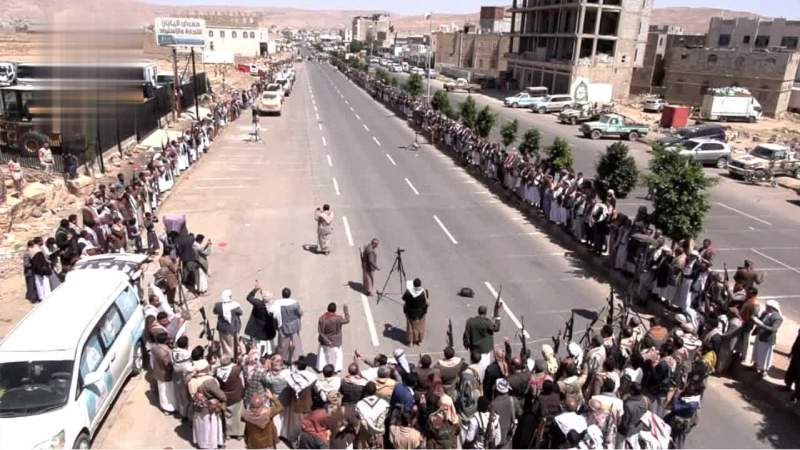
Tribal leaders in the Thula district of Amran governorate have held a large armed gathering, reiterating their full readiness to confront any potential aggression by US-Israeli enemies or their proxies.
Participants stressed that the current challenges facing the nation necessitate unified ranks and a strengthened internal front. They declared that the tribes of Yemen, with those of Amran at the forefront, would lead the defense of national sovereignty and an independent national will.
The gathering also expressed the tribes’ readiness to supply battlefronts with fighters, funds, and weapons, and to continue confronting all projects aimed at undermining Yemen’s unity, security, and stability. They affirmed that liberation and independence is an irreversible choice until complete victory is achieved.
The event underscores the enduring role of tribal structures in mobilizing support and manpower for the Sana’a-based authorities, linking local loyalties to the broader national narrative of resistance against external intervention.
In recent years, foreign military and political influence has expanded across southern and eastern Yemen, particularly through American, British, Saudi, and Emirati involvement in strategic ports, islands, and coastal areas. Sana’a describes this presence as a renewed form of colonial control, similar in intent—though different in method—to the British occupation that ended on 30 November 1967.
As tensions grow over efforts to fragment Yemen and install foreign-aligned authorities, the anniversary of independence has become a focal moment for articulating national unity and resistance to a “new occupation” with interconnected objectives involving regional powers and the Zionist entity.