
Twelfth ramadan lecture of Sayyed Abdulmalik Badr al-Din al-Houthi 1447 AH
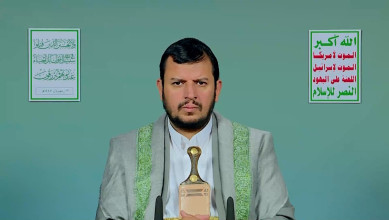
I seek refuge in Allah from Satan, the outcast.
In the name of Allah, the Compassionate, the Merciful.
Praise is to Allah, Lord of the Worlds. I believe that there is no god but Allah, the Sovereign and the Manifest Truth, and that our master Muhammad is His servant, Messenger, and Last Prophet.
O Allah! Confer Your salat and blessings upon Muhammad and the Family of Muhammad as You conferred Your salat and blessings upon Ibrahim and the Family of Ibrahim. You are Owner of Praise, Owner of Glory! And be pleased with Muhammad’s good companions and all Your righteous servants and mujahidin.
O Allah! Guide us and grant us acceptance, for You are the Hearing, the Knowing; accept our repentance, for You are the Relenting, the Merciful.
Brothers and sisters, peace be upon you and the mercy of Allah and His blessings.
In our discussion of the story of Prophet Musa (PBUH), we concluded our previous lecture by reflecting on the blessed verses of Surah Al-Qasas: {‘Once he entered the city, unnoticed by its people. There he found two men fighting: one of his own people, and the other of his enemies. The man from his people called to him for help against his foe. So Musa punched him, causing his death. Musa cried, “This is from Satan’s handiwork. He is certainly a sworn, misleading enemy.” He pleaded, “My Lord! I have definitely wronged my soul, so forgive me.” So He forgave him, [for] He is indeed the Forgiving, the Merciful. He [Musa] said, “My Lord, for the favour You have bestowed upon me, I will never be an assistant to the criminals”‘}[Al-Qasas 28:15-17].
We mentioned how Prophet Musa (PBUH) was always eager to aid the oppressed, carrying the spirit of benevolence in its most refined form. Before his mission, he was among the righteous servants of Allah (the Almighty), characterised by deep faith and benevolence, and Allah granted him wisdom and knowledge.
We also discussed how all his pursuits and actions were characterised by benevolence. He carried out these activities with the spirit of benevolence, driven by sincere devotion to Allah, the Almighty. We also shed light on the blessed Quranic verse: {‘The man from his people called to him for help against his foe‘}[Al-Qasas 28:15]. The oppressed man called upon him, asking for his intervention to rescue him from that oppressive and arrogant transgressor. This serves as a lesson for us, showing how Prophet Musa (PBUH) took the initiative, despite being in extremely difficult circumstances and despite the anticipated consequences of his actions. These are the very consequences that often lead people to shirk responsibility, abandon the right position, and evade taking a clear and explicit stand against the tyrants and oppressors of this era. A person may anticipate being killed or something less than that, such as imprisonment or any other form of persecution. Everything was conceivable for Musa’s intervention in that manner.
Our Islamic Ummah—which believes in Allah, His messengers, and His books—is the Ummah of the Holy Quran, which offers immense guidance through the stories of many prophets (Peace be upon them). It is a book of broad divine guidance that contains explicit commands from Allah (Glory be to Him) and clear, firm promises for those within the Ummah who respond to Allah (Glory be to Him) and move in accordance with His guidance. The Holy Quran also sets out profound truths about the reality of enemies—tyrants and arrogant oppressors—and provides the Ummah with detailed insight into the nature of its struggle with them: insight into their psychology, their conduct, their weaknesses, and the vulnerabilities they exploit, including weaknesses that arise within the Ummah itself due to its own negligence and failings. All of this is addressed extensively in the Holy Quran.
This Ummah finds itself in a dire condition—a state of weakness and subjugation—because it has weakened itself, despite possessing all elements of power and immense capabilities. Had it drawn upon these resources, spiritually and materially, and acted decisively and responsibly, it would have been—as Allah (Glory be to Him) promised—the foremost of nations: calling to what is good, enjoining what is right, forbidding what is wrong, and striving to confront tyranny on a global scale. Instead, centuries of neglect have left it in a state of weakness, fragmentation, and humiliation. As a result, it has become fair game for the worst and most vindictive enemies. These are enemies upon whom Allah has decreed humiliation and abasement, yet they now prey upon those most vulnerable within this Ummah. This is starkly evident in the case of the oppressed Palestinian people and the gravity of their victimhood, especially what unfolded during the two-year period of the Israeli assault on the Gaza Strip. The brutality and savagery of that assault shocked the global conscience and stirred many peoples into action. Across the world, countless individuals were moved by moral outrage to protest and demonstrate, stunned and appalled by what they were witnessing. Many were also shocked by the scale of inaction and passivity shown by those Arabs and Muslims surrounding Palestine—peoples, governments, regimes, and armies, including elites, scholars, the religiously committed, and the educated. It is profoundly distressing.
How many times have the Palestinian people cried out for help, whether in the Gaza Strip or elsewhere? For the past two years in Gaza, the cry has risen every single day, asking: ‘Where are the Arabs? Where are the Muslims?‘ It has been a plea—a truly heartrending cry—rising from intense pain, from an overwhelming and brutal injustice, from beneath the rubble, from among the dead and the wounded—children and women. The desperate cries rise from women and children, from the young and the old alike. It is as though this Ummah—this vast Ummah of two billion Muslims—has no human feelings or human sensitivity; as though it has no connection to the Holy Quran or to the Messenger Muhammad (PBUH&F) as prophet, leader, teacher, and guide; and as though it stands distant from the path of Islam, which raises the Ummah to establish justice, to enjoin what is right, to forbid what is wrong, to stand against tyranny and oppression, to support the oppressed and the persecuted, to nurture upon benevolence in all that what it entails (including noble morals, uprightness in conduct and action, being mindful of Allah, deep concern for the plight of the oppressed, and serious and committed engagement with their causes). This is a deeply saddening situation.
We also spoke about the Quranic warning—found in some of the verses we recited—against dereliction and the abandonment of responsibility. This is a time in which the Ummah bears a grave duty to take a clear stance and to act with seriousness, for the danger is not confined to the Palestinian people alone, but extends to the Ummah as a whole.
The Israeli enemy is an enemy to this Ummah across all its peoples and countries. However, it seeks to complete its battle decisively against the Palestinian people first so as to turn its attention, at ease and undistracted, to the rest of the peoples. Indeed, it already carries out aggressive actions and targets other nations, as is evident in its continuous actions against Lebanon and Syria, as well as its ambitions regarding the Levant in general, Iraq, Egypt, and large parts of the Arabian Peninsula—that in terms of direct occupation. As for overall control, in all its dimensions and extensions, it seeks complete domination over the entire region and targets the Ummah as a whole, intending to transform this geographical position into a base for global control, according to the goals of the Zionist-Jewish movement and in line with their operational plans and their criminal, satanic, aggressive goals on a global scale.
A prophetic Hadith states, ‘Whoever does not care about the affairs of Muslims is not one of them, and whoever hears a Muslim calling out, “O Muslims!” and does not respond to him is not one of them.‘ Today, the call for help is not the appeal of a single voice, but the plea of an entire people in Palestine, and also the plea of oppressed and subjugated nations as a whole. So where is the spirit of benevolence, of faith, of dignity, of faith-driven honour, and of human integrity?!
This deficiency in the reality of the Ummah indicates a very serious deficiency in purifying souls and in faith-based upbringing. It also indicates a grave deficiency in establishing major principles—among the most important principles of Islam—and in instilling great, fundamental, and essential Islamic values.
Therefore, neglecting these principles, values, and morals, as well as shirking major, significant, and important responsibilities is a real danger to the Ummah. It poses a genuine threat to the Ummah in many aspects, including a threat to its worldly life. Indeed, Allah (Glory be to Him) is entirely free of need from the worlds: He stands in no need of the Muslims, of the Arabs, or of any people whatsoever; He is not in need of their deeds, their acts of worship, their striving, or even their faith. He is the All-Sufficient, the Praiseworthy—glory be to Him. What He has ordained for us, guided us to, commanded us, directed us towards, and entrusted to us of responsibilities is entirely for our own benefit, for it is we who stand in utter need of it. We need it to be able to live in this world with honour, generosity, human dignity, and spiritual strength so that our lives may be balanced and righteous in all aspects. It is also to attain Allah’s pleasure and secure our eternal future in the Hereafter, for we are a nation that believes in the Hereafter, in Jannah and the Fire, and in accountability and recompense. It is of utmost importance for every Muslim to be concerned about this matter.
Indeed, this negligence in the reality of the Ummah is extremely dangerous. It is among the most important matters that the Ummah must turn attention to, while in the month of fasting—the month of Ramadan—whose most significant fruit is expressed in the verse, {‘so that you may become mindful of Allah‘}[Al-Baqara 2:183]. We have to be mindful of Allah in this domain, where there is major negligence on the part of the Ummah. In fact, the Ummah faces a real confrontation with enemies who target it on every front: through their satanic, corrupting, and deceptive soft war and through their hard military and security war, which kills, destroys, devastates, occupies, plunders, and more. These are two parallel tracks pursued by the enemies. The satanic, corrupting, and misleading soft war targets values, morals, awareness, and understanding.
In fact, the enemies work to lead the Ummah astray, to seduce it, to corrupt it, and to confuse it. They seek to influence public opinion, shape people’s thinking, and distort their perception of matters. Beyond that, they seek to condition the Ummah and curtail any response from it, regardless of what they inflict upon it. This way, the Ummah becomes conditioned to them, and it lacks any clear vision of what it should do to confront their evil and danger, no matter what they do to it or how utterly horrific the crimes they commit against its peoples.
And what can be worse than the crimes they have committed in the Gaza Strip in Palestine?! They have excelled in perpetrating the most heinous atrocities, even deliberately publishing scenes of them that are utterly horrific. The enemies themselves have published many forms of their crimes, for they are not only focusing on what they are doing in Palestine, but they are also targeting this Ummah in its human dignity—and even the very essence of humanity within people. In fact, they want to strip a person of his innate humanity so that he becomes devoid of pride, dignity, honour, and human conscience, placing him in a state of domesticated submission where nothing truly important can provoke or stir him—neither injustices, crimes, disasters, nor attacks on his religion, values, morals, dignity, honour, family, or sacred symbols. Ultimately, all of these crimes that people watch or listen to become ordinary news: When they see the most heinous crimes with their own eyes on television, they watch without any human conscience or feeling, as if it were a routine scene—like any completely ordinary scene. In that case, no reaction arises from them, and their emotions remain unmoved by anger, indignation, outrage, or even the resolve to take a stand. This represents a grave danger to the Ummah. Allah (Glory be to Him) has repeatedly, abundantly, and extensively underscored these truths in the Holy Quran.
Therefore, the nature of the conflict with the Zionist Jewish enemy and its instruments—whether the Zionist entity, America, Britain, or those aligned with them—constitutes one of the most critical realities this Ummah must understand, interpret in the light of the guidance of the Quran, and realise through the manifestations and examples of the Quranic truths. Indeed, the Quranic truths are numerous, clear, and continuously evident on a daily basis, and their significance cannot be overstated. If the Ummah fails to comprehend the nature of this conflict—a truly regrettable situation—its reality could deteriorate to the point of losing its human conscience, its dignity, its faith-driven sentiments, and its sense of responsibility at all levels: religious, human, and moral. One then finds oneself unmoved even when witnessing events a hundred, or even a million, times more severe than the scene that provoked the Prophet Musa (PBUH), when he saw the arrogant oppressor attack one of the oppressed. Yet, as a Muslim, one may witness—or hear of—the most heinous crimes committed by the enemies, but he remains unmoved.
The dire state in which the Ummah may find itself occurs when the Zionist Jews succeed in assuming an educational role over the Ummah: They educate it—instead of the Quran, instead of the teachings of Islam—to become conditioned, to fall into human bankruptcy, and to lose humane feelings. They kill the human conscience of its people and extinguish their spiritual faith so that it becomes an Ummah that is not provoked by wrongdoing, tyranny, or criminality. Moreover, it becomes an Ummah that takes the disbelievers, the tyrants, and the worst criminals as allies, drawn to them and directing its loyalty towards them. This is an extremely dangerous situation, one that previously led the Children of Israel astray, bringing them to such a level that they even lost their eligibility to bear the divine message. They were forsaken and expelled from the realm of divine mercy, and Allah replaced them with others.
The spirit of benevolence in the Prophet Musa (PBUH) was manifested in his initiative to rescue the oppressed, despite the expected consequences that might result. In the same story, as mentioned in the blessed verse, Musa (PBUH) moved to save the oppressed man who called out for help and to repel the arrogant aggressor from him. However, what happened was unexpected for the Prophet Musa (PBUH); when he struck the arrogant aggressor—it is said that he punched him with the fist of his hand—to push him away from the oppressed man, the outcome was unforeseen for the Prophet Musa. The result was {‘causing his death‘}[Al-Qasas 28:15]. In other words, that punch was fatal, resulting in the death of the aggressor. That represented a critical and severe development in the situation, at an inopportune moment, which constituted the essence of the issue.
This means that Prophet Musa (PBUH) did not commit a crime in acting against that criminal; he struck a criminal—one of the killers and aggressors. Thus, there was no wrongdoing in what happened to that oppressive aggressor, who himself belonged to a tyrannical, arrogant, unbelieving, and criminal power that even slaughtered children without mercy. Nevertheless, Prophet Musa (PBUH) was deeply connected to Allah and was one of His devoted servants. What he was striving for was not merely impulsive reactions carried out randomly or without a higher purpose.
This is why, even before this incident, he had been involved in many acts of service: rescuing the oppressed, striving to help them, and extending to them every form of benevolence across the various spheres of their lives. He would comfort the poor, relieve the distressed, assist the needy, ward off harm from someone, and rescue the wronged—among many other acts of benevolence. This was not the first time Prophet Musa (PBUH) had intervened in a difficult situation. He might well have been confronting such circumstances regularly, perhaps even daily. Yet Allah had granted him sound judgement and knowledge, and he acted in accordance with profound wisdom and true justice. This particular event occurred at the culmination of a specific phase, following a long period of mounting. He faced this incident at a time when tension between him and Firrawn and his people had already escalated; for this reason, he was not seeking mere reaction, nor acting randomly. His major aim was the deliverance of a nation, the rescue of the oppressed, and the transformation of an entire situation. And he was very careful to ensure that his actions were directed by Allah’s guidance and support, in service of that great aim: the deliverance of the oppressed. He was not seeking to become consumed by a single isolated problem, nor to engage in a final and decisive clash by striking one individual, as though that alone would resolve the matter.
Therefore, regarding the unintended outcome—since the killing of that Coptic man was unintended—Musa said, {‘This is from Satan’s handiwork. He is certainly a sworn, misleading enemy‘}[Al-Qasas 28:15]. He was referring to that unintended outcome, arising from the incident, which occurred in a situation where the assaulted man urgently called upon Musa for help—perhaps in a way that stirred a strong emotional response and heightened the intensity of Musa’s reaction.
This carries an important lesson for us: In the path of striving for Allah’s sake—in upholding truth and equity, in supporting the oppressed and the wronged, and in confronting tyranny and arrogance—the course of action must be in accordance with divine guidance and teachings, oriented towards major objectives and a significant cause, and carried out in a way that genuinely serves those major objectives and that significant cause.
Within that framework, action should not be driven by random, impulsive, or poorly considered reactions. Rather, it should be purposeful—serving the cause and the position one stands for — grounded in divine guidance and support, and consistent with wisdom, truth, and justice.
This is a foundational principle and an essential set of guidelines for practical conduct. When Satan despairs of turning you away from a just and rightful stance altogether, or of pushing you to abandon your responsibility, he shifts to another strategy: influencing the way you carry out the details of your actions. That is, Satan operates from multiple angles, as expressed in this blessed verse: {‘I will approach them from their front and their back and from their right and their left‘}[Al-A’raf 7:16-17], for he is {‘certainly a sworn, misleading enemy‘}[Al-Qasas 28:15]. He may attempt to target you in your practical conduct by influencing the way you act and carry out your work—diverting you in random directions, leading you into a haphazard approach, or prompting you to overstep the demands of the situation in ways that do not serve the great and sacred cause you are striving to uphold, such as rescuing the oppressed, defending those who are wronged, and the like.
We find in this a vital lesson for us: {‘Musa cried, “This is from Satan’s handiwork. He is certainly a sworn, misleading enemy”‘}[Al-Qasas 28:15]. In connection with this point, consider how Prophet Musa (PBUH) responded—a point we shall, Allah willing, examine more fully in its proper context in forthcoming lectures—when Firrawn addressed him after he had returned bearing the divine message, saying, {‘Then you did what you did, being [utterly] ungrateful!” Musa replied, “I did it then, lacking guidance”‘}[Ash-Shu’ara 26:19-20]. Here, {‘lacking guidance‘} does not mean deviation from the truth or departure from the rightful stance. Rather, it refers to the absence of a clear and established project—the foundational project through which the cause is properly and effectively served.
At that stage, the Prophet of Allah, Musa (peace be upon him), was striving for precisely this: that his efforts and actions be grounded in a divinely guided project that would yield the greatest outcomes in attaining Allah’s pleasure, drawing closer to Him, and serving and rescuing His oppressed and wronged servants. However, he did not yet possess such a project; it came later. In other words, he did not then have that project at this level of clarity. But when Allah (Glory be to Him) commissioned him with the message, He granted him the great and foundational project from which major results followed. Among its central and defining objectives was the deliverance of those oppressed people, and through it, that noble aim was realised at the highest level. We shall, Allah willing, speak about this further in forthcoming lectures. We shall also draw attention to a problem that sometimes arises in the undisciplined conduct of some unaware followers—those who fail to recognise the importance of different stages and the particular demands and requirements of each stage in serving great causes, and consequently act in a random and undisciplined manner.
When he pleaded, {‘My Lord! I have definitely wronged my soul, so forgive me‘}[Al-Qasas 28:16], we see that he turned to Allah seeking forgiveness, even at the level of what may be described as a tactical error that led to an unintended outcome. Notice that there was no crime in the usual sense for which he sought forgiveness, since he had taken a stand for what was right—an action that was correct, necessary, and truly great in itself. However, regarding that unintended mistake—the tactical error, namely, the blow that caused the unintended death of that arrogant oppressor—and the subsequent complications and repercussions affecting his practical performance and circumstances, particularly the potential limitation on his ability to continue his mission in the same manner, he regarded it as something for which he should turn to Allah and seek forgiveness. He was also fully aware of the importance of rectifying mistakes and exercising caution, even at this level: tactical errors in practical methods and performance, including even the unintended consequences that may arise from such errors.
Thus, he turned to Allah (Glory be to Him) because he was very careful to carry out his duties correctly, within the framework of the guidance and support granted to him by Allah (Glory be to Him). This, indeed, is a profound lesson in practical conduct. Yet despite all of this, it may well have been part of Allah’s divine plan to prepare him for a transition to a new stage—and we shall discuss it in due course. He also faced an additional difficulty, after which he entered a new stage in which he was compelled to leave Egypt entirely. That too, within Allah’s plan, was one of the preparatory stages through which He readied him for that great project and the major mission of being entrusted with the divine message.
That concludes our lecture for today.
We ask Allah (Glory be to Him) to grant us success in seeking what pleases Him. O Allah, have mercy on our virtuous martyrs, heal the wounded among us, set free our captives, and grant us victory. You are the Hearer of Prayer!
Peace be upon you and the mercy of Allah and His blessings.