
US Military Assessments Acknowledge Increased Sophistication of Yemeni Air Defenses
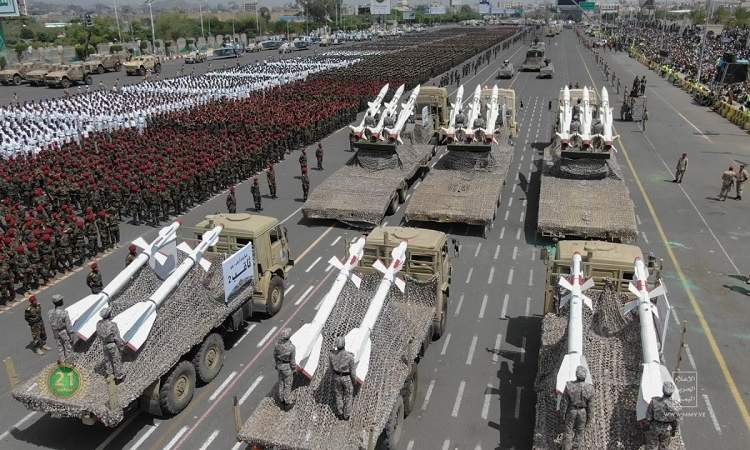
A new report from the American military-focused publication Task & Purpose reveals a shifting assessment within US defense circles, indicating that Yemeni air defense capabilities are more advanced and robust than previously estimated by the Pentagon.
This reassessment follows a series of operations where US forces encountered significant difficulties during missions in Yemeni airspace. According to the report, a retired US Air Force officer and former B-52 test pilot stated that recent operations over Yemen have proven the local air defenses to be more sophisticated and complex than US military planners had presumed.
The officer indicated that the ability of Yemeni forces to detect and engage aerial targets, including US aircraft, has established a new operational calculus for Washington. He confirmed that the Yemeni air defense systems make direct air strikes “more hazardous than previously imagined,” noting that US pilots are now forced to employ evasive maneuvers in Yemeni airspace that were not necessary in prior years—a sign of evolving Yemeni surveillance and interception capabilities.
The Task & Purpose report suggests that these developments have pushed the United States to reevaluate its tactical approaches in the Red Sea and Gulf of Aden. This comes after Yemeni Armed Forces demonstrated a proven capacity to counter US drones, cruise missiles, and surveillance systems in ways that have complicated operational planning at the Pentagon.
Analysts note that the report highlights a concern in Washington: the continued advancement of Yemeni air defenses could potentially restrict US military freedom of movement in the region. This shift in US assessment underscores the growing challenge posed by the Yemeni-based forces and their success in imposing a more complex and costly operational environment on one of the world’s most advanced militaries.
Since the onset of the start of the Israeli genocidal war against Gaza, Yemen has repeatedly demonstrated its capacity to challenge international maritime security and air operations. Their possession and use of drones, cruise missiles, and ballistic missiles have posed a persistent threat, compelling the United States and its allies to maintain a continuous military presence in the region for counter-measures.