
Second Ramadan lecture of Sayyed Abdulmalik Badr al-Din al-Houthi 1447 AH
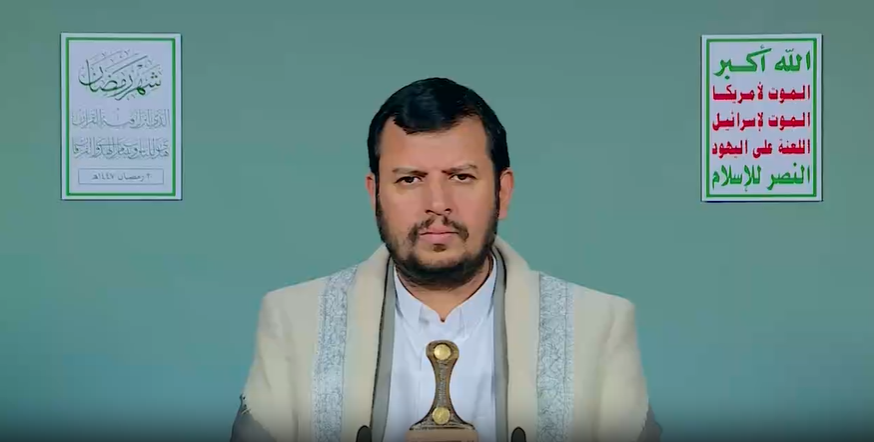
I seek refuge in Allah from Satan, the outcast.
In the name of Allah, the Compassionate, the Merciful.
Praise is to Allah, Lord of the Worlds. I believe that there is no god but Allah, the Sovereign and the Manifest Truth, and that Muhammad, our master, is His servant, Messenger, and Last Prophet.
O Allah! Confer Your salat and blessings upon Muhammad and the Family of Muhammad as You conferred Your salat and blessings upon Ibrahim and the Family of Ibrahim. You are Owner of Praise, Owner of Glory! And be pleased with Muhammad’s good companions and all Your righteous servants and mujahidin.
O Allah! Guide us and grant us acceptance, for You are the Hearing, the Knowing; accept our repentance, for You are the Relenting and the Merciful.
Brothers and sisters, peace be upon you and the mercy of Allah and His blessings.
During previous Ramadan seasons, we spoke about the distinctive features of the Quranic narratives, the importance of storytelling, and the history of major events that have occurred in human society. We reflected on how successive generations can benefit from these accounts—drawing lessons and insights from them, gaining an understanding of the laws of Allah (Glory be to Him), and appreciating other important domains. We also emphasised the significance of this subject for individuals and human societies alike, particularly in relation to biographies, narratives, historical events, and chronological records, for a variety of purposes.
In the present age, this area has developed significantly. This is reflected in artistic production, particularly in the sphere of performance, acting, and the dramatisation and re-enactment of historical events. In general, this area remains a matter of great importance to humanity.
However, the narratives contained in the Quran possess unique qualities that set them apart from all the stories preserved by human societies about the past—whether in written and documented history or in recorded accounts of historical events rich in lessons and insights.
At the forefront of the distinctive qualities of the Quranic narratives is that their source is Allah (Glory be to Him), the Knower of the unseen and the seen, whose knowledge encompasses completely all that has occurred, including the deeper realities and contexts behind historical events. More than that, Allah (Glory be to Him) is the One Who governs the affairs of the heavens and the earth. His governance plays a central and decisive role in the transformations and events of this worldly life—through the divine laws and through His intervention as part of His divine management. He (Glory be to Him) knows what the human soul hides; even the causes, motives, and psychological dimensions are fully encompassed within His knowledge: He is the All-Knowing of what is concealed within hearts.
Therefore, one of the essential prerequisites in transmitting historical events or recounting the stories of past nations or prominent figures in the course of human history is accurate knowledge of what truly took place. Regarding this matter, Allah’s knowledge encompasses all things. He (Glory be to Him) is the All-Wise, Who conveys to us the most important elements we require from those events, in accordance with the dictates of His divine wisdom. He knows us intimately and is fully aware of our circumstances and of what we need for guidance in the reality of our lives. Thus, He presents this to us as part of His guidance for us.
Moreover, regarding transmission, there has often been considerable confusion and serious misrepresentation within human society concerning history, biographies, narratives, and related matters. This is a well-known and widely acknowledged reality. Nonetheless, what Allah (Glory be to Him) conveys and presents to us within the framework of His guidance is truth in its purest form—free from every corrupting influence: It contains no falsehood, fabrication, myths, superstitions, or slander against anyone. It is unadulterated truth.
In addition, the very manner in which it is presented contains guidance; it even offers guidance in its presentation. The content He presents to us is guidance of profound importance. Therefore, what He presents to us is purposeful and beneficial, delivered within the scope of Allah’s guidance for us and offering proofs that affirm important truths. We need to become conscious of these truths, to attain certainty regarding them, and to comprehend them fully. For this reason, Allah (Glory be to Him) has said, {‘There was certainly in their stories a guiding example for those of understanding‘}[Yusuf 12:111]. Indeed, He presents to us the very points that contain the lesson—the matters in which we are most in need of meaningful lessons and insights.
The significant lessons in the Quranic narratives are diverse, but they are all of great importance. Foremost among them are those that relate to knowledge of Allah (Glory be to Him). Among the greatest and most profound benefits of the Quranic narratives is that they deepen and enrich our knowledge of Allah (Glory be to Him). Through these lessons, trust in Allah (Glory be to Him) is strengthened. The truths He presents to us provide us with clear evidence that Allah (Glory be to Him) is dominant over His command and true to His promise, and that He is the Almighty, the Irresistible, the All-Wise, the All-Aware. They also contain profound lessons about the mercy of Allah and extensive lessons regarding the knowledge of Allah (Glory be to Him).
Similarly, the morals conveyed extend across broad and far-reaching domains, including even faith-based responsibilities, such as striving in the path of Allah, working to establish equity, confronting tyranny, and fulfilling other essential obligations. These domains also encompass knowledge of Allah’s laws, of the events, of life transformations, and of the signs that unfold and become manifest within them.
The Quran describes these accounts as {‘a guiding example for those of understanding‘}[Yusuf 12:111], because people of sound intellect truly benefit from what the Holy Quran presents of the histories of the Prophets and Messengers, of the peoples and nations, and of the personalities whose stories it recounts. The Holy Quran offers extensive and valuable material in this regard: It presents both elevated models of faith and contrasting models that followed the path of tyranny and the path of Satan—a path of deviation and falsehood. It even records their words, revealing their mentality, their motivations for opposing truth and guidance, and the barriers they erect to prevent people from believing in Allah (Glory be to Him).
Within the rich and varied Quranic narratives, considerable attention is devoted to a story of great historical importance, abundant in lessons and morals and closely related to our contemporary reality, conditions, and lived events: the story of the Prophet Musa (PBUH). It appears in the Holy Quran more frequently than any other story and contains significant, profound, and numerous lessons and morals that we are in urgent need of at this stage, as the Ummah faces grave dangers and challenges and finds itself in conflict with the very enemies whose counterparts existed in that historical era—the era of Prophet Musa (PBUH) and his conflict with Firaawn. In fact, these lessons were among the most important lessons in their own history.
This contains a lesson for us, and also a lesson for them as well: that the lessons which truly benefit us (with all the morals they contain, the profound truths they carry, and the broad and varied guidance within them) are drawn from the history of our enemies we confront in this era. They have reached a level of tyranny that surpasses that of Firaawn in his oppression and arrogance—even though certain outward forms and labels may differ. Allah (Glory be to Him) has said concerning Firaawn’s tyranny, {‘Indeed, Firaawn [arrogantly] elevated himself in the land ‘}[Al-Qasas 28:4]. Yet regarding the haughtiness, tyranny, and arrogance of the Jews, Allah says in the Holy Quran, {‘And We warned the Children of Israel in the Scripture, “You will certainly cause corruption in the land twice, and you will become extremely arrogant”‘}[Al-Isra 17:4]. Thus, their arrogance is described in terms even greater than those used for Firaawn: {‘You will become extremely arrogant‘}[Al-Isra 17:4].
In fact, given the expertise and resources the Jews possess, the favourable circumstances available to them, and the vast technological capacities of this era, the corruption they practise renders their tyranny—in scale, effectiveness, magnitude, and global reach—greater than that of Firaawn.
Drawing lessons from the history of these enemies is therefore vital for us, and it offers a crucial insight for us and a profound warning for them. This is the stage in which the tyranny of the Jews has surpassed the tyranny of Firaawn.
The story of the Prophet of Allah Musa (PBUH) was described by the Martyr of the Quran (May Allah be pleased with him) when he said, ‘It is something needed by every person who bears the name of faith and piety, so that he may draw from it the great lessons that strengthen their trust in Allah: that Allah is true to His promise and does not abandon His devoted servant and that He is All-Powerful, Supreme, All-Knowing, the Compeller, and Prevailing over His command.‘ He also mentioned, ‘The life of the Prophet Musa (PBUH) offers countless lessons and morals and that his story appears frequently throughout the Holy Quran. From this repeated emphasis on his story with Firaawn, we can understand that this issue will continue to be a reality for us.‘ Indeed, the struggle continues with those who falsely claim to be followers of Musa and Isa, while their conduct reflects Firaawn’s tyranny—even surpassing that of Firaawn himself.
Our journey into this compelling and important story, rich in lessons and insights, begins with the blessed verses of Surah Al-Qasas, which presents the story to us from its very beginning.
Allah (Glory be to Him) says in the Holy Quran, in Surah Al-Qasas, {‘In the Name of Allah, the Compassionate, the Merciful. Ṭa-Sin-Mim. These are the verses of the clear Book‘}[Al-Qasas 28:1-2]. The Holy Quran is the Book of Allah, and it makes truths clear to us—truths supported by historical evidence, with manifestations that continue to appear even in the future. Indeed, it presents realities from the past that have already occurred, as well as truths in the present and those yet to come. It clarifies truths through diverse methods, and this is one of the Quran’s methods of conveying the essential truths that we must know and hold with certainty.
{‘We narrate to you [O Prophet] part of the story of Musa and Firaawn in truth for people who believe‘}[Al-Qasas 28:3]. The phrase {‘We narrate‘} makes it clear that the source of this story is Allah (Glory be to Him). He presents it to us through His blessed Book as part of His guidance to His Prophet and Messenger Muhammad (PBUH&F) and to the believers throughout the ages—indeed, as guidance offered to all humanity.
The words {‘to you‘} indicate that the recipient of this divine revelation—this recitation, this guidance, this narrative—is the Seal of the Prophets, the Messenger of Allah, Muhammad (PBUH&F). In fact, he is guided by Allah’s guidance and benefits from what he receives by gaining light, knowledge, insight, and increased certainty and awareness. From the lives of the prophets, he also draws inspiration for what he needs in his practical journey, in fulfilment of his sacred mission, and in his striving to guide humankind.
{‘Part of the story of Musa and Firaawn in truth for people who believe‘} means that what is being recited here is a portion of the story of Musa and Firaawn—an extraordinary and momentous account, rich with profound lessons and deeply significant insights.
Musa (PBUH) stands as a model of Allah’s mercy towards His servants, of kindness to people, of goodness, and of confronting tyranny, arrogance, and oppression. Musa embodied the divine values throughout his life: in the period before his prophethood, during the stage of preparation for his great mission, and in the stage that followed, from the very outset of carrying out his noble prophetic task.
The phrase {‘part of the story of Musa and Firaawn‘} indicates that only a portion of their story is presented. Indeed, the Holy Quran offers us selected exemplary models, highlighting the most significant aspects of their long and eventful history—a history that unfolded over many years and involved numerous major events. The Holy Quran deliberately focuses on the key points of the reflection, selecting what we most need in order to be guided in our own practical journey—within the framework of our responsibilities and duties and in the light of the challenges we face in this life—as an expression of Allah’s mercy towards us.
{‘Part of the story of Musa and Firaawn‘}: Firaawn here stands as a model of tyranny, criminality, arrogance, evil, and corruption in the land, marked by brutal and oppressive practices that turn people away from the path of Allah. He stands as a profoundly destructive example. The Quranic narrative details and exposes this type of personality, showing the grave danger such individuals pose to human societies. This is particularly so because, through misguided perceptions and distorted judgement, such figures often attract large numbers of followers, supporters, and loyalists. Their great crimes and widespread evil become extensive and eventually affect everyone; even those who follow them end in loss and ruin, while others suffer persecution and oppression.
{‘In truth‘} signifies that what Allah presents to us in the stories of the Holy Quran is conveyed in absolute truth—untainted by myth, falsehood, fabrication, exaggeration, or any distortion of reality. Moreover, what Allah grants to us is bestowed for the purpose of guiding us and enabling us to derive benefit from it. Divine wisdom necessitates this: It is not granted in vain, nor for ends devoid of meaning or worth. Rather, it is entirely in accordance with truth, both in its delivery to us and in the content He provides, which is pure and free from any corrupting flaw.
{‘For people who believe‘}: This immense guidance, this blessed light, this wondrous narrative, this momentous proclamation is conveyed through what Allah (Glory be to Him) revealed to His servant and Messenger Muhammad (PBUH&F) for people who believe. That is because these are the ones who truly benefit from this narrative, which in its very origin stands as a clear sign of Allah’s revelation and message to His servant and Messenger (PBUH&F). In its content and in what it contains (guidance, insights, and lessons), it benefits those who believe: It increases them in faith, in certainty, in trust in Allah (Glory be to Him), and in awareness. Furthermore, regarding their faith-based duties, they stand in need of such lessons from history, as they draw from them abundant guidance of profound importance for their journey in life, for rising to meet their responsibilities, and for the fulfilment of their sacred and weighty duties of faith.
Thus, they are purposeful lessons that address our present lived reality within the framework of our striving duties—lessons we need in every age. Therefore, those events were not merely passing historical incidents whose value and significance expired with their time. Rather, from them remain enduring lessons and profoundly important morals to which believers stand in need. They are, indeed, the ones who truly benefit from them, for it is in their very nature to draw lessons from events and occurrences—whether in their own time or in earlier ages. Such is the nature of the believer as he is keen to derive benefit from all that occurs, viewing it as a source of reflection, lessons, and practical guidance.
Then the story begins: {‘Indeed, Firaawn [arrogantly] elevated himself in the land and divided its people into [subservient] groups, one of which he persecuted, slaughtering their sons and keeping their women. He was truly one of the corruptors‘}[Al-Qasas 28:4]. The story opens with this emphatic phrasing, {‘Indeed, Firaawn [arrogantly] elevated himself in the land,‘} which signifies that this is a verified historical reality that truly occurred in history.
Firaawn sat at the helm of the state, ruling Egypt in his time. Egypt in his time was a state possessing formidable military strength, vast economic resources, and an obedient, loyal, and submissive people. It also exercised considerable influence over the surrounding region. However, Firaawn employed all these economic, political, and military capabilities to perpetrate tyranny and arrogance. His pride and oppression reached such an extreme that he declared, {‘I am your lord, the most high!‘}[An-Nazi’at 79:24], and said, {‘I know of no other god for you but myself‘}[Al-Qasas 28:38]: He claimed divinity and asserted godhood for himself.
Tyranny and arrogance are directed at the people. When tyrants exercise their oppression, it impacts the lives and realities of the people and brings harm and consequences to society itself. This is what characterises Firaawn’s approach: tyranny, arrogance, and the practice of injustice.
{‘And [He] divided its people into [subservient] groups.‘} In his approach to society, he adopted the strategy of tyrants, summed up in the short phrase, ‘Divide and rule’. In other words, tyrants foster division among members of society and exacerbate social divisions. They then exploit these divisions in various ways to manipulate each group. This serves as a means of controlling a socially fragmented community, whose internal connections are simultaneously used to advance the tyrants’ objectives. Indeed, they divide the people into groups.
{‘One of which he persecuted‘}: The policy of dividing society to secure control over it has been employed by tyrants—as we have noted—in every age. The arrogant powers of our time—the Zionist Jews, America, and Israel—target societies to sow division among them, employing every means at their disposal to achieve this aim. They create division under racist, sectarian, and political labels, and through various causes and methods. Then they exploit the state of division to rally people around them, manipulate them, and exploit them, making it a means of control for their own interests.
{‘One of which he persecuted‘}: Among the methods of his policy towards the community, Firaawn deliberately weakened a faction through the practice of persecution, injustice, oppression, and humiliation against it. This faction was the Children of Israel, who were part of the community as they had remained in Egypt since the Prophet Yaqub (PBUH) and his sons went to the Prophet Yusuf (PBUH) in Egypt. They settled there, multiplied, and lived for centuries, becoming an established part of that society. However, Firaawn’s policy towards them was one of deliberate weakening. In other words, he practiced injustice, persecution, humiliation, and oppression against them.
The situation of their subjugation reached such an extreme that the Quran described it saying, {‘slaughtering their sons and keeping their women‘}. The oppression he practised escalated to this level of weakening, domination, persecution, and injustice—extending even to the slaughter of their children. This constitutes one of the most heinous atrocities and among the most brutal forms of torture—a horrific practice that Firaawn exercised against them. But why was that?
Several factors drove Firaawn to adopt this brutal, criminal practice against them. Foremost among these was the counsel of the soothsayers and astrologers in his country, as well as those he relied upon for predicting the future—a counsel based on a dream Firaawn had, according to some [scholars], although others did not refer to this dream at all. In essence, they informed him that the end of his rule would come at the hands of a young man from among the Children of Israel and that his authority, power, and control would ultimately be overturned by him. This constituted one of the primary reasons that prompted him to take measures aimed at preventing the birth of this boy, as he was informed that the boy had not yet been born, but that he would be born, grow up, and ultimately bring about this outcome. This course of action falls within the framework of this criminal policy, serving as a deliberate strategy to prevent the fulfilment of that objective.
It also involved what is referred to as ‘population control’, ensuring that this group within society remained oppressed, deprived of the opportunity to multiply, and restricted in their numbers and social presence as a significant community. Population control and the systematic oppression of this group extended to the extreme, reaching the point of ordering the killing of their male children and the sexual subjugation of their women. This served as a means to ensure that the group remained weak, humiliated, oppressed, and subjugated, while also limiting their reproduction. In fact, the aim was to reduce the size of this group to the point of eventual disappearance, with its path in society moving towards extinction and erasure.
Another objective behind this brutal policy was the deliberate infliction of torture upon that group, as the Holy Quran describes, {‘They afflicted you with dreadful torment‘}[Ibrahim 14:6]. This torment was embodied in a sustained practice, which constituted one of the most severe and merciless forms of persecution. Whenever children were born to them, they were taken away and slaughtered in an act of brutality and criminal savagery, before the very eyes of their parents. The people had been reduced to such an extreme level of weakness, oppression, and subjugation that they mounted no resistance whatsoever. Instead, they submitted completely, even as they endured profound psychological torture. Consider the grief of the fathers and mothers—their overwhelming sorrow, feeling of subjugation, humiliation, and pain—when their children were seized from their arms, slaughtered before them, or carried off to be killed as though they were helpless sheep. These acts were manifestations of tyranny, atrocity, brutality, arrogance, injustice, and despotism to the worst level.
The condition of subjugation to which that segment of society had been reduced reached an extraordinary degree—a state of weakness, helplessness, exhaustion, surrender, and submission so profound that no resistance arose at all.
As for sparing the women, this too served calculated aims: They were exploited for servitude, for moral corruption, and for other purposes. Firaawn did not regard them as a source of strength in battle or resistance, and he assumed that their community would ultimately be driven to extinction if this conduct continued.
Firaawn’s approach of tyranny, arrogance, and injustice was steeped in every form of corruption: {‘He was truly one of the corruptors.‘} All of this has been mentioned to underscore these realities: He practised corruption in its most abhorrent and varied forms. Corruption, tyranny, arrogance, and injustice served as both his instruments and his policy, enabling him to control society, interact with it in this manner, and deal with that segment of its members accordingly.
That is enough for today. Allah willing, we shall continue our journey with this important and beneficial story.
We ask Allah (Glory be to Him) to grant us success in seeking what pleases Him. O Allah, have mercy on our virtuous martyrs, heal the wounded among us, set free our captives, and grant us victory. You are the Hearer of Prayer!
Peace be upon you and the mercy of Allah and His blessings.