Hormuz tensions, their impact on global economic security
Global markets have been affected by an unprecedented economic crisis, the likes of which the world has not seen since the Great Depression of the 1930s. This crisis is a result of the American-Zionist aggression against Iran and its repercussions, which have not been limited to one country or region, but have extended to almost every country in the world.
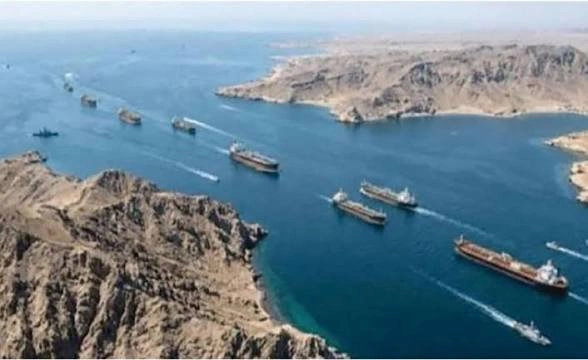
The closure of the Strait of Hormuz, a direct consequence of this aggression, has intensified pressure on global markets. The repercussions of the crisis are no longer confined to oil and gas, but have extended to strategic raw materials, signaling a shift towards a new form of trade war linked to supply chains.
Commodity markets have recorded significant increases in the prices of vital metals, which are essential components in defense industries and advanced technology. This has heightened concerns about supply security and increased the fragility of global markets.
These metals are used in a wide range of applications, from electric vehicle batteries and wind turbines to artificial intelligence chips and advanced military systems, making them essential components of global production chains.
Rising Oil Prices and Transportation Costs
Each Arab country, even oil-producing ones, has seen an increase in oil prices and public transportation and commercial shipping costs for vegetables, grains, and imported goods between cities, ports, and markets.
Egypt was the first country to announce price hikes for fuel, cooking gas cylinders, and car fueling gas following the outbreak of the war (the aggression against Iran). Subsequently, prices for vegetables, fruits, grains, vegetable oils, and some imported products also rose, according to the BBC.
In Jordan, fuel prices also increased, along with transportation and electricity costs, and the prices of basic commodities such as bread and some food items and consumer goods.
In Lebanon, which is already suffering from a severe economic crisis, the rise in global fuel prices has led to a significant increase in transportation and electricity costs, as well as the prices of food and everyday goods in the markets.
In Morocco, fuel prices saw a significant increase, leading to higher domestic transportation and shipping costs, which in turn impacted the prices of vegetables and other foodstuffs in local markets.
In the Palestinian territories, gasoline prices rose at the start of the offensive. In Mauritania, the government was forced to increase diesel prices due to the rising cost of fuel imports.
In Iraq, oil exports plummeted, and the closure of the Strait of Hormuz prevented large vessels from reaching export terminals in the south of the country, halting most Iraqi oil shipments.
In the Gulf states, despite being oil-producing nations, the prices of some imported goods and foodstuffs increased due to higher shipping and marine insurance costs, particularly given concerns about navigation in the Strait of Hormuz.
Many other countries’ markets were also affected. In the United States, the offensive exacerbated consumer fears of inflation after retail gasoline prices jumped to around four dollars per gallon.
In Britain, Chancellor Rachel Reeves faces difficult choices regarding funding support for British families. The Institute for Fiscal Studies in London predicts that she will face a significant shortfall in the new fiscal year’s budget and will be forced to increase public spending by approximately £20 billion due to rising energy prices.
In France, the government’s budget deficit is projected to reach 5.1% of GDP by the end of 2025. This deficit is accompanied by a lack of financial reserves to provide widespread aid to mitigate the impact of rising energy prices. Nevertheless, the government has prepared measures to support the agriculture and trucking sectors at a cost of €70 million.
In Spain, the Spanish parliament approved a €5 billion package of tax cuts to mitigate the effects of rising energy prices. These cuts include reducing the value-added tax (VAT) from 21% to 10% on electricity, natural gas, and fuel.
90% of Asia’s oil passes through the Strait of Hormuz
For Asian countries, the situation is more complex. They receive approximately 90% of their crude oil and the majority of their gas shipments via the Strait of Hormuz. China, India, Japan, and South Korea alone account for three-quarters of these shipments, according to the South China Morning Post.
According to Al-Araby Al-Jadeed, the prolonged blockade not only impacts the availability of petroleum products but also extends to energy operations and industries throughout the Asia-Pacific region.
Fitch Solutions, a consulting firm, warned that “the Asia-Pacific region’s vulnerability is concentrated in crude oil and refined petroleum products, directly affecting the costs of manufacturing inputs, transportation, and trade finance.”
Arpit Chaturvedi, a South Asia geopolitical risk consultant at Teneo, stated that even if Washington were to allocate special provisions for India, these provisions are unlikely to cover all of New Delhi’s energy needs.
However, the energy shock to China remains less severe compared to other Asian countries, according to CNBC.
Meanwhile, South Korea, Taiwan, and Singapore, all heavily reliant on Qatari liquefied natural gas (LNG), are facing supply disruptions after their production facilities were damaged.
Janeev Shah, vice president of oil commodity markets at Rystad Energy, said that Asian countries seeking alternative crude oil will likely have to turn to oil producers in the Atlantic Basin, such as the United States, Canada, and Latin America.
It has become clear that the repercussions of the American and Israeli aggression against Iran will extend to include broad economic and social impacts on Arab and non-Arab societies.
With the continued uncertainty, the ability of Arab states to manage these repercussions remains contingent on the stability of regional conditions and the effectiveness of their economic policies in mitigating the effects of the crisis.
The Strait of Hormuz and 20% of the World’s Oil
The Strait of Hormuz, located between Iran and Oman, is the most important artery for the flow of energy in the global economy. Approximately one-fifth of the world’s oil passes through this narrow waterway daily, with tankers carrying between 18 and 21 million barrels of oil passing through its waters each day, equivalent to about 20% of global consumption.
Two Years to Restore Lost Energy Production
In the same context, the head of the International Energy Agency, Fatih Birol, said that restoring the energy production lost in the Middle East as a result of the war will take about two years.
In an interview with the Swiss newspaper Neue Zürcher Zeitung, quoted in part by Reuters, Birol added, “This will vary from country to country. In Iraq, for example, it will take much longer than in Saudi Arabia.”
“In any case, our estimates indicate that it will take approximately two years to reach pre-war levels,” he continued.
Birol noted that market estimates underestimate the impact of a prolonged closure of the Strait of Hormuz.
He explained that oil and gas shipments that were en route to their pre-war destinations have now arrived, mitigating the supply shortage.
“But no new tankers were loaded in March. There were no new shipments of oil, gas, or fuel to Asian markets,” he added.
Birol emphasized that “the gap is becoming increasingly apparent. If the Strait of Hormuz is not reopened, we must prepare for a significant rise in energy prices.”
When asked whether the International Energy Agency would conduct another release from its emergency oil reserves after its action in March, Birol stated that the agency was prepared to act immediately and decisively.
“We are not at that stage yet, but it is certainly under consideration,” Birol explained.
Public debt levels have reached record highs.
The International Monetary Fund (IMF) has warned that an additional 45 million people could face severe food insecurity if the war continues and fertilizer shipments remain disrupted.
The IMF and the World Bank are racing to respond to the crisis and support vulnerable countries, at a time when public debt levels have reached record highs and budgets are severely limited, according to Al-Ghad TV.
The IMF stated that it anticipates a short-term emergency support request of between $20 billion and $50 billion for low-income, energy-importing countries.
The World Bank, on the other hand, said it is capable of mobilizing approximately $25 billion through its crisis response instruments in the near term, and up to $70 billion over six months, depending on the need.
However, economists are urging governments to take only targeted and temporary measures to mitigate the effects of rising prices, warning that broad-based measures could exacerbate inflation.
Similarly, Larry Fink, CEO of BlackRock (an American investment management and financial advisory firm), warned that oil prices reaching $150 per barrel would lead to a global recession.
On February 28, the United States and Israel launched a new aggression against Iran, resulting in the deaths of hundreds of civilians and targeting schools, hospitals, mosques, and other infrastructure belonging to the Iranian people.
In response to the aggression, Iran launched Operation True Promise 4 against Israel and US bases in the region.
The United States is currently imposing a blockade on Iranian ports, violating the ceasefire agreement and contravening international law and international humanitarian law.
Tehran had announced a conditional reopening of the Strait of Hormuz to civilian vessels, but Washington’s failure to adhere to the terms of the agreement and its continued blockade of Iranian ports prompted Iran to close the strait.