
Israeli Enemy Intensifies Assault on Gaza and West Bank with Military Escalation, Medical Siege and Settler Violence
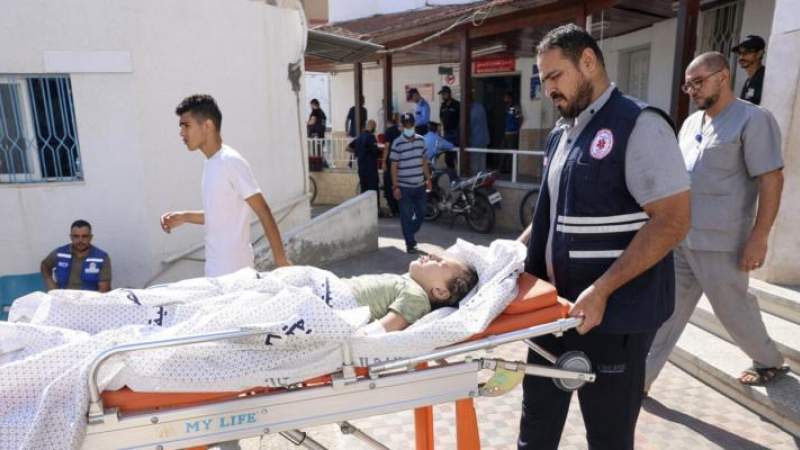
The Israeli enemy has intensified its military campaign across the occupied Palestinian territories, expanding its operations beyond battlefield attacks to include a tightening medical siege on Gaza, widespread destruction of civilian infrastructure and escalating settler violence across the occupied West Bank and Al-Quds.
In the Gaza Strip, Israeli forces continued violating the ceasefire agreement through artillery bombardment and the demolition of residential buildings in several areas.
Israeli artillery shelled northwestern Rafah while demolishing homes in the northern parts of the city. In Khan Younis governorate, eastern areas of Al-Qarara came under heavy artillery fire and illumination flares as Israeli drones maintained continuous sursdcdveillance overhead.
Israeli forces also demolished additional residential buildings west of Beit Lahia in northern Gaza. Meanwhile, Palestinian citizen Huzaifa Hussein Al-Hawajri was killed after Israeli shelling struck near Abu Sharkh Roundabout west of Jabalia refugee camp.
On the humanitarian front, the Palestinian Centre for Human Rights warned that approximately 650 kidney failure patients face an imminent threat to their lives due to the depletion of sodium bicarbonate, an essential component used in dialysis treatment, as a result of the ongoing Israeli blockade.
Hospitals have been forced to reduce both the duration and frequency of dialysis sessions, exposing patients to potentially fatal complications.
The rights group said the crisis comes after the systematic destruction of Gaza’s healthcare system since October 2023. According to the organization, 18 of Gaza’s 36 hospitals and 82 primary healthcare centers remain out of service.
At Al-Shifa Medical Complex, shortages of medical supplies, electricity outages and fuel scarcity have rendered 25 of the hospital’s 51 dialysis machines inoperable. Medical staff have consequently reduced dialysis sessions from four hours to three hours and cut weekly treatments from three sessions to two.
Patients also continue to face worsening humanitarian conditions due to limited transportation, long walking distances to medical facilities, widespread hunger, malnutrition and shortages of safe drinking water.
In the occupied West Bank and Al-Quds, Israeli forces carried out widespread raids while armed Israeli settlers intensified attacks under military protection.
In Nablus governorate, Israeli forces detained a tractor driver and confiscated his vehicle in Beita. Israeli settlers rammed a Palestinian vehicle and assaulted its passengers, while Israeli troops raided the villages of Burqa, Urif, Al-Lubban Ash-Sharqiya, Duma and the Old Askar refugee camp, conducting arrests and house searches.
Settlers also set fire to a restaurant located between Al-Lubban Ash-Sharqiya and Amuriyah, vandalized the property and stole cash, causing damage estimated at around one million shekels. Additional attacks targeted Palestinian vehicles near the entrance to the Homesh settlement.
Israeli raids extended to Jenin, where forces stormed homes in the Al-Jabriyat neighborhood and arrested a young Palestinian, while settlers set fire to farmland in Turmus Ayya near Ramallah.
In Hebron governorate, Israeli forces carried out raids in Sa’ir, Halhul and Jabal Johar, while settlers attacked a home and damaged a vehicle northeast of Yatta. Settlers also released livestock into Palestinian farmland in Yatta and Ramallah, damaging crops and olive trees. Further incursions were reported in Anabta and Shufa near Tulkarm, the Jericho Gate area and Al-Doha near Bethlehem.
In Al-Quds and Jericho, settlers entered the Al-Ka’abneh communities near Anata and Jericho, releasing livestock among residents’ homes, damaging property and storming the Arab Al-Ka’abneh Basic School in an effort to intimidate students, teachers and residents into leaving the area.
Settlers also obstructed Palestinian traffic at the entrances to several towns south of Nablus and in Salfit governorate.
Separately, Al-Khalil’s Director General of Tourism and Antiquities, Jabr Rajoub, accused Israeli authorities of appropriating more than 140 archaeological and historical sites across the governorate by reclassifying them as Israeli heritage sites within Area C. The sites, including Khirbet Hamseh and ancient caves and historic homes in Dura, represent approximately 62 percent of Al-Khalil’s registered archaeological locations.
Rajoub said the move forms part of broader efforts to alter the historical identity of Palestinian heritage sites and consolidate Israeli control over land and cultural assets.
The latest escalation comes despite the ceasefire agreement that entered into force in October 2025, which the Israeli enemy continues to violate through daily military operations across the Gaza Strip.
At the same time, international humanitarian organizations have repeatedly warned that Israel’s blockade has pushed Gaza’s healthcare system to the brink of collapse, while settlement expansion, home demolitions and attacks by armed settlers continue to intensify across the occupied West Bank and Al-Quds in violation of international law.