
Yemeni Analyst: Breaking Air Siege Marks End of Saudi Tutelage, Deepens Integration Within Resistance Axis
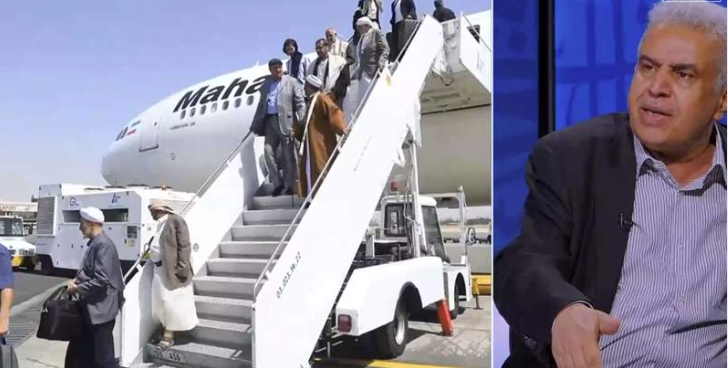
Yemeni political analyst Mohammed Al-Abed said Yemen has entered a decisive phase in its confrontation with the Saudi-led coalition, arguing that the breaking of the air blockade and the arrival of the first direct flight to Sana’a International Airport mark the practical end of Saudi tutelage and the beginning of a new reality shaped by Yemen’s military and political gains.
Speaking to Almasirah TV, Al-Abed said recent developments reflect Yemen’s transition from a strategy of endurance and defense to one focused on reclaiming sovereign rights and imposing national sovereignty. He pointed to mass tribal and public mobilization across the country as evidence of broad support for ending the aggression and blockade under the leadership’s direction.
He described the resumption of direct flights to Sana’a as the restoration of a sovereign and humanitarian right, noting that years of airport closure deprived thousands of Yemenis of access to travel, medical treatment and family reunification. He argued that opposition to reopening the airport effectively supports the continuation of the blockade.
Al-Abed said years of war have transformed Yemeni society, strengthening public confidence in the leadership and reinforcing support for continued resistance until the aggression is brought to an end. He added that the Saudi-led campaign affected virtually every Yemeni household through bombardment, siege or destruction, drawing parallels with the suffering experienced by Palestinians in Gaza.
The analyst stressed that Yemenis are prepared to move into a new phase should the blockade and military operations continue, asserting that the leadership enjoys broad public backing for any future measures aimed at restoring full sovereignty.
Turning to regional developments, Al-Abed said the arrival of an Iranian aircraft in Sana’a represented a major milestone in breaking the blockade and demonstrated the collapse of Saudi control over Yemen’s sovereign decisions. He argued that the move reflected the practical implementation of the “unity of fronts” concept rather than simple political coordination.
According to Al-Abed, the resistance axis has evolved beyond coordination into operational integration, with its various fronts acting under a unified strategic vision stretching from the Red Sea and Bab al-Mandab to the Arabian Gulf and the Strait of Hormuz. He said Yemen had embodied this approach through its military support for Gaza, making Palestine the central focus of the broader regional confrontation.
He credited the late Hezbollah Secretary-General Sayyed Hassan Nasrallah with first advancing the concept of the unity of fronts, adding that Sayyed Abdulmalik al-Houthi later expanded on the idea by linking it to Islamic unity in confronting common adversaries.
Al-Abed also argued that Yemen’s ability to withstand US and Israeli military pressure represented a historic turning point. He said US naval forces and aircraft carriers had been forced out of the Red Sea after failing to break Yemen’s resolve, describing this as evidence of declining American military dominance.
He further asserted that Yemen has moved from defending its territory to establishing sovereign control over key maritime routes, including the Red Sea, Bab al-Mandab and the Indian Ocean, while signaling that additional sovereignty-related issues would be addressed in the future.
Commenting on Saudi Arabia, Al-Abed said Riyadh continues to operate with a mindset of tutelage toward Yemen despite regional shifts. He argued that attempts to prevent the Iranian aircraft from landing in Sana’a reflected the same approach that characterized years of blockade and military intervention.
He also accused Saudi Arabia of acting in line with US and Israeli policies rather than pursuing an independent regional strategy, asserting that the Saudi-led war on Yemen has always been part of a broader US-Israeli project targeting the region.
Regarding Iran, Al-Abed said the recent US-Israeli aggression had strengthened revolutionary sentiment inside the country rather than weakening it. He argued that the assassination of senior leaders had reinforced national unity and further consolidated Iran’s regional role.
He concluded that the Middle East is entering a new phase marked by rapidly shifting power balances, with Yemen emerging as a central actor alongside Iran and other members of the resistance axis, while the US-led project of regional dominance continues to lose influence.
The remarks follow the arrival of the first direct international flight to Sana’a International Airport after years of restrictions imposed under the Saudi-led blockade. The development has been presented by Sana’a authorities as a significant step toward ending the air siege and restoring Yemen’s sovereign control over its airspace. It also comes amid closer political coordination among members of the resistance axis following the recent US-Israeli aggression against Iran and continued regional tensions linked to the Gaza war.