
Saudi Arabia Extends Closure of 3 Airports Amid Yemen’s Air Blockade Warning
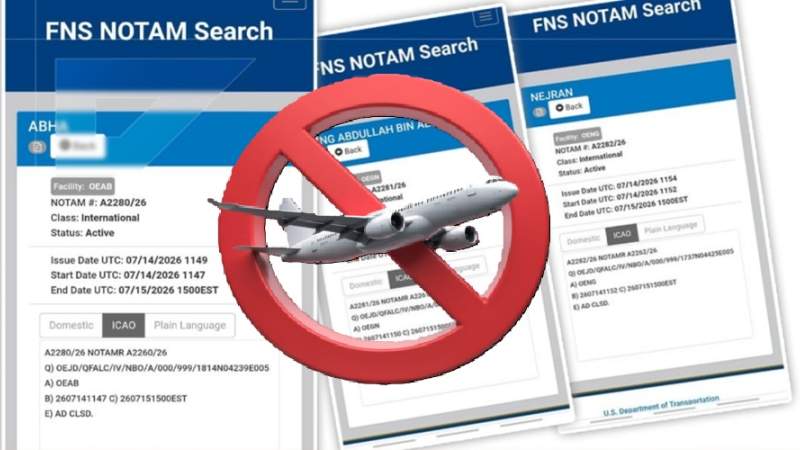
Saudi authorities have extended the closure of three major airports in the south of the kingdom until further notice, following the Yemeni Armed Forces’ missile and drone strikes on Abha International Airport and Sana’a’s declaration of an air blockade on Saudi airports.
The development marks a new stage in the military confrontation, with the Yemeni Armed Forces asserting their ability to impose a reciprocal air deterrence equation in response to the continued closure of Sana’a International Airport.
The strikes on Abha Airport were intended not only to disrupt airport operations but also to demonstrate that continued restrictions on Sana’a International Airport would carry increasing costs for Saudi Arabia’s aviation sector.
The US Federal Aviation Administration (FAA) as confirming on its official website said that Saudi authorities had extended the closure of Abha, Jizan, and Najran airports until further notice.
The extension reflects growing security concerns following Yemen’s warning to airlines against operating in Saudi airspace, with observers saying the closures indicate Riyadh’s precautionary response to the threat of further missile and drone attacks.
Regional and international media also reported on the continued suspension of operations at the three airports, describing the move as a significant disruption to air traffic in southern Saudi Arabia and a challenge to the kingdom’s domestic and international transport network.
In its latest statement, the Yemeni Armed Forces reiterated their determination to continue military operations until the aggression and blockade on Yemen come to an end. The statement warned all airlines against transiting Saudi airspace, urging them to take the warning seriously until the blockade on Sana’a International Airport is lifted.
Observers said the latest developments reinforce Sana’a’s declared strategy of “blockade for blockade,” signaling that Saudi airspace will remain under threat as long as restrictions on Sana’a International Airport continue.