
Saudi Blockade of Hodeidah Port Leaves 6,000 Workers Without Livelihoods
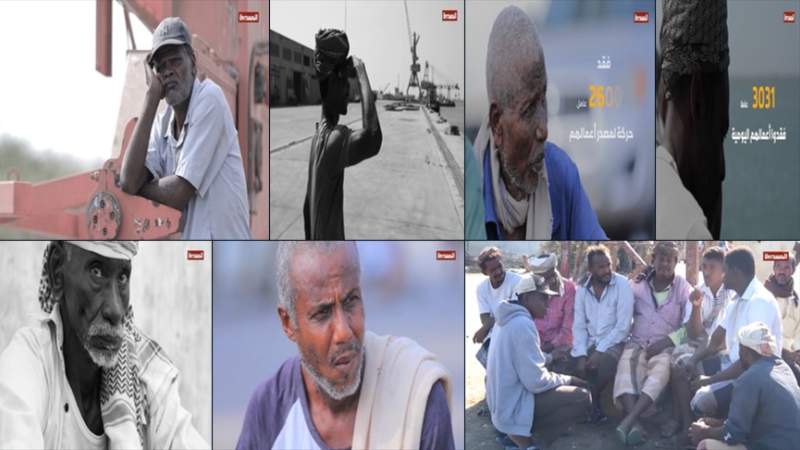
The Saudi blockade of Hodeidah’s ports has deprived around 6,000 workers who support more than 6,000 families of their main source of income.
Port workers described waiting for months for a vessel to arrive and provide them with a few days of work. They said the prolonged blockade has left them unable to secure food and medicine for their families.
Daily-wage worker Abdo Heba Hammoud Mizjaji, who has worked at Hodeidah Port for more than 22 years, said port activity had previously provided continuous work, but workers now wait six to seven months between opportunities.
Another worker, Hammoud Mizjaji, said workers had previously been employed weekly and monthly but now wait months for vessels, leaving them unable to provide basic necessities for their families.
Port worker Abdul Qader Saleh Al-Azani appealed to the international community and humanitarian organizations to address their plight, affirming that thousands of workers depended on the port for their daily income.
Hodeidah Port Labor Department Director Akram Hamra said the port has more than 6,000 workers, each supporting families of roughly five to 10 people. He said vessels that once arrived daily now may take five to six months to reach the port, with delays in some years approaching a full year.
Hodeidah Port Workers Union Chairman Ali Rajeh Ahmed said the blockade has caused severe hardship and hunger, noting that workers may wait six months before receiving another work opportunity.
The war and blockade have cost 3,031 official port workers their daily jobs, while another 2,600 cargo-handling workers have lost the work linked to port activity, in addition to hundreds employed throughout the logistics chain.
The workers now have little left but to wait for the blockade to be lifted, as years of economic hardship continue to weigh heavily on them and their families.
After years of Saudi blockade and repeated attacks on Yemen’s Hodeidah ports, the country’s main maritime lifeline has been severely crippled, disrupting cargo traffic and depriving thousands of port workers and their families of regular livelihoods.
The prolonged restrictions have sharply reduced vessel arrivals and delayed the flow of goods, leaving workers facing mounting difficulties in securing food, medicine and other basic necessities.
The sustained disruption has further deepened Yemen’s wider humanitarian and economic crisis by constraining the flow of essential goods through its key Red Sea gateway.