
Hebrew Website: Ansarullah Possesses Independent Decision and Unbreakable Will
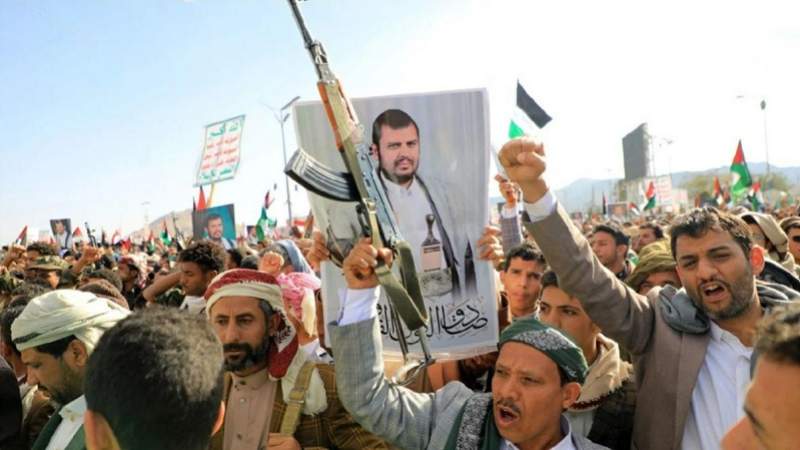
An Israeli Hebrew-language website has highlighted the strategic nature of Ansarullah in Yemen, affirming that attempts to confine them to the category of a proxy moving at Tehran’s behest are a limited and misleading reading.
The Israeli website “Makor Rishon” stressed that Ansarullah is a strategic ally within the Axis of Resistance, possessing a solid ideology, an independent political and field decision, and a massive popular and military base that makes it impossible to break their will through traditional military means.
The website noted that it has written extensively about Yemen and Ansarullah since they began launching missiles toward the Zionist entity in occupied Palestine and imposing a navigation ban in the Red Sea.
It affirmed that Yemen has become a major player in the war raging in the region, and that Ansarullah has risen to the top of the list of strategic threats to the Zionist entity.
September 21 Revolution: A Pivotal Turning Point
The Zionist website explained in its report that the pivotal turning point for Ansarullah was embodied in the September 21, 2014 Revolution, when it succeeded in breaking the hegemony of external guardianship and seizing the reins of power in the capital Sana’a—gradually transforming, according to its expression, from a group facing a central authority into a state authority managing the country’s institutions with care and capability.
The website continued: “Yemen was able to manage complex battles with high skill, overcoming long years of siege and aggression supported regionally and internationally, reaching the establishment of unprecedented deterrence equations in the face of the Israeli entity and American-British alliances.”
It noted that by September 2026, the Yemeni Armed Forces strengthened their absolute control over the strategic coasts of the Red Sea, consecrating their presence as a regional power that cannot be bypassed in any future equation for the region.
In its deconstruction of the relationship between Sana’a and Tehran, the Hebrew report shattered the Western-Zionist narrative promoting Sana’a’s subservience to Iran.
It explained that the most accurate description of that relationship is “strategic alliance,” affirming that every missile launched or drone flying toward the Zionist depth or its linked ships in the Red Sea stems from a purely Yemeni decision responding to what Sana’a and its leadership consider a “religious, moral, and humanitarian duty toward the Palestinian people in the Gaza Strip”—not the implementation of external orders.
It added that Tehran found in Yemen an ally that rejects hegemony and stands in the trench of resistance, while Yemen found in the forces of the Axis of Resistance a true depth and support—without losing its independent sovereign decision, which is the greatest secret of the movement’s resistance to being broken.
The report highlighted the fundamental reasons that make military resolution against what it called the Houthis impossible according to Israeli enemy assessments.
Foremost among these factors is the deep ideological commitment of Ansarullah fighters, who engaged in combat armed with absolute faith in the justice of their cause.
Citing data from the Associated Press, the report documented the enormous leap in Sana’a and Ansarullah’s human capabilities—from approximately 30,000 fighters in 2015 to hundreds of thousands of brave fighters at present, according to the agency.
The website considered this massive human bloc, supported by rugged and harsh mountainous terrain in Yemen that allows the concealment of missile arsenals and advanced drones, as having made American, British, and Israeli airstrikes “a failed showpiece tool incapable of achieving any strategic objective other than increasing the Yemeni people’s rallying around their leadership.”
The Hebrew report concluded with a warning that the real power card Yemen possesses exceeds by many times the size of its traditional material capabilities.
Instead of needing to fight field battles in major capitals, the Yemenis succeeded in turning the Bab al-Mandab Strait and the Red Sea into a “forbidden zone” for the navigation of the Israeli enemy and those linked to it.
According to the report, the Yemenis do not need to occupy Riyadh, Quds, or Washington, as a small number of relatively cheap drones and anti-ship missiles can force commercial ships worth hundreds of millions of dollars to change course.