
British Maritime Intelligence: Saudi Ships’ ‘Escape Routes’ Fail as Blockade Tightens
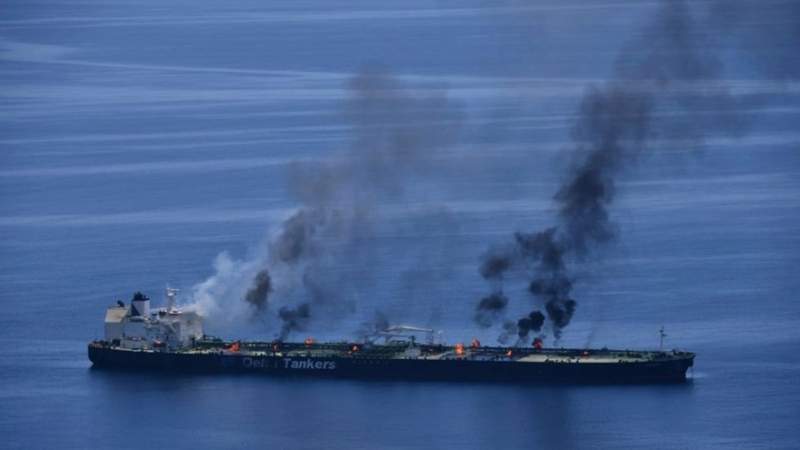
Yemen’s maritime operations against Saudi-linked vessels have expanded, with escape routes and adaptation options pursued by Riyadh proving ineffective, according to a report by the international maritime intelligence firm Windward.
In a recent analysis, the British intelligence firm stated that “changing course northward to avoid Bab al-Mandab is no longer sufficient to escape the risks of Yemeni targeting.”
The report added that “the Yemenis have expanded their targeting range to pursue Saudi-linked vessels outside the declared blockade zone in Bab al-Mandab, following the targeting of the vessel ‘Wafa.'”
Targeting ‘Wafa’ Near Yanbu Proof of Expanded Threat
The firm considered that “the targeting of the Saudi tanker ‘Wafa’ off Yanbu proves the extension of the Yemeni threat into Saudi waters,” and noted that “the Cape of Good Hope route was the only remaining option for Saudi-linked vessels seeking to move geographically away from the targeting zone.”
In concluding its report, Windward noted that “the operational risk environment in the Strait of Hormuz, the Red Sea, the Gulf of Aden, and the northern Arabian Gulf remains at a critical level.”
The targeting of the Saudi tanker “Wafa” off Yanbu represents a significant escalation in Yemen’s maritime operations, extending the blockade beyond the Bab al-Mandab strait into Saudi territorial waters. This expansion demonstrates the Yemeni Armed Forces’ capability to target vessels deep within Saudi maritime zones, forcing Saudi shipping to seek even more distant and costly alternatives.
Yemen’s maritime operations have achieved a level of effectiveness that makes alternative routes like the Cape of Good Hope—a significantly longer and more expensive journey—the only viable option for Saudi-linked shipping.