
Coalition of the Dead: Yemeni Equation Disrupts Saudi Calculations, Undermines Its Faltering Alliances
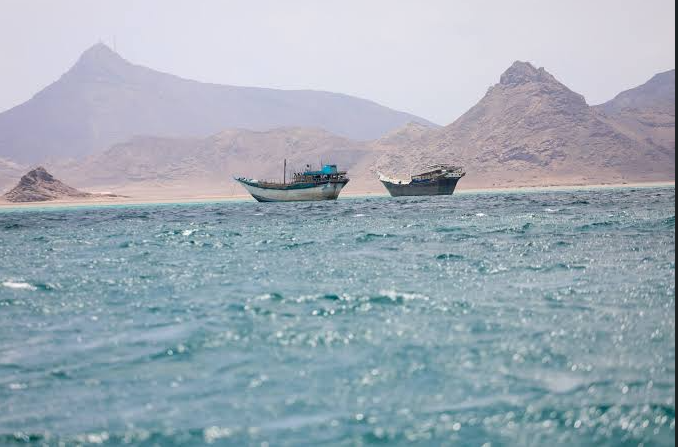
Saudi Arabia’s maritime ambitions are increasingly confronting the resilience of the Yemeni equation. As Riyadh seeks a way to avoid the consequences of direct confrontation, Western and Israeli reports and admissions are highlighting how the Red Sea has become an arena in which deterrence rules are being reshaped. Amid US reluctance, European inability and Israeli acknowledgments that fleets have been constrained, the proposed new maritime coalition appears politically premature and operationally incapable of lifting the maritime ban or protecting targets that have come under the scrutiny of Yemeni missiles and drones.
British shipping publication Lloyd’s List confirmed that the maritime coalition proposed by Saudi Arabia to secure the Red Sea faces major challenges, saying that, in its current form, it appears closer to a political message than a naval force capable of changing the region’s security reality.
The publication said the proposed coalition still lacks key details regarding the size of participating forces, naval vessels and equipment, command structure and mechanisms for implementation, raising questions about its actual ability to carry out its mission.
It noted that security analysts doubt whether the countries being considered for participation possess sufficient naval capabilities to significantly reduce threats posed by Yemen to Saudi maritime traffic in the Red Sea.
Against this backdrop, Lloyd’s List said it was unlikely that shipowners or insurance companies would change their assessment of maritime risks or reconsider transiting the Red Sea solely on the basis of the coalition’s announcement.
It further warned that countries joining the coalition could see their commercial interests and vessels added to the list of potential targets for Yemen, potentially making the proposed force’s mission more complicated rather than reducing the risks facing maritime traffic in the region.
Meanwhile, Axios reported that Saudi Defense Minister Khalid bin Salman failed to persuade the US administration during meetings in Washington to endorse the coalition Riyadh seeks to establish against the Yemeni Armed Forces in the Red Sea.
According to the US outlet, bin Salman responded to the setback with a brief statement claiming that Riyadh was capable of dealing with the maritime and missile threats posed by the “Houthis,” saying that “Saudi Arabia does not currently need US intervention.”
Axios added that “Riyadh believes a strong response in Iraq was necessary to deter the Houthis from carrying out similar attacks against it,” according to the report.
Saudi Arabia has sought to establish the new international maritime coalition as part of efforts to avoid direct confrontation with Yemen, recognizing Yemen’s ability to disrupt Saudi maritime traffic and inflict painful strikes on its infrastructure and strategic oil facilities.
On Friday, The New York Times reported that the United States and European countries had shown little interest in joining the maritime coalition proposed by Saudi Arabia. Only 14 countries have so far joined the initiative out of 51 invited, while 43 attended its founding meeting on Thursday.
Western officials reportedly confirmed that European capitals were reluctant to join the new coalition, arguing that the existing situation in the region’s waters could not withstand further complications.
They also said it remains unclear how the new coalition would differ from the European Union’s existing Red Sea operation, known as Operation Aspides, which many Western capitals acknowledge has failed to make a meaningful difference.
Western research centers have likewise said Saudi Arabia is seeking to avoid direct confrontation with the Yemeni Armed Forces because Riyadh recognizes Yemen’s ability to affect maritime traffic to and from Saudi Arabia, as well as its capacity to inflict damaging strikes on the kingdom’s infrastructure and strategic oil assets.
Countries with limited influence are expected to join the coalition amid Saudi efforts to attract participants through financial incentives. The initiative, according to the report, appears likely to meet the same fate as several previous efforts that failed to achieve their objectives.
The proposed coalition also recalls earlier initiatives, most notably Operation Prosperity Guardian, launched in 2023, through which Washington failed to assemble an international and regional coalition to support its war against Yemen in the Red Sea. The operation ultimately saw US aircraft carriers and warships withdraw from the area.
In a rare challenge by Jordanians to their leaders, The New York Times ran a headline on its front page on Friday reading: Jordanians’ Rare Challenge to Their Leaders: Tell the US to Leave.
The newspaper reported that hundreds of political, legal and other public figures had signed an open letter warning that the close alliance between Jordan and the United States poses a danger to the country.
It said that, in a rare public challenge to a government that has long suppressed freedom of expression and dissent, the signatories called for the withdrawal of US forces, arguing that their presence had become an unacceptable threat to Jordanian sovereignty.
Meanwhile, retired Israeli Major General Eliezer Marom, a former commander of the Israeli Navy and former head of its intelligence service, acknowledged failure in the confrontation with Yemen, saying this had become an established reality within the Israeli military leadership.
The Hebrew-language Maariv newspaper quoted Marom as saying that “we understand what is happening around us, and it is extremely difficult to defeat them or win the battle against them.” He added that the “Houthis have subdued the European fleets in the Red Sea, while the Americans are unwilling to confront them.”
Marom said European naval forces led by Britain had reached a point at which they were simply incapable of confronting the “Houthis”. He also acknowledged Israel’s inability to find an appropriate way to deal with the threat from Yemen, stating: “At present, there is no solution to this issue.”
He further said Saudi Arabia and the UAE had failed decisively to “contain the Houthis or limit the development of their military capabilities, foremost among them their missile and drone arsenals.” He added that relying on the “mercenary forces opposing the Houthis in Yemen offers no grounds for optimism” and that Israel could not depend on them.
The Yemeni Armed Forces have meanwhile announced a ban on maritime traffic to and from Saudi Arabia under the principle of blockade-for-blockade, in response to the comprehensive blockade Riyadh has imposed on Yemen for 12 years under the banner of the coalition.
Saudi Arabia has increasingly turned to exporting the bulk of its oil through the Red Sea following the crisis caused by the closure of the Strait of Hormuz, which coincided with US and Israeli aggression against Iran.
The proposed Saudi maritime coalition reflects Riyadh’s attempt to strengthen maritime protection while avoiding a direct military confrontation with Yemen, which could expose Saudi economic and strategic infrastructure to further attacks.