
Garbage dumps in Gaza… Additional health disaster threatening residents of besieged Strip
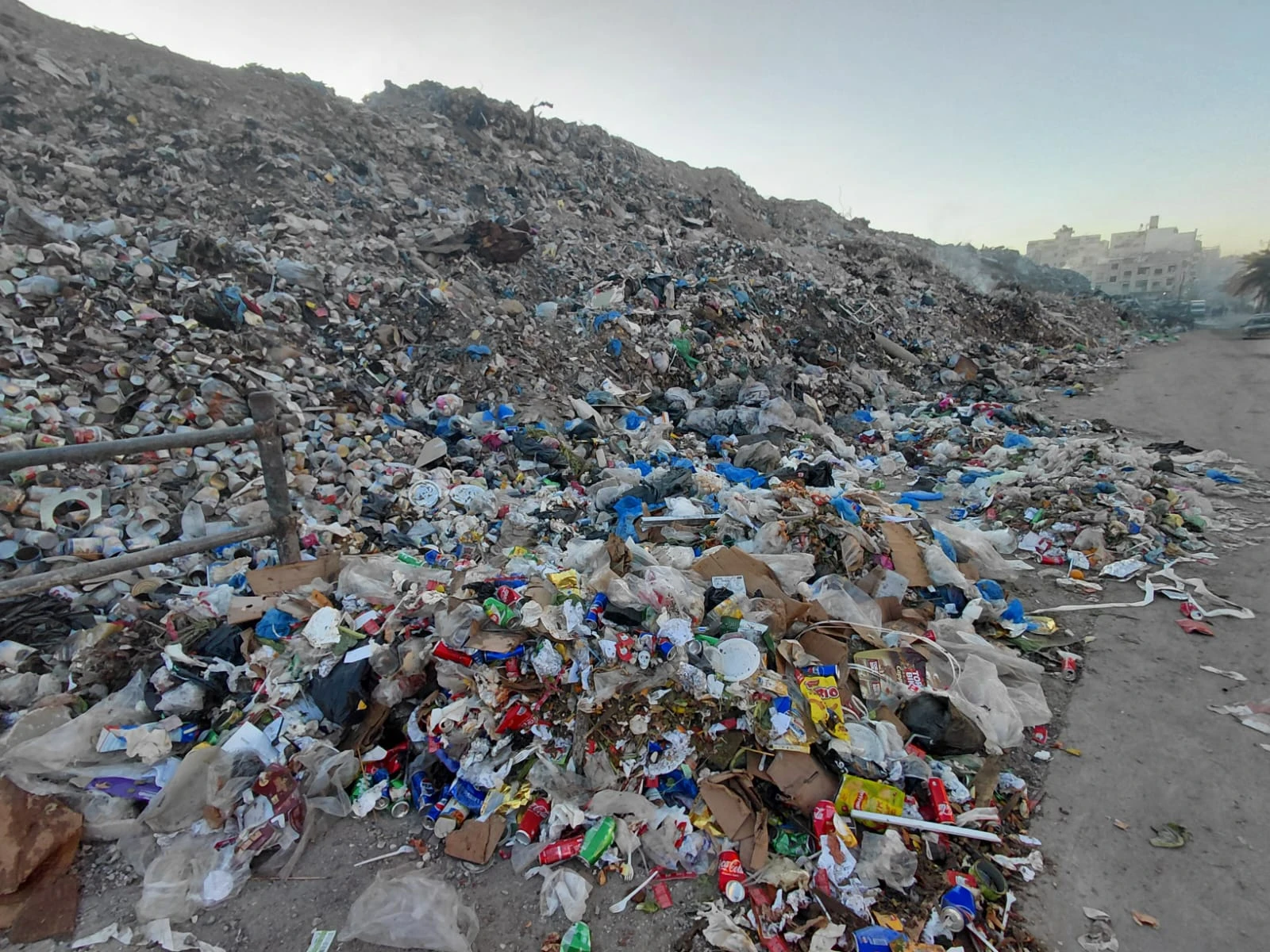
The Gaza Strip is suffering from the spread of a large number of garbage dumps across various areas due to the Israeli occupation’s prevention of transferring residents’ waste to the main official landfills currently located in what is known as the “Yellow Line” area, which is controlled by the Israeli army.
This has led to an enormous accumulation of waste in neighborhoods close to residential areas and in displacement sites, threatening a health catastrophe for the population, the soil, groundwater, and the environment in general.
Garbage dumps are present in many residential areas and near population centers, including close to hospitals, such as the dump located approximately 200 meters from Al-Ahli (Baptist) Hospital, significantly affecting people’s lives and the surrounding hospital environment.
In this context, environmental expert Dr. Abdul Fattah Abed Rabbo from the Islamic University in Gaza warned of the health and environmental dangers posed by the widespread dumps throughout the Strip.
In remarks to the Yemeni News Agency (Saba), Dr. Abed Rabbo explained that no one can access the main waste landfills because they are located within the “Yellow Line” areas controlled by the Israeli army. This forces residents of the besieged Strip to dispose of their waste in temporary dumps spread along Gaza. These sites are unlined, meaning there is no protective barrier underneath to prevent leachate from seeping into the ground, posing serious risks to groundwater and the environment overall.
He said, “Municipal and organic waste is widely spread throughout the Gaza Strip. If we calculate that each Palestinian individual in the Strip produces less than one kilogram of municipal or organic waste per day, we can estimate the amount generated daily by approximately 2.3 million residents in this small, besieged area. This waste accumulates in streets and roads before eventually being transported by municipal councils to random or temporary dumps scattered in dozens of locations across the Strip.”
The environmental expert outlined the multiple dangers posed by this waste, noting that burning garbage in dumps or public spaces releases toxic gases, compounds, and pollutants into the local environment. This causes air pollution, particularly with carbon monoxide, carbon dioxide, nitrogen oxides, and sometimes other harmful gases, including some with carcinogenic effects. These gases and fumes significantly impact public health and lead to numerous and serious health problems.
He also pointed to the foul odors emitted from these dumps due to the decomposition of waste and organic materials through bacterial activity, which cause health, psychological, and other problems in addition to disturbing residents.
He further explained that the accumulation of waste anywhere in the Gaza Strip encourages the proliferation of vertebrate pests such as stray cats, dogs, rats, and other rodents, as well as invertebrate pests including insects of all kinds. Both types contribute to the spread of diseases within the Palestinian community, particularly amid overcrowding in displacement camps and shelters. These insects transmit diseases , epidemics and cause health problems for all members of society.
Dr. Abed Rabbo also spoke to Saba about the impact of waste and dumps on soil, explaining that waste—especially solid waste—and the rubble left by Israeli military attacks have polluted agricultural land and reduced its productivity, severely affecting food security in the Gaza Strip.
He noted that the vast majority of the current dumps across Gaza are unlined, allowing leachate to seep into the ground, particularly in sandy areas where infiltration occurs more easily. This leads to contamination of the already fragile and polluted groundwater aquifer, causing numerous health problems for residents.
The environmental expert confirmed that the groundwater reservoir already suffers from chemical, physical, microbial, and biological contamination for various reasons, most notably wars and the accumulation of waste.
Previously, Alessandro Fracassetti, Head of the United Nations Development Programme (UNDP) Office in Gaza, stated that “the scale of the waste problem in Gaza is enormous.”
He explained, “We are talking about two million tons of untreated waste across Gaza,” adding that “the risks are enormous for the environment, for the groundwater reservoir from which Gaza draws most of its water, and for public health.”