
Sixth Ramadan lecture of Sayyed Abdulmalik Badr al-Din al-Houthi 1447 AH
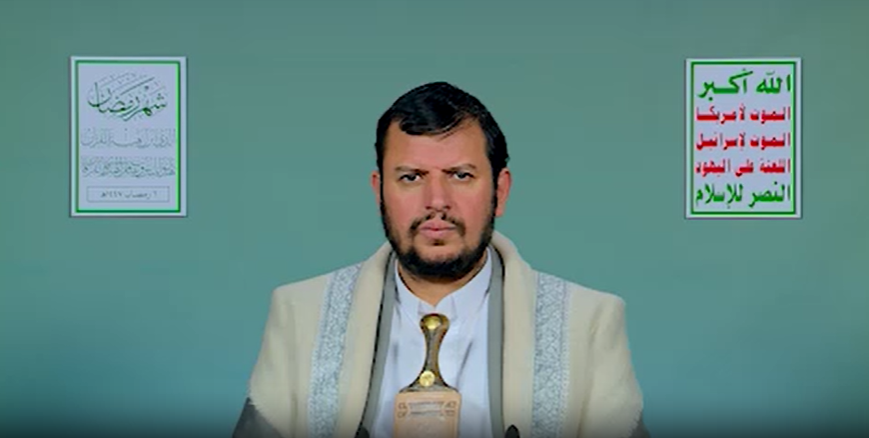
I seek refuge in Allah from Satan, the outcast.
In the name of Allah, the Compassionate, the Merciful.
Praise is to Allah, Lord of the Worlds. I believe that there is no god but Allah, the Sovereign and the Manifest Truth, and that our master Muhammad is His servant, Messenger, and Last Prophet.
O Allah! Confer Your salat and blessings upon Muhammad and the Family of Muhammad as You conferred Your salat and blessings upon Ibrahim and the Family of Ibrahim. You are Owner of Praise, Owner of Glory! And be pleased with Muhammad’s good companions and all Your righteous servants and mujahidin.
O Allah! Guide us and grant us acceptance, for You are the Hearing, the Knowing; accept our repentance, for You are the Relenting, the Merciful.
Brothers and sisters, peace be upon you and the mercy of Allah and His blessings.
As part of our discussion of the story of Prophet Musa (PBUH) in the Holy Quran, we spoke in the previous lecture in light of the blessed verse: {‘We revealed to Musa’s mother, “Nurse him, but when you fear for him, cast him into the sea, and do not fear or grieve. We will certainly return him to you and make him one of the messengers”‘}[Al-Qasas 28:7]. In an earlier lecture, we also spoke on the early signs and glad tidings that come as part of Allah’s established way of caring for His prophets and messengers. This helps us, in turn, when examining the life of Prophet Muhammad (PBUH&F) and when correcting certain misconceptions that have arisen from unreliable narrations that may contain additions or errors, if not outright fabrication.
It is beyond doubt that the Prophet Muhammad (PBUH&F) would be encompassed by divine care, as is Allah’s established way with His messengers and prophets. That care accompanies the course of their lives: before their existence, during their creation and birth, and afterwards in their upbringing. Allah nurtures them with special care because of their great and weighty missions. In Allah’s justice, mercy, and wisdom, these missions require such support, for they are immense, difficult, and carried out in extremely challenging circumstances. At the same time, they are sacred tasks that demand Allah’s care.
Certain historical accounts depict the revelation to the Messenger of Allah (PBUH&F) and his commission as a prophet as having occurred in a sudden and bewildering manner. They claim that he was taken by surprise by the angel of revelation, Jibrail [Gabriel] (PBUH) and that he was choked—three times—with the angel asking him to read while he replied, ‘I am not a reader.‘ They then claim that, afterwards, he did not know what had happened, who had come to him, or what was being required of him, and so on—until he went to Waraqah ibn Nawfal to ask what was going on. Such accounts, and others like them—legends and fables inserted into Islamic historical works—are, in our view, far removed from the established practice of Allah (the Almighty) and from His wisdom, even from the sacredness of the divine mission itself.
The messengers and prophets of Allah (PBUT) carry out the most sacred, noble, honourable, and highest of missions, conveying Allah’s message and striving to guide people through it and establish the divine religion. This sacred mission, along with all the divine arrangements for it and even the manner in which revelation is conveyed to them, undoubtedly falls within Allah’s care, wisdom, and mercy, reflecting the sanctity of the mission itself.
The good news given to the mother of Musa (PBUH) came at an early stage—shortly after his birth—informing her that Allah would make him one of His messengers. Allah’s saying, {‘We will certainly return him to you ‘}[Al-Qasas 28:7], was good news for her as a mother—fearful for her son and eager to raise him herself. Yet, alongside it came the greater and more momentous glad tidings: {‘… and make him one of the messengers‘}[Al-Qasas 28:7]. This was revealed to her at that early stage. So she, from the outset, knew through this good news that her son would be one of the messengers and that he would undertake the important mission of bringing salvation to the oppressed, as part of his broader prophetic mission—one that the most major aspect of it is working to rescue the oppressed.
In our discussion of the blessed verses, we shed light on how Musa’s mother carried out her mission by placing her trust in Allah (Glory be to Him), despite the fact that such a mission is difficult for her as a mother. She had to place her tiny nursing infant in a wooden chest and cast him into the sea, where the waves would toss him about, carrying him in the end to the shore, where he would be taken by the enemy of Allah—and his own enemy, as well: Firaawn, the tyrant and arrogant oppressor. In other words, her son would end up in the hands of the very enemy who sought to kill him by any means possible. However, Allah (the Almighty) gave the mother of Musa glad tidings and reassurance that His divine care would protect this child as he floated on the waves, safeguard him upon reaching the shore, preserve him even in the arms of Firaawn’s people, and shield him from all dangers—drowning, slaughter, death, or being lost.
The chest reached the shore, where it was found by Firaawn’s people, as stated in the blessed Quranic verses: {‘And [it so happened that] Firaawn’s people picked him up‘}[Al-Qasas 28:8]. They were the ones who spotted the chest—an astonishing scene, where the chest was being tossed by the waves, arriving on the shore, containing an infant.
{‘And [it so happened that] Firaawn’s people picked him up‘}[Al-Qasas 28:8]. Firaawn’s people—who mobilised all their forces to kill him and employed their intelligence apparatus for that purpose, committing the most heinous crimes and atrocities to achieve their goal—ultimately ended up raising him as one of their most beloved sons. This is a clear manifestation of the divine declaration: {‘Allah’s will always prevails‘}[Yusuf 12:21]. This is a profound reality whose signs are seen in every era.
Though the scene was astonishing—prompting questions such as: How did this child arrive, from where did he come, and who was he?—Allah (Glory be to Him) granted him extraordinary protection. Since they were relentlessly slaughtering infants at that time, the most immediate and obvious response upon discovering him would have been to order his execution. Indeed, that would naturally have been the first course of action. Yet Allah cast upon him a remarkable love, as He (Exalted is His Majesty) declared, {‘And I endeared you with love from Me [O Musa] ‘}[Taha 20:39]. Everyone who saw him felt deep affection for him. That affection became his shield: It restrained the hands raised to kill, lowered the knives prepared for slaughter, and halted the swift enforcement of a general decree ordering the killing of male children. {‘And I endeared you with love from Me [O Musa] so that you would be brought up under My [watchful] Eye‘}[Taha 20:39]—a wondrous manifestation of divine care.
Allah further states, {‘And [it so happened that] Firaawn’s people picked him up, only to become their enemy and source of grief‘}[Al-Qasas 28:8]. The phrase ‘only to‘ in this verse denotes consequence rather than intention. They did not take him in with the intention of his becoming their enemy; rather, they found a chest, wondered what it contained, and when they discovered the child, brought him into their palace, harboring hopes that would later be expressed by Firaawn’s wife. Yet the ultimate outcome was that this very child would be the one whose birth they had sought to prevent, even by slaughtering all the male infants of the Children of Israel.
Allah’s wondrous management caused them to lose their bearings and fail to recognise that this baby was the very child for whose sake they were slaughtering every infant—seeking to prevent his coming and to avert what they imagined to be his danger. Why was there such an extraordinary divine arrangement to lead Firaawn and his court—despite their intelligence, their might, their tyranny, and their uncompromising resolve in enforcing this precaution by slaughtering every male infant among the oppressed Children of Israel? What was it that influenced them inwardly—in their thinking, in their psychological state, and in the decision they ultimately made? Such a matter required intervention from Allah (Glory be to Him)—Allah, who controls souls and hearts and who has the power to shape their inner dispositions, their decisions, their patterns of thought, and the judgements they ultimately reach in such a matter.
It was Allah (Glory be to Him) who willed to preserve that infant child, to protect him from their evil, and to make them themselves raise him—surrounding him with the finest care, providing him with the best nourishment, attending to his needs, safeguarding him, and bearing the expense of his upbringing. In the end, he would {‘become their enemy‘}—He would become their adversary because of their tyranny, criminality, and injustice—{‘and source of grief‘} through their struggle against him, which would ultimately result in their destruction after the collapse of their tyranny, arrogance, influence, and dominance.
The phrase {‘to become their enemy and source of grief‘} means that Allah creates an enemy against tyrants and the arrogant in order to deliver the oppressed from their grasp and to rescue those who have been wronged. In His wise management, Allah—who is the All-Powerful, the Almighty—does not abandon His servants. When there are despotic, oppressive, arrogant tyrants (wielding military and economic power, political influence, and control over the existing order), their arrogance may reach such a level that they imagine themselves beyond removal. This is especially so when they take calculated precautions against any anticipated movement that might oppose them, restrain their tyranny, and free people from their oppression and despotism. Usually, when such tyrants have reached an advanced stage in terms of capabilities, control, influence, and domination, they begin calculating even the most remote possibilities. That is, if they expect that a particular group within society—if allowed any space to grow—might eventually gain sufficient strength and develop to confront their danger, injustice, tyranny, and transgression, they take into consideration how to prevent that from happening from the outset. Their policies and procedures towards that group are deliberately structured to block its development and to ensure that it remains in a condition of complete oppression, humiliation, repression, and degradation.
This is precisely what Firaawn, Haman, and their soldiers did in their policy towards the oppressed—the Children of Israel at that time. Indeed, it went even further, resembling the policies pursued by Zionist Jews in Palestine against the Palestinian people—a policy directed towards driving the oppressed towards disappearance, total collapse, and extinction. Despite all of this, those policies failed, and all of those precautionary measures were brought to collapse by Allah’s management and His wondrous Will.
Here, this question arises: Why does Allah take such measures against some of His creatures? In fact, Firaawn, his soldiers, his people, and his family—along with all other Pharaohs—are also among Allah’s creation. They exist within Allah’s dominion and are His servants; they all are but slaves of Allah. So why does Allah (Glory be to Him) set such measures in motion, and within His will ordain the downfall of certain powers? Why does He raise up—even from among the oppressed, despite the depth of their subjugation—those whom He empowers, until they ultimately reach the point of bringing down those vast and powerful powers? This reflects a wondrous divine plan: from the midst of the oppressed, He prepares those at whose hands the fall of mighty and arrogant forces comes to pass—forces that possess immense capabilities, vast influence, extensive experience, firmly entrenched control, and much more besides. Why does Allah intervene against certain people in this manner? Allah Himself states the reason, saying, {‘Indeed, Firaawn, Haman, and their soldiers were sinners‘}[Al-Qasas 28:8]. Their tyranny was built upon the arrogance of Firaawn and the despotism of Haman and relied heavily upon military power (their soldiers); that tyranny became the very foundation of grave sins. Foremost among those major sins were horrific injustice, criminality, and spreading corruption in all its forms and manifestations. When a certain power—whether a state, an authority, an entity, or an empire—transforms into such a state (employing its capabilities, potentials, and influence in the service of tyranny, injustice, and aggression towards humanity, and assuming a satanic role on earth), Allah does not merely stand by and leave it free rein to pursue tyranny, injustice, corruption, arrogance, as well as the degradation of human beings and life. Allah (Glory be to Him) is the Lord of all worlds; the earth belongs to Him, and He grants it to whomever He wills among His servants. Humans are His servants; He is the Sovereign of people, their God, their Lord, and the Controller of this entire world. The major sins—such as injustice, corruption, criminality, abominations, indecencies, vices, and all forms of grave sins that accumulate and converge to transform into a general behaviour for powers, tyrants, states, and empires—ultimately lead to their destruction and downfall. This is because Allah is the All-Powerful, the Mighty, the Wise, and so He does not grant them free rein indefinitely. There is a certain threshold of tyranny and criminality; once they reach it, divine accountability descends from Allah, the Almighty.
This demonstrates the grave danger of crimes and sins, clarifying that they are a cause of divine retribution and punishment from Allah (Glory be to Him). Indeed, history bears witness to the downfall of countless empires. As for these arrogant empires and entities, the more they grew in strength, the more their tyranny intensified, their crimes multiplied, their corruption spread, and their oppression of the people deepened, until they eventually fell. This has happened repeatedly across history. Countless unjust, tyrannical, and despotic entities have fallen even though people of their time believed that they would endure forever, due to their power, influence, dominance, vast capabilities, formidable military strength, and immense economic resources. They imagined they would remain indefinitely, but Allah brought about the changes that made them fall. Arrogant tyrants and unjust oppressors once possessed such levels of influence and control that some imagined they would remain in power forever. Yet they fell, perished, and came to an end. Indeed, this demonstrates a profound lesson: {‘Surely Firaawn, Haman, and their soldiers were sinful‘}[Al-Qasas 28:8].
Thus, every entity that follows their path of tyranny, domination, injustice, and corruption in the land—deploying all its resources and capabilities for such purposes—will likewise fall, and Allah will prepare the means for its downfall through His wisdom and providence.
When the people of Firaawn took the infant, Musa, and brought him into their palace, the danger was obvious: the threat of slaughter, as was their practice with the other infants. At that moment, however, a significant, wondrous, and distinctive role unfolded—one prepared by Allah for the care and protection of Musa (PBUH). It was entrusted to a woman. The first such role had likewise belonged to a woman: Musa’s mother. As we mentioned in the previous lecture, her role was great and sacred, forming part of a divine mission connected to the divine message, to the rescue of the oppressed, and to the deliverance of a nation from injustice and persecution. Thus, it was a noble and weighty responsibility that Allah entrusted to a woman. This reflects the immense honour granted in Allah’s religion and guidance to both men and women alike. It is here that this role becomes manifest: {‘Firaawn’s wife said [to him], “[This baby is] a source of joy for me and you. Do not kill him. Perhaps he may be useful to us, or we may adopt him as a son.” They were unaware [of what was to come]‘}[Al-Qasas 28:9]. This demonstrates Allah’s care and protection, for He cast an extraordinary love upon His Prophet Musa (PBUH). When Firaawn’s wife saw him, she loved him deeply; her heart was stirred with compassion and tenderness, and she therefore exerted every effort to protect him and intercede on his behalf. Perhaps even Firaawn himself, despite his hardened heart, felt a glimmer of tenderness for the baby, and thus yielded to his wife’s plea to spare his life. Once they realised he was a male infant, the expected course—just as with other infants—was to put him to death. Yet through this divine care and by virtue of the love Allah cast upon Musa—Firaawn’s wife cherished him deeply, interceded on his behalf, and rejoiced greatly in him. Later in the story, she would assume another significant role. Ultimately, after the mission of Musa, she attained success through embracing faith and became one of the exemplary figures praised in the Holy Quran. Allah willing, we can discuss it further when we reach its proper context.
In this part of the story, we witness divine intervention, extraordinary care, and providential planning in the realm of human emotions. Allah holds in His hand the reins of souls and hearts, and He alone possesses the power to move feelings. This was manifest when He cast upon the infant—Prophet Musa (PBUH)—such love that all who beheld him were moved to love him. Firaawn’s wife, in particular, was filled with profound tenderness and compassion towards him. Such is Allah’s sovereign intervention in hearts and emotions. This is, in fact, one of the most significant forms of divine intervention within the framework of divine governance. As we have already seen in the previous verse concerning Musa’s mother, Allah strengthened and reassured her heart, enabling her, in the first place, to carry out a task that was immensely difficult for her as a mother. Later, as we will see in the coming verse, this same divine intervention manifests once again. Through this, we clearly witness Allah’s power in directing hearts and emotions in different circumstances—instilling love in some situations and fear in others. This too is part of Allah’s decisive and influential governance over events, for He possesses the power to intervene even in souls and emotions: instilling love, casting fear, or manifesting whatever He wills.
The plea of Firaawn’s wife when she first said, {‘a source of joy for me and you‘}[Al-Qasas 28:9], expressed her hope that benefit might be derived from that child. That is, she saw in him a potential source of happiness for them both, especially as they had no children at the time and longed to have some. She was addressing Firaawn in this way, suggesting that the child could bring them shared joy. At the same time, she urged, {‘Do not kill him. Perhaps he may be useful to us‘}[Al-Qasas 28:9], because the immediate course they were inclined to take—the swift response that came to their minds—was killing through slaughter. Her intervention was therefore an attempt to intercede on behalf of the child and to spare him from death insofar as she was able.
{‘Perhaps he may be useful to us‘}[Al-Qasas 28:9]. That is, he might serve them through whatever service he could render. {‘Or we may adopt him as a son‘}[Al-Qasas 28:9]. This is because they were childless. {‘They were unaware [of what was to come]‘}[Al-Qasas 28:9]—that is, they did not realise that he was the very child on whose account they were slaughtering infants in an attempt to prevent his arrival, nor were they aware of what he was destined to become. They did not perceive that the irresistible will and unfailing decree of Allah (Glory be to Him) had prepared for that child to be raised in the very place most perilous to his life—and yet kept safe. This stands as a remarkable lesson, as we have said, concerning the fundamental and profound truth: {‘Allah’s will always prevails‘}[Yusuf 12:21].
In this account, we see how divine governance operates within the framework of causes and through the actions of His servants. This is evident, for example, in the role of Musa’s mother, then in that of Firaawn’s wife, and in the chain of events that followed. Thus, divine governance in transforming human circumstances—in bringing about what Allah wills in their lives—unfolds even through their own hands. It also manifests in certain influence over hearts and emotions, resulting in the protection of this child and in other outcomes besides.
Divine governance operates within the framework of causes, unfolding through the actions of Allah’s servants. Divine intervention extends even to human decisions, influencing the choices of both the devotees of Allah (Glory be to Him) and His enemies whenever He wills.
{‘They were unaware [of what was to come]‘}[Al-Qasas 28:9]. That very unawareness became a means of protection for Musa (PBUH): Instead of slaughtering him, they turned to take care of him, deciding to keep him, to raise him, to attend to his upbringing, and to safeguard his life.
We shall conclude our lecture today with this.
We ask Allah (Glory be to Him) to grant us success in seeking what pleases Him. O Allah, have mercy on our virtuous martyrs, heal the wounded among us, set free our captives, and grant us victory. You are the Hearer of Prayer!
Peace be upon you and the mercy of Allah and His blessings.