
Third Ramadan lecture of Sayyed Abdulmalik Badr al-Din al-Houthi 1447 AH
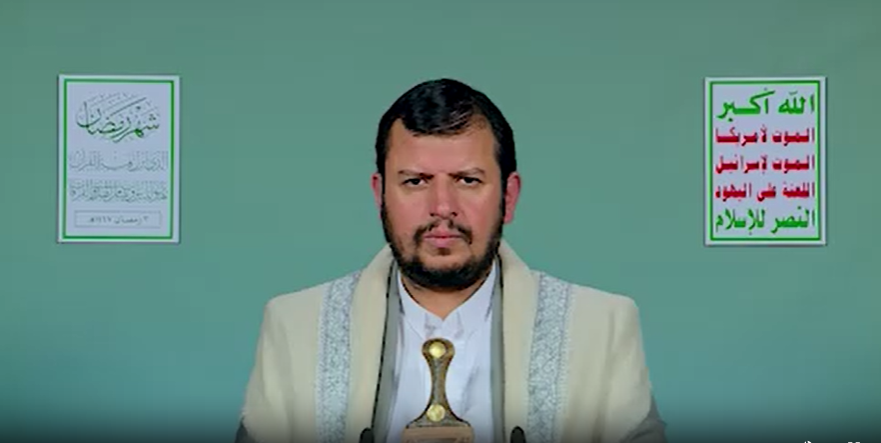
I seek refuge in Allah from Satan, the outcast.
In the name of Allah, the Compassionate, the Merciful.
Praise is to Allah, Lord of the Worlds. I believe that there is no god but Allah, the Sovereign and the Manifest Truth, and that our master Muhammad is His servant, Messenger, and Last Prophet.
O Allah! Confer Your salat and blessings upon Muhammad and the Family of Muhammad as You conferred Your salat and blessings upon Ibrahim and the Family of Ibrahim. You are Owner of Praise, Owner of Glory! And be pleased with Muhammad’s good companions and all Your righteous servants and mujahidin.
O Allah! Guide us and grant us acceptance, for You are the Hearing, the Knowing; accept our repentance, for You are the Relenting, the Merciful.
Brothers and sisters, peace be upon you and the mercy of Allah and His blessings.
In discussing the story of Prophet Musa (PBUH) in light of the blessed verses from Surah Al-Qasas, we spoke yesterday on some of the important lessons and insights drawn from those verses—lessons that we should absorb, especially as they relate to what Allah guides us to in light of the challenges we face today. Allah’s guidance is vast; the teachings within the Quranic verses offer much, and what we absorb, know, or present is merely a small part of it.
In light of His saying, {‘We relate‘}[Al-Qasas 28:3], it becomes clear to us the significance of this story, especially as it is revealed by Allah. It also comes as part of His guidance to His servants in His blessed book. With regard to His saying, {‘to you [O Prophet]‘}[Al-Qasas 28:3], we also spoke about the important implication that the one who received these revelations is the Prophet (PBUH&F), who is guided by Allah’s guidance, benefiting from it in knowledge, light, and inspiration drawn from the lives of previous prophets (Peace be upon them) and from historical events in the Holy Quran, along with lessons in general. All of this is part of his sacred prophetic mission.
{‘We relate to you [O Prophet] part of the story of Musa and Firaawn in truth‘}[Al-Qasas 28:3]. The narrated story is part of the remarkable and important account of Musa and Firaawn. What is mentioned from the story is a fraction, dictated by wisdom, the significance of the lessons that can be drawn from it, and the requirements of guidance. The full story is long, with significant and numerous events, marked by dramatic moments that spanned many years.
The story presents contrasting models, such as that of Musa (PBUH), a prime example of Allah’s mercy to His servants. He embodies divine guidance, benevolence, striving to rescue the oppressed, and confronting tyranny and arrogance. He is a model of trust in Allah, belief in His promise, and perseverance in fulfilling his prophetic duties in the face of exceedingly complex circumstances.
On the other hand, there is the model of Firaawn in the story, the ruler of Egypt during the time when Prophet Musa (PBUH) was born and raised. Firaawn led a powerful state, with a formidable military, vast economic resources, firm political control, and a submissive, obedient population. He employed all these capabilities in tyranny and arrogance, to the point of claiming divinity and lordship. His oppression deeply impacted the lives and reality of the people, making him a model of one of the most atrocious forms of tyranny, arrogance, injustice, and criminality.
When Allah (Glory be to Him) says, {‘We relate to you [O Prophet] part of the story of Musa and Firaawn in truth‘}[Al-Qasas 28:3], we know that this narrative, which Allah has provided for us, is pure and free from any myths, legends, falsehoods, or lies. It is grounded in factual reality, revealed and recited to Prophet Muhammad (PBUH&F) with a profound purpose.
{‘For a people who believe‘}[Al-Qasas 28:3]—these stories are signs of prophethood, and the believers draw guidance from such stories that strengthen their faith and benefit them in their faith-based duties. In this way, their belief in these stories enhances their steadfastness and trust in Allah’s promises, and they gain insight, awareness, and knowledge of Allah’s laws, growing certain that Allah is omnipotent. They, as believers, recognise the need to remain steadfast, never faltering or straying from the path of truth, no matter the overwhelming strength and the pressure of their enemies—who may outnumber and outgun them.
That is because Allah is fully capable of fulfilling His promises, and what may seem difficult to us is simple for Him, the Almighty. Therefore, He can bring about remarkable changes.
{‘Indeed, Firaawn crossed [all] limits in the land ‘}[Al-Qasas 28:4]. Firaawn transgressed from being a servant of Allah to becoming a tyrant and oppressor. His arrogance led him to claim divinity and enslave people, exercising his tyranny on the community through criminal practices and unjust policies.
{‘… and divided its people into different groups‘}[Al-Qasas 28:4]—this illustrates his use of a divide-and-rule strategy. He aimed to exploit the various factions within society to further his control, fostering divisions to strengthen his grip on power. This is the Pharaonic policy of tyranny, which thrives on exploiting societal differences, fostering further division, and using one group against another. This approach mirrors the tactics of modern-day tyrants—such as the Jews, America, and Israel—in their dealings, particularly with our Muslim Ummah.
{‘He used to oppress a group of them‘}[Al-Qasas 28:4]. Firaawn specifically targeted the Children of Israel, relying on policies of oppression, persecution, humiliation, and the most grievous forms of injustice. He used this to protect himself from the perceived threat they posed.
{‘Slaughtering their sons‘}[Al-Qasas 28:4]. The oppression became so extreme that Firaawn ordered the slaughter of their sons as a method of further weakening them and preventing their potential salvation. He used this as a precaution to eliminate any future leader who might rise from among them, someone prophesied by the soothsayers and pastors to lead them to liberation and bring an end to his reign. He also employed this as a form of population control, aiming to limit their numbers and push them towards extinction. This brutal tactic also served as a means of torture, inflicting severe suffering on them, reinforcing a state of subjugation, control, and humiliation. Doing nothing despite all of this reveals the point of weakness and submission the Children of Israel reached, where he slaughtered their sons in such a brutal, criminal manner, treating them as mere sheep, leading them to the butchers. The Children of Israel reached a point of such extreme weakness and submission that most, if not all, likely despaired of any hope of salvation, seeing no way out of their oppression.
{‘And sparing their women ‘}[Al-Qasas 28:4]—this was done in order to exploit them for service and moral corruption and to trample their dignity. These are among the tyrannical policies seen in every age: seeking to feminise society and then to weaken everyone—men and women alike—by targeting manliness and the values associated with it in society. They target both men and women so that all become corrupt. In contrast, Allah’s guidance and His true way elevate the whole of society—men and women—while also recognising the important roles even for women within the framework of divine guidance.
{‘Indeed, he was one of the corruptors‘}[Al-Qasas 28:4]. Firaawn, in his policies and measures, was corrupt; corruption was his habit and his way, and it continued relentlessly, taking various forms. This is the policy of tyrants: first, because they are corrupt within themselves; second, because they view corrupting society—and governing through corruption—as a means of control.
That blood-stained persecution sought above all to deny both the existence of the one who would lead to the liberation of the oppressed Children of Israel—Musa (PBUH). This is a brief summary of the previous lecture and some of the lessons and insights drawn from it.
In today’s lecture, our discussion proceeds in the light of the Quranic verse {‘But it was Our will to favour those who were oppressed in the land‘}[Al-Qasas 28:5]. {‘But it was Our will ‘} refers to the will of Allah—the One Who is merciful towards His servants, the Mighty, the Wise, and the One Who does not neglect His servants. He (Glory be to Him) wills to bestow His favour upon those who were oppressed in the land. This immense favour lay in delivering them from the enslavement, injustice, and oppression they suffered from and in transferring them into entirely different circumstances—circumstances in which they enjoyed dignity, honour, and true freedom. Moreover, they were honoured to undertake a sacred mission: to move in accordance with the teachings of Allah (Glory be to Him) in order to establish equity, promote goodness within society, confront tyranny, and so on.
This is part of Allah’s wise planning and one of the manifestations of His immense mercy towards His servants. It is an enduring divine law. For this reason, it was not expressed as something confined to the past—not a will limited to a particular period of human history that has since come to an end. Rather, it is one of Allah’s established and enduring laws, continuing across all generations. Thus, Allah wills the deliverance of the oppressed because He is merciful towards His servants—the Most Merciful of the merciful. He wills for them salvation and elevation into a leading role within society, enabling them to confront tyrants and the arrogant. It is, in fact, an abiding divine will: to rescue them and to choose them for a great and sacred mission. It is also among the manifestations of Allah’s saying, {‘Allah’s will always prevails‘}[Yusuf 12:21].
For this reason, the lesson drawn from the story of Musa (PBUH) and Firaawn is profoundly important. It reveals the scale of oppression endured by the Children of Israel on the one hand, and, in stark contrast, the formidable extent of Pharaoh’s tyranny, savagery, and despotism on the other. It shows how absolute his grip and control had become, set against the state of weakness, submission, and helplessness to which the Children of Israel had been reduced—to the point that they watched their young children being taken and slaughtered without any response whatsoever. It was a condition of oppression one can scarcely imagine. Yet, despite this, we see the profound transformations that occurred through Allah’s will (Glory be to Him).
In reflecting upon our own reality—whether at the global, regional or local level—we must recognise that among the enduring divine laws throughout history is that Allah delivers the oppressed. He does not leave tyrants, criminals, the arrogant and the unjust free to dominate and enslave people without intervening to rescue those who are wronged. Such a notion would be incompatible with the might and wisdom of Allah.
At the same time, it is essential that the oppressed themselves be conscious and aware, striving earnestly to rise from the condition in which they find themselves. In fact, the Jews themselves, who currently stand at the height of tyranny and arrogance, are fully aware of this established divine law—that it is Allah’s will to deliver the oppressed. For this reason, despite their control over the governments of our Islamic Ummah and their securing of the loyalty and submission of most leaders and rulers, they have not regarded this as sufficient to guarantee their dominance over this Ummah. They fear the peoples themselves—even though those peoples have reached an alarming state of subjugation, humiliation, and surrender, a condition that has settled heavily upon most of them. Precisely for that reason, they focus intently on corrupting the peoples themselves. Why? This is because when oppressed people become morally corrupted, they are no longer worthy of Allah’s support. They seek to distance them from Allah (Glory be to Him), to remove them from His care and mercy, and to cut them off from the means of deliverance and relief. They do so by corrupting them so that they fall into a condition in which divine retribution is brought upon them. This is one of the most important realities to understand.
People living in a state of oppression and subjugation— a condition that many take as a justification for surrender and often invoke it as a pretext for submission and for refusing to respond to any call to serious and meaningful action—represent a deeply alarming reality for the Jews. They are well aware of this state, having observed it even historically: Their forefathers once lived through such a phase of subjugation at its most extreme levels. And from that experience, they came to understand how deliverance from such a condition can be achieved.
For this reason, the Quran clearly distinguishes between different types of the oppressed, classifying them into three categories. Among them are the conscious ones. They are distinguished by their awareness of their circumstances and their lived reality. They are also not content with their condition, nor with the injustice, criminality, and arrogance practised against them by the tyrants. At the same time, they turn sincerely to Allah (the Almighty), seeking change in their condition. Such oppressed people—who possess the will to change, directing themselves towards Allah (Glory be to Him), and refuse to accept the reality imposed upon them—are described in the Holy Quran in the words of Allah (Glory be to Him): {‘And what is [the matter] with you that you fight not in the cause of Allah and [for] the oppressed among men, women, and children who cry out, “Our Lord! Deliver us from this land of oppressors! Appoint for us a saviour; appoint for us a helper—all by Your grace”‘}[An-Nisa 4:75]. These oppressed people—conscious and unresigned; aware of the injustice, persecution, and subjugation they endure; longing for liberation and turning to Allah—are truly deserving of His relief, His care, and His mercy.
Another category of the oppressed consists of those who are unaware of their reality, who do not long for change in their condition, and who do not turn to Allah in seeking transformation. Instead, they remain in a state of total surrender and inaction, possessing neither the will to change nor a sincere turning to Allah (Glory be to Him) in pursuit of that change. Allah (Glory be to Him) mentions examples of such people in the Holy Quran, saying, {‘When the angels seize the souls of those who have wronged themselves—scolding them, “What was wrong with you?” they will reply, “We were oppressed in the land.” The angels will respond, “Was Allah’s earth not spacious enough for you to emigrate?” It is they who will have Jahannam as their home—what an evil destination! Except helpless men, women, and children who cannot afford a way out—it is right to hope that Allah will pardon them. For Allah is Ever-Pardoning, All-Forgiving‘}[An-Nisa 4:97-99]. This type of oppressed people does not deserve Allah’s mercy (Glory be to Him), even in the Hereafter, as He says concerning them, {‘It is they who will have Jahannam as their home—what an evil destination!‘}[An-Nisa 4:97]. This is because they accepted their condition, remained in submission, lacked the will to change, and failed to pursue the means of relief and deliverance.
As for the third type of the oppressed, they are those who follow the tyrants and arrogant ones and align themselves with them. These people fall under the divine law: {‘This is how We make the wrongdoers [destructive] allies of one another because of their misdeeds‘}[ Al-An’am 6:129]. They are the ones about whom Allah says in the Holy Quran, {‘[Consider the day] when they will dispute in the Fire, and the lowly [followers] will appeal to the arrogant [leaders], “We were your [dedicated] followers, will you then shield us from a portion of the Fire?” The arrogant will say, “We are all in it! [For] Allah has already passed judgment over [His] servants”‘}[Ghafir 40:47-48].
Returning to the topic of the oppressed and the divine promise made to them, Allah says, {‘But it was Our will to favour those who were oppressed in the land‘}[Al-Qasas 28:5]. As we have mentioned, the Quranic wording makes clear that this is an established practice of Allah. Thus, Allah’s will concerning the state of the oppressed among the Children of Israel during that period fell within this very law: Allah says, {‘making them models [of faith] as well as successors‘}[Al-Qasas 28:5]. Indeed, the will of Allah went far beyond merely rescuing and relieving them from their situation. Rather, He willed to elevate them to a higher, greater, and more distinguished position, transforming them into an independent nation with its own leaders, and giving them the capacity to influence the world—a nation that could leave a profound impact, have a great effectiveness, and play an essential role. This very will of Allah (the Almighty) stemed from His wisdom and mercy towards His servants. It opens broad horizons and great hope in Allah for the oppressed, since it falls within this enduring divine practice.
For example, in the story of the Children of Israel, we see a transformation to a position they once deemed impossible. It was something they could never have anticipated. They were enslaved in every sense of the word. Indeed, Firaawn and Haman said, after the coming of Prophet Musa with the divine message, {‘Will we believe in two humans, like ourselves, whose people are slaves to us?‘}[Al-Mu’minun 23:47]. This is nothing less than a state of enslavement. However, Allah changed their state from that of complete subjugation and total surrender to that of a free and independent nation, with leaders among them who act within the framework of Allah’s commands and teachings. This represents a tremendous shift: from a condition of oppression, humiliation, submission, surrender, and loss of agency to one of leadership, administration, and a prominent role in society—to this high level! At the time, their enemy was the one dominating and controlling them, subjecting them to severe torment. Its domination stemmed from intense enmity, violating their sanctity and dignity, slaughtering their sons, and inflicting the harshest forms of torture. Despite such circumstances, this great transformation took place.
{‘Making them models [of faith] as well as successors‘}[Al-Qasas 28:5]—this role falls within the framework of a sacred mission: to carry forth the message of Allah and His teachings.
This role and this transformation have had many examples throughout history, including in the early period of Islam. In Mecca, the Messenger of Allah (PBUH&F) and the believers set out to establish the divine message and convey it before they migrated to Medina. At that time, they were in a condition of severe subjugation and endured immense suffering. Yet, during that very stage, Allah promised them victory, as reflected in Surah Ar-Rum, which referred to the coming changes that would occur at the level of the global conflict between the Romans and the Persians. Allah revealed to them that {‘On that day, the believers will rejoice at the victory willed by Allah. He gives victory to whoever He wills‘}[Ar-Rum 30:4-5]. In that situation, such a promise seemed almost unimaginable to some of the oppressed believers in Mecca, as they were experiencing persecution and subjugation and had no apparent indicators of strength or visible signs pointing to such a profound transformation.
Another example occurred during the preparation for the Battle of the Confederates, during the digging of the trench around Medina to confront the allied forces that had united—with Jewish planning—to attack the Muslims several years after the Prophet’s migration to Medina. The Messenger of Allah (PBUH&F) prepared to face the enemy and ordered the trench to be dug in accordance with military necessity. During the digging came the glad tidings that Islam would reach Sana’a in Yemen and Al-Mada’in in Iraq—then the capital of the Persian Empire—and even extend into territories under Roman control. At that time, the hypocrites said, {‘Allah and His Messenger have promised us nothing but delusion!‘}[Al-Ahzab 33:12]. They mocked even the divine promise and those glad tidings of a great transformation and were unable to comprehend how such a change could occur.
{‘And to establish them in the land‘}[Al-Qasas 28:6]—this establishment comes within the framework of those sacred responsibilities that are inseparably linked to it: acting in accordance with the message of Allah, His guidance, and His teachings. Thus, they assume a role that grants them authority over others and enables them to establish the religion of Allah (Glory be to Him).
The Quranic expression in all these promises affirms one of the divine laws of Allah (the Almighty), rather than merely reporting historical events. This constitutes one of the most significant aspects of reflection and admonition therein.
{‘And through them, We show Firaawn, Haman, and their soldiers [the fulfilment of] what they feared‘}[Al-Qasas 28:6]. This is because the arrogant tyrants—no matter how absolute their tyranny and control becomes and no matter how profound the state of subjugation becomes—often remain in a state of continuous anxiety about the oppressed, particularly the aware ones. They rely upon injustice as a means, persecution as a policy, and coercive force as a barrier and safeguard to prevent the rise and liberation of the oppressed.
In the blessed verse, {‘and through them, We show Firaawn, Haman‘}, the role of Haman is brought to the fore. He occupied a prominent position alongside Firaawn, serving as his minister. Likewise, in His saying, {‘and their soldiers ‘}, attention is drawn to the crucial role of the military forces of that time, and to the military capability and the striking power upon which they relied to perpetrate tyranny, injustice, and oppression.
{‘[The fulfilment of] what they feared‘}[Al-Qasas 28:6]—these are the very fears that shape their calculations regarding the oppressed and which drive them to adopt oppressive, tyrannical, and criminal measures: the deliverance and liberation of the oppressed. They also fear their victory, strength, and rise, as this is part of Allah’s laws—laws they discern in present realities, in historical events, or in what they anticipate may yet unfold.
We shall conclude our lecture today with this.
We ask Allah (Glory be to Him) to grant us success in seeking what pleases Him. O Allah, have mercy on our virtuous martyrs, heal the wounded among us, set free our captives, and grant us victory. You are the Hearer of Prayer!
Peace be upon you and the mercy of Allah and His blessings.