
War on Iran Rocks US Domestic Front: Congressional Divisions and Accusations of Covering Up Losses
The circle of domestic repercussions of the American war against Iran continues to widen, as the American street and the Capitol Hill turn into a stage for an unprecedented political and media conflict. The White House faces a wave of accusations of covering up the scale of human losses of US forces, amid a discrepancy between official and unofficial figures of casualties, both dead and wounded.
The spark of controversy was reignited after media reports and parliamentary sources revealed a significant gap between the official data of the Department of War (the Pentagon) and other estimates issued by oversight committees in Congress, fueling fears of “deliberate falsification” of casualty figures to alleviate growing public pressure against the continuation of military operations.
The spark of the crisis began on Tuesday and Wednesday, July 21–22, when controversy erupted following statements by US President Donald Trump, in which he compared the losses of his war against Iran (18 dead) to previous wars. This coincided with a stormy hearing for Secretary of War Pete Hegseth before Congress to request additional war funding.
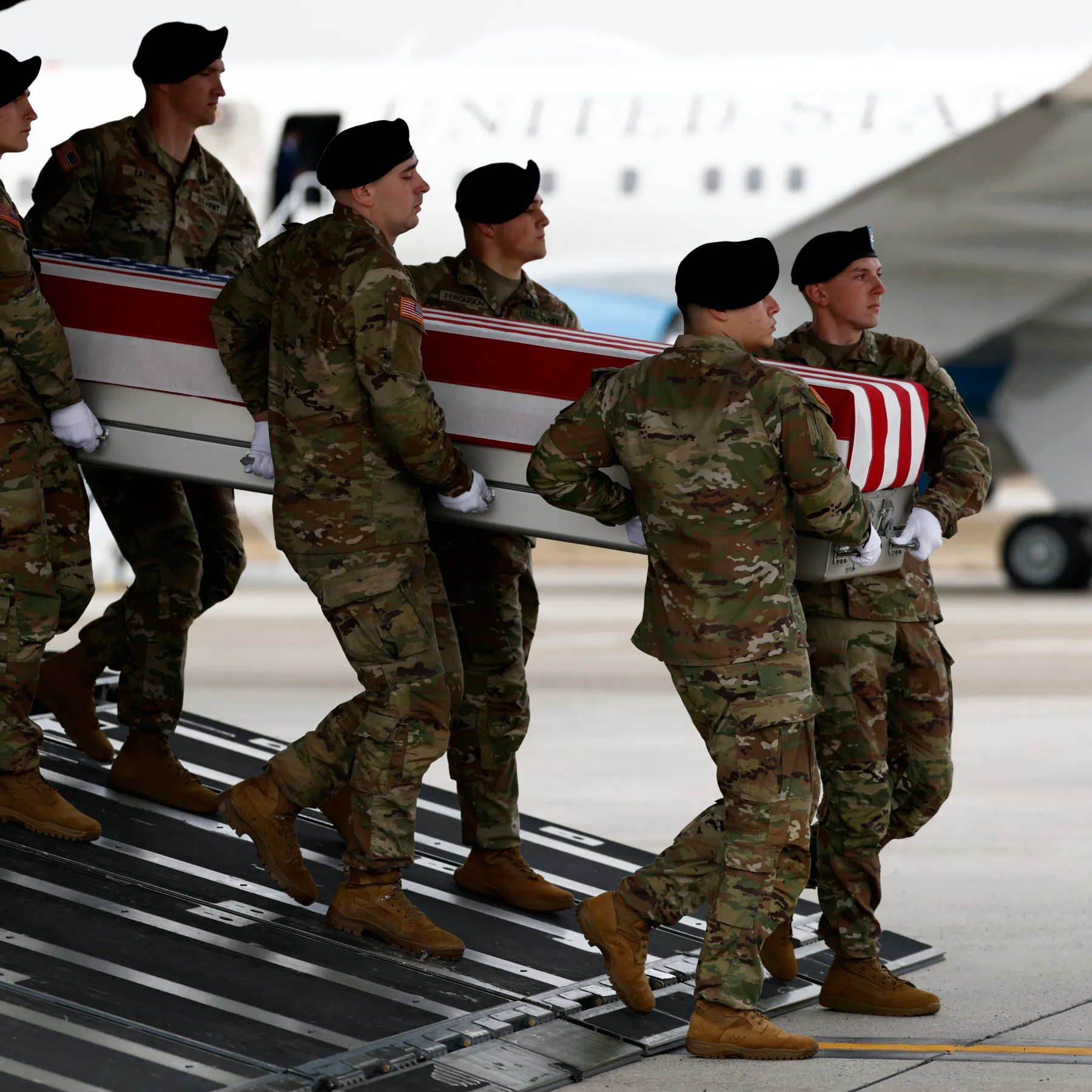
On Wednesday, July 22, the controversy escalated following the Pentagon’s announcement that approximately 100 soldiers had been injured in the recent attacks, and the arrival of the bodies of four service members at Dover Air Force Base, raising congressional and public questions about the true scale of the losses.
On Friday, July 24, the field and political repercussions of this controversy continued as US airstrikes entered their 13th consecutive night without achieving any objectives, while casualty figures remain concealed. In contrast, Iranian missile and drone strikes continue against all US bases in the region.
Meanwhile, Congress is experiencing a sharp division, with Democrats and Republicans exchanging accusations regarding the “constitutional legitimacy” of the war, as calls from both parties escalate for urgent public hearings to reveal the “full truth” about military objectives and actual losses, amid warnings that continued ambiguity exacerbates the crisis of trust between the administration and public opinion.
Cover-Up of Human Losses
Amid the escalating controversy over the war’s human losses, opposition factions within the United States accuse the Trump administration of deliberately concealing the true number of dead and wounded among US forces, by only announcing limited figures that do not reflect the actual scale of losses on the ground.
In Iran, the Islamic Revolutionary Guard Corps (IRGC) stated in a statement issued on Friday that the US administration is hiding the true scale of the losses its forces have suffered during the recent war against the Islamic Republic, affirming that Washington only reveals a limited portion of the casualty toll to the public.
The IRGC explained that the United States “has suffered hundreds of dead and even greater numbers of wounded during the recent criminal aggressive war,” noting that daily medical evacuations via air ambulances to the US military hospital in Germany reveal losses far exceeding what the US administration officially claims—which officially states that its death toll does not exceed 20 service members.
The statement added that the official American narrative does not reflect the reality of what happened on the ground, calling on American and Western media to open independent investigations into what it described as “hidden facts,” and to reveal the numbers of dead and wounded, the extent of damage to US forces, the financial costs of the war, and the mechanisms of oversight governing the publication of military information, affirming that the American people have the right to know the truth of what happened.
Political Disagreements
In a development reflecting the widening divisions within American institutions, the US House of Representatives voted in favor of a resolution calling on President Donald Trump to withdraw US forces from combat operations against Iran, a step described by observers as a new political setback for the US administration.
The resolution received the support of 214 representatives against 208 votes, after four Republican representatives joined the Democrats, based on the War Powers Act, which prohibits the continuation of military operations without congressional authorization.
The vote came amid escalating criticism within the United States regarding the management of the war, following the recent deaths of four American service members in the Middle East, amid growing fears of the conflict’s continuation without a clear strategy to end it.
In contrast, Reuters reported that the US Senate blocked a similar resolution proposed by Democratic members, which aimed to halt the war until the US administration obtained formal authorization from Congress.
According to the agency, the resolution failed after 49 members voted against it versus 47 in favor, in the latest round of political conflict between Democrats and the Trump administration over the president’s powers to use military force against Iran. Democrats insist on the War Powers Act of 1973, while the administration maintains that the president has constitutional powers to conduct military operations.
At the same time, US President Donald Trump attended on Wednesday the official reception ceremony for the bodies of American service members killed during the aggression on Iran, after the US Department of Defense (Pentagon) announced the deaths of four soldiers during the weekend, including three at a military base in Jordan and one in northern Iraq.
However, the file of military losses reignited widespread controversy after the New York Times reported, citing three military officials, that the Pentagon had reduced the number of deaths published on its website from 18 to 14 soldiers, explaining that the administration decided to remove the names of four soldiers, considering that they died after President Trump announced the ceasefire, raising questions about the mechanism for calculating military losses.
In a related context, the Associated Press previously revealed, based on data from the US Central Command (CENTCOM), that the number of US Army deaths during the war had risen to 16 service members, indicating an escalation in the human cost of the military confrontation with Iran. It explained that US forces deployed in the Middle East have become direct targets of Iranian attacks, despite the war relying heavily on drones and long-range missiles, noting that the nature of modern warfare has not reduced the risks facing US forces.
According to the agency, losses began early in the war, when an Iranian drone targeted a civilian port in Kuwait on February 28, killing six American soldiers from a logistics unit affiliated with the state of Iowa.
On March 1, a US soldier was injured in an attack targeting Prince Sultan Air Base in Saudi Arabia, later dying from his wounds after more than a week.
March also saw the deaths of six other service members following the crash of a KC-135 refueling aircraft within Iraqi airspace while participating in supporting military operations against Iran. The US Navy later announced the death of one of its pilots following a helicopter crash in the Arabian Sea during July, confirming that the incident was not the result of hostile action.
In the latest developments, CENTCOM announced the deaths of two American soldiers in Jordan, as human losses among US forces deployed in the region continue.
Popular Anger
On another front, a wave of anger escalated within the United States following the announcement of the deaths of American soldiers in Jordan, as social media platforms witnessed a widespread campaign criticizing the continuation of the war and holding the US administration responsible for dragging soldiers into a conflict that does not serve American interests.
Many American journalists and activists agreed that the soldiers “are dying for Israel,” demanding an end to the war and the return of US forces to their country. Others accused the US administration of hiding the true scale of human and financial losses, considering that American youth are paying the price for foreign policies that do not enjoy domestic consensus.
The deaths of soldiers in the ranks of US forces also reignited questions about the safety of US forces at bases in the Middle East, as these facilities were generally not designed to withstand retaliatory strikes, because during previous wars in Iraq and Afghanistan, fighting took place within those two countries and not at regional facilities that support combat operations.
Before the war began, the Pentagon moved many of its forces from large bases in anticipation of Tehran’s response targeting those facilities. However, Iran’s response was broader, targeting both large and small facilities, and threatening to strike any country that supports American military operations—an indication of Iran’s deterrent power.
The Washington Post quoted a soldier previously deployed at the Muwaffaq Salti Air Base in Jordan as saying that many of the buildings there were metal trailers and thin-walled tents incapable of withstanding missile, mortar, or drone attacks.
However, even newer constructions at some bases in the region, which now include layers of thick walls, cannot protect against a direct hit from a ballistic missile, the soldier said.
Trump’s Denial
Contrary to the concerns and opposition reflected in opinion polls in the country, US President Donald Trump claimed on Wednesday that the American people do not oppose the ongoing war, considering that public concerns are primarily focused on rising fuel and gas prices, not on the military campaign itself.
In contrast to the US president’s claim, a joint poll conducted by the Washington Post and Ipsos last week revealed that 68% of Americans view the war as “not worth fighting,” compared to only 28% who consider it worthwhile—the highest negative margin compared to previous polls on the Iraq and Afghanistan wars.
These results reflect the continued rejection by the majority of the American public of the war launched by the Trump administration in late February, contrary to what official statements promote.
These developments reflect the widening debate within the United States regarding the war on Iran, amid conflicting official figures on military losses, escalating divisions within Congress, and growing popular and media pressures demanding an end to military operations, amid repeated calls to reveal the full facts regarding the cost of the war and its repercussions on the American domestic front, and more importantly, its objectives and who benefits from it.