
Yemen’s Rajum Drones Showcase Growing Engineering Edge in Modern Warfare
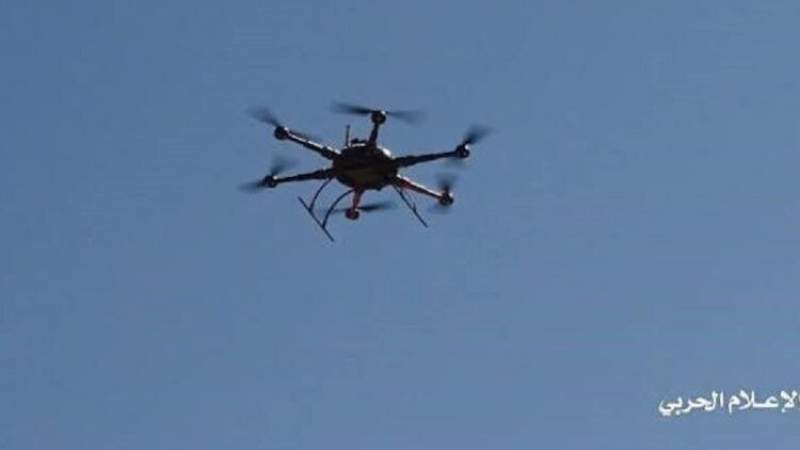
Footage released by Yemen’s Military Media showing attacks on Saudi troop concentrations, vehicles and affiliated forces using Rajum drones has highlighted a major shift in the Yemeni Armed Forces’ offensive capabilities.
The Rajum unmanned aircraft are described as among Yemen’s latest domestically manufactured FPV drones. The aircraft reportedly uses six rotors and a powerful electric motor, along with control systems and high-resolution day-and-night optical cameras.
Designed as a smart, multi-role platform, the drone is capable of vertical takeoff and landing, giving it operational flexibility. Its main features include:
Range and guidance: An operating and control range exceeding 10 kilometers, with upgraded versions reaching 20 kilometers. The drone is operated through a ground control station and an FPV guidance system equipped with advanced electronic-jamming resistance.
Payload capacity: The aircraft can carry payloads of up to 10 kilograms and is designed to carry four to six bombs per sortie, including 120mm shells and anti-armor and anti-personnel munitions.
Multiple roles: It can reportedly be used for surveillance and reconnaissance, precision strikes against stationary and moving targets, and attacks on armored equipment such as tanks and military vehicles.
Low operating cost: Its relatively low manufacturing cost and ability to be operated by a single person make it an economical yet capable weapon on the battlefield.
High Destructive Capability: Targeting Abrams Tanks
Footage shows the drone causing extensive damage to Saudi M1A2S Abrams main battle tanks, described as among the most heavily protected armored vehicles. The footage reportedly shows munitions striking vertically at less-protected areas of the tanks, particularly the rear of the turret, where the ammunition compartment is located, resulting in ammunition explosions and the destruction of the vehicles.
Operational Expertise
What is truly remarkable is the advanced level reached by the Yemeni crews operating these drones. They are not merely operators, but field experts who have mastered the art of warfare using this technology over nine years of confronting the US-Saudi aggression. The footage has demonstrated some of their operational expertise, including:
Reading the battlefield and adapting to conditions: The crews have shown an ability to choose the right moment to strike, targeting concentrations of Saudi mercenaries while they are assembled and destroying vehicles at congested points, thereby increasing human and material losses.
Hit-and-run tactics: The crews’ ability to deploy rapidly, launch from multiple positions and then withdraw makes these units difficult to detect and target with counter-fire, turning them into a dynamic striking force on the battlefield.
The Rajum experience has therefore demonstrated that military superiority is measured not only by technology, but also by the ability of personnel to develop methods and tactics that maximize the weapon’s effectiveness in battle. This system represents a unique operational integration of local manufacturing, tactical intelligence and battlefield expertise.
The destruction of Saudi troop concentrations and fortified Abrams tanks using these aircraft has become a tangible reality that could go down in military history as one of the most successful examples of vertical aerial strikes in modern warfare.
The emergence of the Rajum drone reflects Yemen’s broader push to develop locally manufactured military technology amid years of war and restrictions. Yemeni forces have increasingly relied on domestically developed drones and missile systems, seeking to combine relatively low-cost technology with battlefield experience and evolving tactics.