
Iran Air Defense Says 370 Enemy Aircraft Struck in US-Israeli War
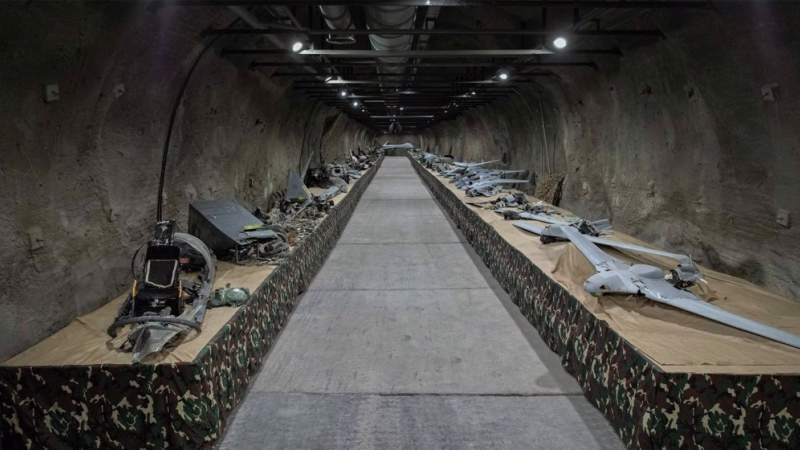
Iran’s Army air defense forces targeted more than 370 enemy aircraft during the recent US-Israeli aggression and shot down enemy aircraft and drones, a senior commander says, crediting domestically developed systems which have strengthened the country’s ability to defend its airspace.
Brigadier General Mohammad Sadeghian, deputy coordinator of the Army’s Air Defense Force, said Friday that Iran’s armed forces used the experience of the 12-day war to identify weaknesses and strengthen their defenses ahead of the second aggression that began on Feb. 28.
“By drawing on the valuable experiences of the 12-day war, properly identifying our strengths and addressing our weaknesses, Iran’s armed forces were able to plan for the war that began on Feb. 28 in such a way that more than 370 enemy aircraft were targeted,” he said.
“Enemy aircraft and drones were shot down, something that was unbelievable to them, because they believed that through their extensive attacks they had managed, on the first day of the war, to hit all of the country’s air-defense radars,” Sadeghian said.
Sadeghian recounted that an American MQ-9 strategic drone was hit in the waters of the Persian Gulf over the previous two days.
The statement follows an announcement by the Islamic Revolutionary Guard Corps that its air-defense forces had shot down a US MQ-9 Reaper over the Strait of Hormuz earlier this week.
The IRGC said the drone was struck by missile fire from its modern air-defense units before crashing into the waters of the Persian Gulf.
The latest incident adds to reported losses suffered by the US MQ-9 Reaper fleet since the beginning of the aggression. The US Air Force has described the Reaper as the “most valuable player” in its operations against Iran.
Bloomberg recently reported that Iran had destroyed more than two dozen MQ-9s since the start of the war, representing nearly 20% of the Pentagon’s pre-war inventory.
At roughly $30 million per aircraft, the reported losses would amount to about $1 billion. The operational US Air Force Reaper fleet has also reportedly fallen to about 135 aircraft, below an internally cited minimum of 189, according to congressional testimony reported by Bloomberg and The War Zone.
Brigadier General Farzad Fereidouni, commander of the Army Air Defense Force’s Specialized Training Center, said in a separate speech that Iranian forces, young people and scientists have closed a significant portion of Iran’s technological and equipment gaps despite sanctions and other constraints.
“Through the determined efforts of the armed forces and the rapid advances of the country’s young people and scientists, a significant part of the technological and equipment gaps has been addressed, and today we have achieved considerable indigenous capabilities,” Fereidouni said.
He said Iran has advanced its air defenses by repairing and upgrading equipment damaged during the eight-year Iran-Iraq war and older systems, producing sensitive components, reverse-engineering advanced foreign systems and designing and manufacturing new ones.
Fereidouni acknowledged that Iran still has work to do.
“We have overcome a significant part of the gaps and shortcomings, but we are still some distance from reaching the peaks we seek and must make greater efforts,” he said.
Sadeghian likewise said cooperation between the armed forces, the Defense Ministry, domestic industries and knowledge-based companies has eliminated critical bottlenecks in parts production and reduced the need for foreign systems.
“Planning was carried out in such a way that there is no longer a bottleneck in parts manufacturing or a need to purchase foreign systems,” he said.
He added that indigenous systems, domestic intelligent software and trained personnel have strengthened Iran’s ability to sustain its air-defense network and reduced its reliance on foreign suppliers and imported military equipment.
“Iran’s indigenous systems have helped the country’s military forces avoid dependence on foreign countries and the payment of dollars that, under these circumstances, may be needed by the country to address the general needs of society,” he said.
Sadeghian said Army and IRGC forces operated together under a unified command during the fighting.
“Contrary to what is said in the tweets, statements and speeches of US and Israeli leaders, Iran’s Army and IRGC, alongside the police and the Basij, are alive, standing, resilient and powerful,” he said.
Fereidouni said the performance of Iran’s armed forces has prevented the enemy from achieving its objectives in recent wars, while warning that Tehran needed to remain alert and strengthen social cohesion.
He said Iran’s armed forces have repaired and developed their capabilities despite the attacks and will continue to protect the country’s borders and territorial integrity.