
Mohammed Abdulsalam reveals details regarding Saudi Arabia’s lack of seriousness in implementing roadmap agreement
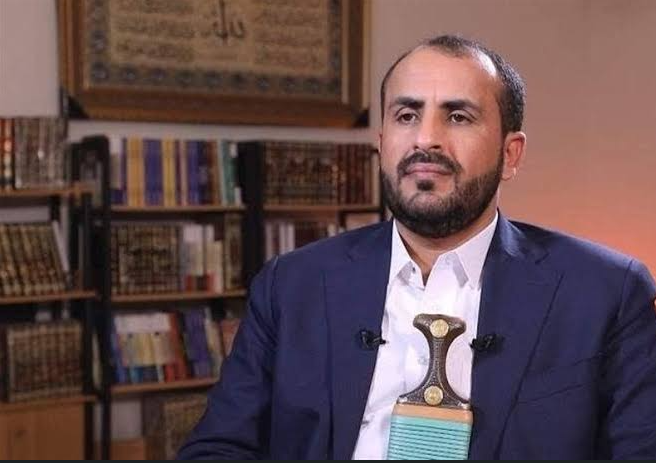
His statement comes in response to claims suggesting that Sana’a has rejected negotiations or a meeting with the Saudi side in the Sultanate of Oman.
In a post on the platform “X” on Sunday, Abdulsalam noted that both before the recent escalation and following the speech delivered by the Leader—marking the anniversary of the Hijra and calling for an end to the blockade and the implementation of urgent humanitarian measures—communications were held with Saudi Arabia, both directly and indirectly. These communications urged the Saudis to honor the agreements reached in the “roadmap” prior to “Al-Aqsa Flood” operation.
Abdulsalam pointed out that several proposals were submitted, yet, regrettably, the Saudi side failed to take even a single step forward.
He further noted that the Saudi enemy appears to believe that regional and international shifts—along with Yemen’s participation in “Al-Aqsa Flood”—have absolved them of their obligations toward Yemen. They seemingly assume that intensifying humanitarian and economic pressures will force Sanaa to accept terms that the Saudis were unable to secure through military means.
The head of the National Delegation also mentioned that, prior to the Saudi bombing of Sana’a Airport on July 13, 2026, contact was made with the Saudi enemy to warn them of the gravity of such an action. They were urged to allow the return of the official delegation, along with accompanying patients and stranded individuals.
Unfortunately, the Saudis remained intransigent and proceeded to bomb the airport—a provocative act that effectively brought an end to the truce and the period of de-escalation.
He emphasized that, in light of this grave violation—characterized by the continued imposition of a blockade on Yemen’s airports and ports, the obstruction of political and humanitarian solutions, and a persistent refusal to engage with any realistic or equitable proposals—it became incumbent upon the Yemeni Armed Forces to fulfill their duty.
He noted that “a few days after the first retaliatory operation against the Saudi side, our brothers in the Sultanate of Oman reached out to us with several proposals for de-escalation. We responded positively; among these proposals was a five-day truce, intended to allow for negotiations in a calm environment. Within three days, we conveyed our agreement to the Saudi request for a five-day cessation of hostilities, contingent upon the Saudi side’s acceptance of our humanitarian demands.”
Abdulsalam pointed out that nearly 21 days passed between the submission of this response and the commencement of military operations on the West Coast. During this interval, the Saudi side provided no indication of a willingness to address the humanitarian demands—demands they had, in fact, already agreed to prior to the ‘Al-Aqsa Flood’ operation.
He further stressed that this period coincided with intensive activity on the ground, involving the mobilization of forces, the amassing of weaponry, and an escalation in hostilities. This led the national delegation to conclude that the delay was merely a tactic to buy time, and that the introduction of additional conditions further demonstrated a lack of genuine intent on the part of the Saudi side.