
Analysis: Abha Airport Strike Signals New Air Deterrence
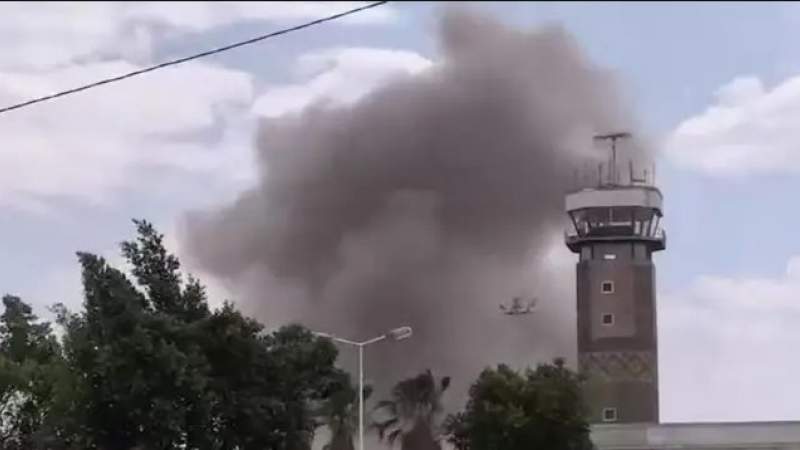
The Yemeni Armed Forces’ announcement that they targeted Saudi Arabia’s Abha International Airport with ballistic missiles and declared an air blockade on Saudi airports has triggered broad political and media reactions, with analysts describing the move as the beginning of a new phase in Yemen’s deterrence strategy against Saudi Arabia.
The operation came in response to the recent Saudi aggression on Sana’a International Airport and establishes a new deterrence equation: “airport for airport, blockade for blockade.”
Commentators said the warning issued to airlines against using Saudi airports reflects Sana’a’s determination to enforce the declared air blockade and shift the confrontation into Saudi airspace unless the war and blockade imposed on Yemen come to an end.
Ansarullah Political Bureau member Ali Al-Qahoum said international support for Saudi Arabia was not a new development, arguing that such positions have remained unchanged since the outset of the US-Saudi-UAE aggression and blockade on Yemen. He said these positions are driven by Saudi and Emirati influence and broader geopolitical interests.
Former Deputy Prime Minister Sheikh Hussein Hazeb said Yemen could expand its pressure campaign by adopting measures similar to those implemented during the Red Sea operations, while adapting them to the current phase of confrontation. He said such steps could help compel an end to the war and blockade, stressing that Yemen possesses multiple options on land and at sea.
Poet Yassin Al-Farawi described the strike on Abha Airport as signaling the end of the negotiation phase and the beginning of a new stage aimed at breaking the blockade, calling for continued military operations.
Writer Malek Al-Madani pointed to the absence of official international condemnation of the Saudi strike on Sana’a International Airport, arguing that the differing international reactions could indicate a broader shift in the regional political landscape.
Activist Sumaya Asalah described the Abha Airport strike as retaliation for the Saudi attack on Sana’a International Airport. She questioned whether Riyadh was moving toward direct confrontation or being pushed by the United States to deepen its military involvement in a way that serves American and Israeli interests.
Meanwhile, Al-Masirah’s correspondent in Al-Jawf reported that operations at Abha International Airport remained suspended from 2:30 p.m., with dozens of flights canceled and at least one incoming flight from Sharjah diverted to Jeddah following the escalation between Sana’a and Riyadh.
The developments followed the Saudi attempt to intercept an Iranian civilian aircraft heading to Sana’a International Airport and the subsequent statement by the Yemeni Armed Forces warning of a “comprehensive response” to any further aggression.
The declaration of an air blockade on Saudi airports marks a significant escalation in Yemen’s military posture, extending the scope of confrontation beyond its borders and reinforcing Sana’a’s stated policy of responding to attacks on civilian infrastructure with reciprocal measures.