
Gas Crisis Deepens in Aden for 3rd Week: Saudi-Backed Authorities Face Criticism
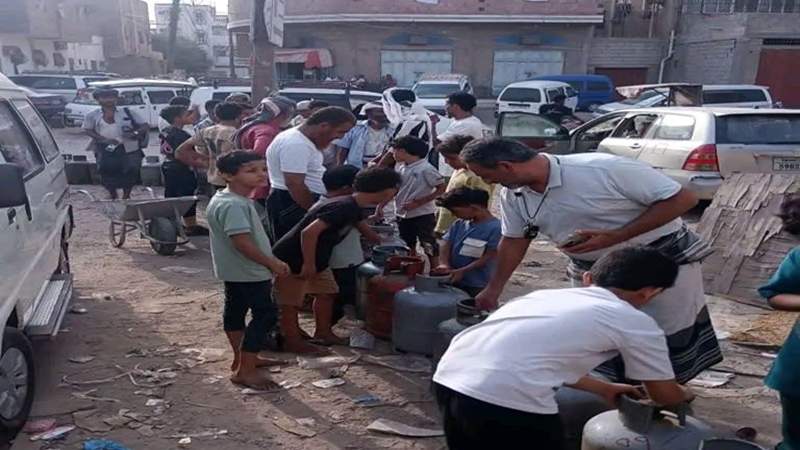
A shortage of household cooking gas has entered its third consecutive week in Aden and other southern provinces under the control of Saudi-backed authorities, with residents reporting difficulty obtaining cylinders and soaring prices on the black market.
The shortage has coincided with a fuel crisis affecting transportation, while residents accuse the authorities of failing to address the worsening situation amid deteriorating living conditions, delayed salaries, rising prices and persistent power and water disruptions.
Local sources said the current crisis differs from previous shortages, which were generally short-lived before supplies returned to normal. Gas availability, they said, has increasingly become a recurring problem in recent months, placing additional pressure on households already struggling with declining purchasing power and rising costs of basic necessities.
Large numbers of residents have reportedly been lining up outside gas distribution points from early morning, often waiting for hours before available supplies run out. Some have consequently turned to the black market, where cylinders are sold at prices significantly above official rates.
The crisis has become particularly difficult amid high summer temperatures and recurring electricity and water outages, adding another burden to families already facing deteriorating living conditions.
The shortages have also affected transportation. Reduced fuel availability has reportedly led to fewer buses and taxis operating in Aden and higher transport fares, forcing students, employees and other residents to reduce their daily travel.
In Sheikh Othman district, residents have also raised concerns over the distribution of gas allocations, including news that some agencies and distribution centers have diverted quantities designated for households to restaurants. The move has prompted calls for an investigation into the distribution system and whether household allocations are reaching their intended recipients.
A local worker monitoring the gas situation said he had received several complaints in recent days about shortages in Al-Mamdara and central Sheikh Othman, adding that such complaints had become increasingly frequent.
Local sources said the price of a gas cylinder had reached around 18,000 Yemeni rials in one reported case, raising questions over the reasons for the sharp increase, particularly amid supplies allocated to restaurants continuing to be delivered regularly.
Meanwhile, activists on social media have said that influential networks affiliated with the Saudi-backed authorities are stockpiling gas in private compounds and reselling it on the black market when supplies become scarce. They linked the activity to the distribution of official allocations and the movement of gas tankers between areas under the control of Saudi-backed forces.
Activists have called for an official investigation to identify those involved in hoarding or illegally diverting household allocations, as well as to trace gas supplies from the departure of tankers through to their arrival at distribution centers.
Residents have also called for authorities to publicly disclose the quantities of gas delivered to Aden, the amounts distributed to each district, the criteria used to determine allocations and the entities receiving them. They argue that greater transparency would help identify gaps in the supply chain and prevent shortages from becoming an opportunity for speculation and monopolization.
They stressed that the problem extends beyond the arrival of gas in Aden to transportation, distribution and oversight, calling for a transparent mechanism to ensure that household allocations reach consumers at official prices and do not leak into the black market.
As the crisis enters its third week, pressure on households continues to mount, with long queues at distribution centers and a parallel transportation crisis caused by fuel shortages. Residents are demanding concrete measures to restore regular gas supplies, regulate prices and hold accountable anyone found to be concealing, hoarding or illegally selling household allocations.
The gas shortage comes amid broader economic and service-related pressures in Aden and other areas controlled by the Saudi-backed authorities, where residents have repeatedly complained about high living costs, delayed salaries, electricity outages and fuel shortages. The latest crisis has increasingly affected daily household needs and transportation, while questions over distribution and black-market activity have intensified calls for greater oversight and transparency.