
Leader’s Speech Signals New Phase in Yemen-Saudi Confrontation
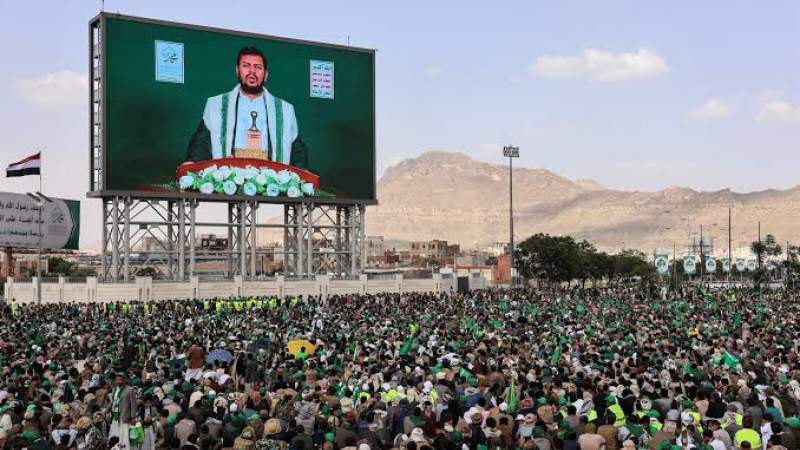
The recent speech by leader of the revolution Sayyed Abdulmalik Badreddin al-Houthi redefined the comprehensive nature of the conflict with Saudi Arabia, drawing a clearer picture of the equation that will govern the coming phase.
Moving past merely explaining the aggression and blockade and describing their humanitarian and economic impacts, the speech delivered a decisive stance: Yemen will no longer tolerate continued foreign control over its airports, ports, and resources. Any return to full-scale escalation will place vital Saudi interests and facilities directly within Yemen’s declared deterrence equation.
The core of this speech centers on absolute Yemeni sovereignty and the inherent, non-negotiable rights of the Yemeni people—not negotiating chips for Saudi Arabia to grant or withhold. The Yemeni response does not aim to manage a passing crisis; it seeks to end an entire era of subjugation, shifting the relationship from guardianship to peer-to-peer, and from external control to mutual sovereignty.
The speech poses a fundamental question: by what right does another country control where Yemenis travel, how their goods arrive, how their ports operate, and how their wealth is spent? Under what justification does Saudi Arabia treat Yemen as a guardian, deciding what enters and leaves, who travels and returns, and what is permitted or banned?
The Leader’s speech leaves Saudi Arabia with two clear choices: either revise its policies and transition to agreements that respect Yemen’s sovereignty and the rights of its people, or continue down the path of entanglement and escalation, putting its vital interests and facilities directly in the line of fire.
Thus, Riyadh’s options are limited: end the aggression, open the airports and ports, lift travel and trade restrictions, and allow the Yemeni people to benefit from their oil and gas wealth; or watch the deterrence equation shift from a verbal warning to a battlefield reality.
Under this vision, the era of merely demanding rights is over; the era of defending them has begun. Sana’a will no longer accept a truce that secures the other side while the Yemeni people remain under blockade and economic strangulation.
A return to war will not be a walk in the park, nor will it turn back the clock. Yemen has changed, the balance of deterrence has shifted, and any new aggression will be far more costly and devastating than before.
Yemen is not where it was at the start of the war. It has accumulated vast military experience, developed its drone and missile capabilities, and is now fully capable of striking distant, highly sensitive targets.
Consequently, if Saudi Arabia returns to direct confrontation, it will not face a rerun of previous rounds. The regional landscape is much more complex, and the conflict in the Red Sea is now intertwined with broader confrontations. Any new escalation will not remain confined to the Yemeni-Saudi border; it will inevitably spill over into global energy security, shipping lanes, trade, and open regional conflicts.
The least costly way out for Riyadh is not to test Yemen’s capabilities once again, but to transition from managing the crisis to solving it, and from maintaining the blockade to building clear agreements based on sovereignty, rights, and good neighborliness.
The door to peace is not closed. The Yemeni leadership and people do not seek war, but they will not run from it if it is imposed. They extend their hands toward a just and honorable peace, while keeping all options on the table to counter blockade and aggression.
Over the past years, Yemenis have proven that they do not break under pressure or back down from threats. Every attempt to subdue them has only made them more resilient, united, and determined to defend their homeland and dignity.
Today, Yemenis are prepared for all possibilities, confident in their leadership, and steadfast in demanding their rights. They know that freedom is not begged for, sovereignty is not granted, and a blockade cannot become a permanent reality imposed on an entire nation.
The ball is in Riyadh’s court: either choose a settlement that respects Yemen and its people, or bear the consequences of a confrontation under entirely new rules. For Yemen, taking action remains a sacred duty, regardless of the sacrifices or the outcomes.