
Legal expert: 2nd phase of ceasefire has not improved Humanitarian situation in Gaza
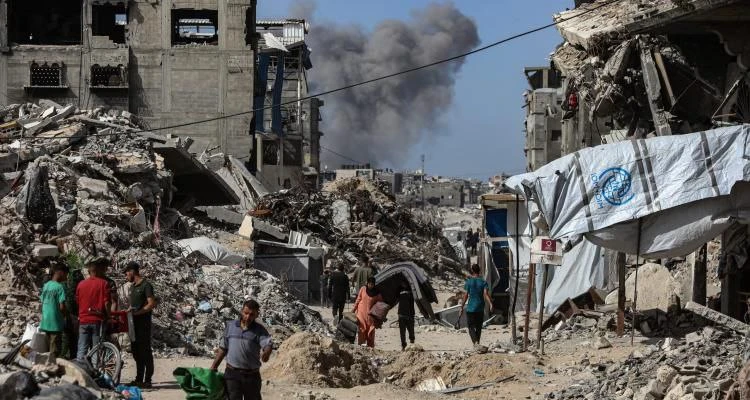
Legal expert and consultant Osama Saad confirmed on Sunday that the implementation of the second phase of the ceasefire agreement in the Gaza Strip has not resulted in any tangible improvement in the humanitarian situation. On the contrary, it has coincided with the continuation of severe restrictions on the entry of aid, particularly medical supplies, which has exacerbated the health crisis in the Strip.
Saad explained in a statement to the Palestinian news agency Shihab that what is happening cannot be considered merely a technical reduction in the volume of aid, but rather reflects a systematic approach that is intensifying the humanitarian catastrophe.
He noted that international expectations had indicated that this phase would witness the beginning of recovery and relief, but the reality shows a worrying reduction in the flow of vital supplies, especially medicines and equipment needed to support the deteriorating health sector.
He pointed out that restricting or reducing the entry of aid into the Gaza Strip constitutes, from a legal standpoint, a grave violation of the rules of international humanitarian law, which mandate the protection of civilians and guarantee unimpeded access to healthcare during armed conflicts. He argued that depriving the population of basic health services could amount to collective punishment, prohibited under the Fourth Geneva Convention, and might even constitute an international crime according to the Rome Statute of the International Criminal Court.
He emphasized that the ceasefire does not suspend the application of international law, stressing that any targeting of civilians constitutes a breach of the agreement and a violation of the principles of distinction and proportionality in armed conflicts, which are fundamental and binding rules.
The legal expert stated that directing attacks against civilians entails criminal liability at both the individual and international levels, a liability that is not subject to any statute of limitations. He noted that the conditions imposed on the residents of the Gaza Strip could contribute to creating an uninhabitable environment and lead to forced displacement.
Saad called on international mediators to exert pressure to ensure the full implementation of the ceasefire agreement, the opening of border crossings, and the commencement of reconstruction efforts. He also urged the United Nations and the international community to take concrete steps to enhance the protection of civilians.
He further urged the Prosecutor of the International Criminal Court to include incidents that occurred after the agreement came into effect in the ongoing investigations and to broaden the scope of legal accountability for those responsible.