
Spokesman: End of War in Lebanon Integral Part of Iran-US MoU
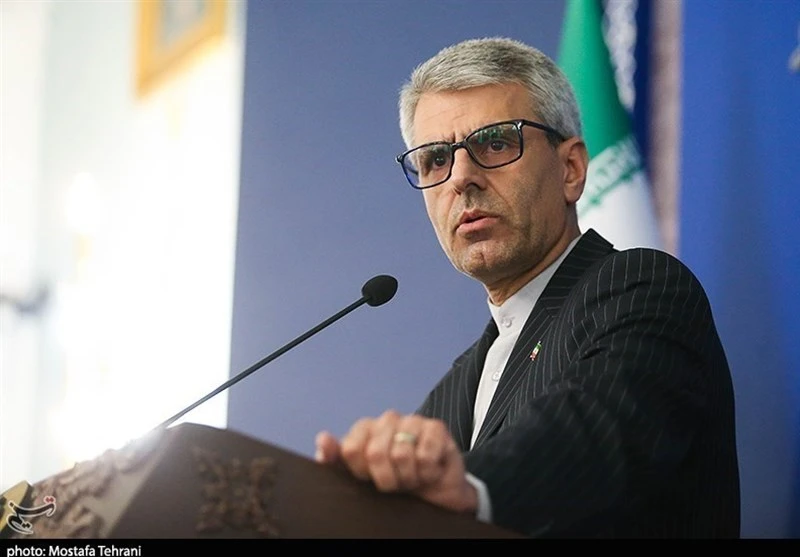
Spokesperson for the Iranian Foreign Ministry Esmaeil Baqaei made it clear that Lebanon and ending the war in the Arab country constitute an inseparable part of the understanding reached between Iran and the US.
Speaking to reporters at a weekly press conference on Monday, Baqaei said the finalization of the memorandum of understanding between Iran and the US to end military confrontation on all fronts, including Lebanon, was highly significant and came as a result of standing firm against two malicious actors.
Commenting on the continuation of the Zionist regime’s attacks against Lebanon and Iran’s response, the spokesman said that at the same time efforts to reach the understanding were reaching their peak, the Israeli regime carried out crimes in Beirut’s southern suburbs.
Baqaei said every decision is made based on a precise and comprehensive assessment of Iran’s national interests and added that over time it would become clearer how the Israeli regime’s terrorist act ultimately resulted in maximizing the national interests of both Iran and Lebanon.
Future generations, he said, would see that Iran and its allies did not allow the Israeli regime’s actions to disrupt efforts aimed at securing the interests of Iran and Lebanon and that the crime ultimately strengthened the cohesion of the Axis of Resistance against the Zionist regime.
The spokesman reiterated that Lebanon and ending the war in that country are an inseparable component of the war-ending understanding between Iran and the US and said Iran has demonstrated both determination and seriousness on the issue and will continue to monitor developments carefully.
Addressing references to Lebanon in the memorandum, Baqaei said the word “Lebanon” appears three times in the text.
He added that the memorandum explicitly refers to ending the war in a way that includes Lebanon and emphasizes respect for Lebanon’s sovereignty and territorial integrity, adding that the framework of commitments has been clearly defined.
His comments came after Pakistani Prime Minister Shehbaz Sharif announced that a peace deal had been reached between Iran and the US following weeks of negotiations mediated by Pakistan with support from Qatar, Saudi Arabia, and Turkey. According to Sharif, the agreement provides for the immediate and permanent end of military operations on all fronts, including Lebanon, and is scheduled to be formally signed in Switzerland on June 19.
Iranian Deputy Foreign Minister Kazem Gharibabadi later confirmed that the memorandum of understanding (MoU) had been finalized, saying Tehran had incorporated its key positions into the text and would verify implementation of US commitments before entering further negotiations. He said the agreement includes the lifting of the US naval blockade and a phased process toward broader talks on sanctions relief, reconstruction, and other issues.
Iran’s Supreme National Security Council subsequently announced that the finalized MoU would end war and military operations across all fronts and that future negotiations would proceed only after implementation of commitments by the other side. An informed source also said that final amendments proposed by Iran included provisions related to the management of the Strait of Hormuz and guarantees for Lebanon’s sovereignty and territorial integrity.