
War of Shifting Calculations: What does Israeli enemy want from Gaza after October 2025?
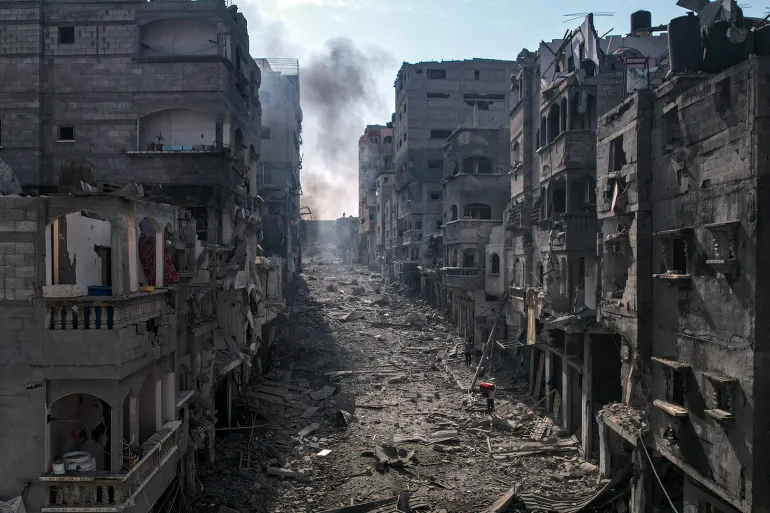
The Israeli enemy continues its genocidal war on the Gaza Strip, disregarding the ceasefire agreement, obstructing progress toward its subsequent phases, and ignoring all efforts by mediators and guarantors of the deal.
More than 900 people have been killed and over 2,700 injured since the ceasefire came into effect on October 11, 2025. Meanwhile, the enemy continues its violations through air and artillery strikes, the demolition of homes, and live gunfire.
The enemy also issues sudden evacuation warnings on a daily basis, causing repeated displacement and further scattering Palestinian civilians.
Around 60 percent of the Gaza Strip has come under Israeli control under the pretext of implementing the agreement and within what is referred to as the “Yellow Line” — an agreement that the enemy itself continues to obstruct by every possible means and under various pretexts.
The Zionist enemy also continues to impose a blockade and a policy of engineered starvation, severely restricting the entry of humanitarian and medical aid.
In addition, it prevents the entry of construction materials and anything that could assist reconstruction efforts. United Nations estimates indicate that more than 370,000 housing units have been damaged or destroyed, leaving hundreds of thousands of families without adequate shelter.
The conduct and policy of the Israeli enemy, based on constantly reshuffling the situation on the ground, indicate a clear attempt to occupy and fully control the Gaza Strip.
So, what exactly is the Israeli enemy seeking to achieve in Gaza, and what are its real objectives?
Temporary Security Arrangements
Analysts believe that the agreement in Gaza remained practically limited to implementing part of the first-phase arrangements, primarily the exchange of prisoners , bodies between the enemy and the resistance factions. While the latter adhered to the requirements of this phase, the Israeli entity reneged on most of its commitments, most notably withdrawing beyond the Yellow Line, allowing the regular entry of humanitarian aid, and easing the military restrictions imposed on the Strip.
Although the enemy failed to abide by the ceasefire and implement the rest of the first-phase requirements, the U.S. administration announced in January 2026 the launch of the second phase of its plan based on UN Security Council Resolution 2803, which included starting reconstruction efforts and transitioning to “the day after” arrangements, as it was eager to disarm the resistance.
Nevertheless, the Israeli enemy continued to obstruct the actual transition to this phase, reflecting its treatment of the ceasefire as temporary security arrangements rather than a genuine end to the war.
Israeli violations also extended to the humanitarian file, with continued restrictions on the entry of aid, fuel, and medical supplies, leaving the humanitarian crisis in the Strip at critical levels.
A Clear Reversal of Understandings
Hamas spokesman Hazem Qassem affirmed that the ongoing crimes, violations, and escalation against Gaza — including the bombing of residential houses and the displacement of their residents — represent a clear reversal of the understandings and agreements reached under the sponsorship of mediators.
Qassem explained that the understandings stipulated the withdrawal of the criminal enemy’s forces and the avoidance of imposing new realities on the ground, yet the enemy continued its bombardment, destruction, and incursions into civilian residential areas in an attempt to impose a fait accompli and tighten the siege on the Palestinian people.
He stressed that what is happening is not merely isolated violations, but rather a systematic aggression, a disregard for mediation efforts and guarantees, and a continuation of policies of blockade, starvation, and killing against more than two million people.
He called on the mediators and the parties that witnessed the Sharm el-Sheikh agreement, as well as the so-called “Peace Council,” to take urgent action to stop these dangerous violations and compel the enemy to fulfill its obligations and reverse its criminal excesses.
Another Hamas source indicated that developments on the ground — including the Israeli entity’s return to assassination policies, intensified targeting of police points, and the demolition of houses after warning residents — confirm that the enemy authorities are implementing a new military plan based on increasing pressure and moving toward escalation.
Spreading Chaos and Instability
For its part, the Palestinian Mujahideen Movement said that the fascist crimes committed by the Zionist enemy in the Gaza Strip reflect its determination to continue the war of genocide and its disregard for the international community.
In a statement, the movement strongly condemned the enemy’s crimes against the Palestinian people in the Gaza Strip, most recently the targeting of a police site, which resulted in the martyrdom of several officers, in a continued violation of the ceasefire agreement under American cover and amid international silence.
It said that “the repeated Zionist attacks on our people and police personnel are a malicious attempt to spread chaos and social instability while the genocidal war and suffocating blockade against our people continue.”
The movement also condemned the international silence over the continued crimes of the Zionist enemy and its ongoing violations of the truce agreement, holding the U.S. administration fully responsible for enabling the enemy to continue its crimes by providing it with cover and support.
Returning the Agreement to Square One
Meanwhile, the Democratic Front for the Liberation of Palestine said that prioritizing the humanitarian issues facing the people of the Gaza Strip, accelerating their resolution, and ensuring the immediate entry of the national committee into the territory constitute a practical response to the Israeli enemy’s attempts to return the implementation of the agreement to square one.
In a statement, the group added that the Palestinian side had fulfilled all of its obligations under the agreement, beginning with adherence to the ceasefire, the handover of both living and deceased prisoners, and presenting its vision for completing the first phase of the plan and moving to the second phase, while the Israeli enemy authorities had failed to implement any of the plan’s provisions or obligations.
It noted that the “Israeli” hostile actions are still ongoing and continue to claim the lives of residents of the enclave every day, including children and women, under false pretexts and justifications contradicted by facts and realities.
The group also pointed out that the Israeli enemy authorities continue manipulating the Yellow Line, which, by unilateral Zionist decision, was turned into what has been called the “Orange Line,” leading to an expansion of enemy-controlled areas in the enclave from 53% to 64%, according to the United Nations.
“United Nations”: A Compound Humanitarian Catastrophe
Moreover, the United Nations Office of the High Commissioner for Human Rights in Palestine confirmed that the ongoing Israeli violations in the Gaza Strip since the signing of the ceasefire agreement seven months ago have created a tragic reality for the population, noting that Palestinians, including children, are being killed everywhere.
The office’s spokesperson, Mai Al-Sheikh, said in an interview with Al Jazeera that war crimes have not stopped in Gaza, stressing that the enemy has turned the truce into a cover for continuous killings that recently resulted in the deaths of 180 civilians in tents and on the streets through naval and aerial bombardment.
She added that they have documented the continuation of Israeli air attacks, particularly through drones, missile strikes, and naval shelling.
The UN official warned of a compounded humanitarian catastrophe that includes a complete paralysis in reconstruction efforts, stressing that “Israel” is deliberately suffocating the Strip on a humanitarian level by restricting food , medicine supplies and spreading fear among displaced families along Gaza’s coastal strip.
She added that “Israel’s continued exposure of Palestinians to violence in this manner is incompatible with the concept of a ceasefire,” considering that displacement conditions still affect most of the population in the Strip.
For its part, the United Nations Relief and Works Agency for Palestine Refugees (UNRWA) confirmed that the Gaza crisis extends beyond politics to food, health, shelter, and water. The World Health Organization also warned that thousands of wounded people in Gaza are not receiving adequate treatment.
Human Rights Watch: Humanitarian Infrastructure Under Threat
Meanwhile, the so-called “Peace Council” claimed in a report submitted to the UN Security Council that the Israeli entity had allowed a more than 70% increase in aid flows, alleging that nearly 300,000 tons of relief supplies had entered.
However, the relevant authorities in Gaza denied these claims and confirmed the continued tightening of the blockade measures imposed by the Israeli enemy on the Gaza Strip.
In response to the council’s report, Human Rights Watch stated that the humanitarian infrastructure keeping people alive in Gaza “remains under threat more than six months after the ceasefire agreement.”
The organization added in a report that the Israeli authorities are “undermining the lifelines sustaining relief efforts,” noting that the ongoing Israeli attacks have killed hundreds and injured thousands.
Commenting on the truce agreement, Adam Coogle, deputy Middle East director at the rights organization, said: “The plan was supposed to bring relief, but Palestinians in Gaza are still hungry, deprived of medical care, and civilians are still being killed. Whatever the Peace Council tells the Security Council, this is the reality of life after six months.”
Human Rights Watch further stressed that “the broad figures presented by the ‘Peace Council’ overlook the fact that aid volumes have declined since early 2026 and have not recovered to pre-war levels before the war on Iran began in late February, nor have they returned to the minimum levels the United Nations says are necessary.” The organization also pointed out that “four UN agencies warned last December that famine, which had receded only weeks earlier thanks to the ceasefire, could quickly return without sustainable supplies and access.”
Mixing the Cards and Complicating the Situation
For his part, Gaza Government Media Office adviser Taysir Mohsen affirmed that the Israeli enemy continues escalating its attacks in the Gaza Strip as part of a systematic policy aimed at “mixing the cards” and complicating the negotiation process.
In remarks to the Palestinian Sanad News Agency, Mohsen explained that the Israeli enemy is attempting to shift pressure onto the Palestinian side by “disrupting the political track,” as part of efforts to impose new negotiating realities on the ground.
He pointed out that the continued pace of attacks over recent months reflects the absence of any genuine intention by the Israeli enemy to abide by the requirements of the truce, adding that “if there were sincere will, these attacks would have stopped.”
He added that the behavior of the “Israeli right wing” reflects its pursuit of what it calls “absolute victory” through destabilizing the security and military situation in the Gaza Strip.
Mohsen warned of Israeli attempts to “extract a state of surrender” from the Palestinian factions in preparation for exploiting it domestically within the context of political and electoral calculations.
He stressed that these policies reflect a consistent occupation approach to managing the conflict through field escalation for political pressure, without regard for international law or humanitarian considerations.