
Night Protests Paralyze Seiyun, Aden and Hadramout Amid Deepening Economic and Service Crisis
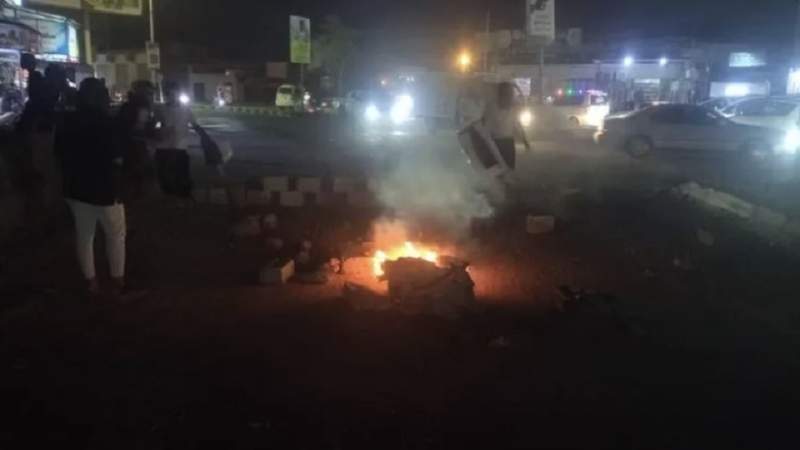
Widespread night-time protests and acts of civil disobedience swept across Seiyun, Aden and other areas of Hadramout on Thursday, bringing traffic and commercial activity to a near standstill as residents voiced anger over the continuing collapse of public services, worsening living conditions and prolonged power outages amid soaring summer temperatures.
Local sources said protesters burned tires and blocked major roads in Seiyun, the administrative center of Hadramout Valley and Desert, causing severe disruptions to transportation. Markets and businesses also closed their doors in response to calls for civil disobedience and in solidarity with public demands for an end to what residents considered policies of deprivation imposed on resource-rich regions.
The protests come amid mounting public frustration over deteriorating electricity services, the sharp decline in living standards and the continued depreciation of the national currency, all of which have intensified economic hardship across southern and eastern Yemen.
Rights Groups Condemn Use of Force Against Protesters
The unrest has been accompanied by allegations of excessive force by security personnel affiliated with the Saudi occupation and its local proxies.
International and local rights organizations, including Human Rights Watch and SAM for Rights and Liberties, called for transparent investigations into the killing of young protester Munaf Basbaeen in Seiyun and the shooting of citizen Naseem Al-Yafaei in Aden’s Dar Saad district. According to local accounts, Basbaeen died from gunshot wounds sustained near a protest site in Seiyun.
A statement issued by his tribe said he had been inside a gaming hall opposite the protest area when a military patrol ordered those present to evacuate. An argument reportedly followed before one of the soldiers opened fire, wounding Basbaeen and another individual. Basbaeen later succumbed to his injuries.
In an apparent attempt to contain public anger, local authorities aligned with the Saudi-led coalition announced the formation of investigation committees to examine the circumstances surrounding the incident.
Political Blame and Growing Rivalries
Political groups and social components in the occupied provinces have placed responsibility for the worsening crisis on the Presidential Leadership Council and the coalition-backed government, accusing them of failing to address the hardships faced by residents while operating from abroad.
At the same time, the UAE-backed Southern Transitional Council has sought to capitalize on growing public discontent by intensifying its political campaign against Saudi-backed factions and publicly endorsing popular demands.
Aden Explosion Raises New Security Questions
Meanwhile, in Aden, where residents have been protesting the worsening electricity crisis and facing what local sources describe as a crackdown on demonstrations, a separate security incident further heightened tensions. A large explosion rocked the Al-Mamdara area at Al-Solban military camp, leaving dozens of casualties among recruits affiliated with the so-called First Giants Brigade.
Medical sources in Aden reported that hospitals received 18 fatalities and dozens of wounded following the blast, reviving questions about Saudi efforts to reorganize military formations in the city, particularly camps that were originally established under Emirati-backed structures.
Field sources have not ruled out the possibility that the explosion at a weapons depot was deliberate, citing indications from the scene that point to an ongoing process of restructuring the military landscape in the southern occupied provinces, including efforts to regulate weapons stockpiles, military equipment, and support mechanisms for forces with varying loyalties.
The incident also comes amid previously announced plans to relocate military camps from within Aden. Earlier statements by a Saudi representative indicated that residents could witness major changes within 48 hours, including directives requiring camps containing heavy weaponry to move outside the city limits.
Other parties aligned with Saudi Arabia have promoted a different narrative, claiming that the explosion was intended to divert attention from allegations involving the looting of weapons from camps backed by the United Arab Emirates during previous periods.
In either case, the crises affecting Aden appear to be shifting between competing Saudi and Emirati spheres of influence, while continuing to exact a heavy toll on local residents. Observers say the developments may prompt residents of Aden and other southern provinces to reassess the outcomes of a decade of conflict and political fragmentation, amid concerns that external agendas have failed to serve either Yemen’s national interests or the aspirations of the people of the south.
The current wave of protests began on Sunday in Hadramout, fueled by widespread anger over deteriorating public services and prolonged electricity outages during an intense heatwave.
Residents have linked their hardships to years of economic decline, soaring prices, currency depreciation and the cumulative impact of more than a decade of war.
Observers say the unrest reflects growing public dissatisfaction across occupied southern and eastern provinces, where worsening living conditions and political rivalries among coalition-backed factions continue to deepen instability.