HRC: Israel turns thirst into tool of slow death threatening lives of over two million Palestinians in Gaza
In a statement obtained by the Yemeni News Agency (Saba), the center affirmed that Israel is using this situation, which it has imposed on Gaza, as a means of punishing and pressuring its residents by creating an uninhabitable environment, warning of an unprecedented escalation of humanitarian and health risks.
The center stated that this situation is forcing more than two million Palestinians to face the summer in catastrophic conditions, with temperatures exceeding 40 degrees Celsius in tents and shelters.
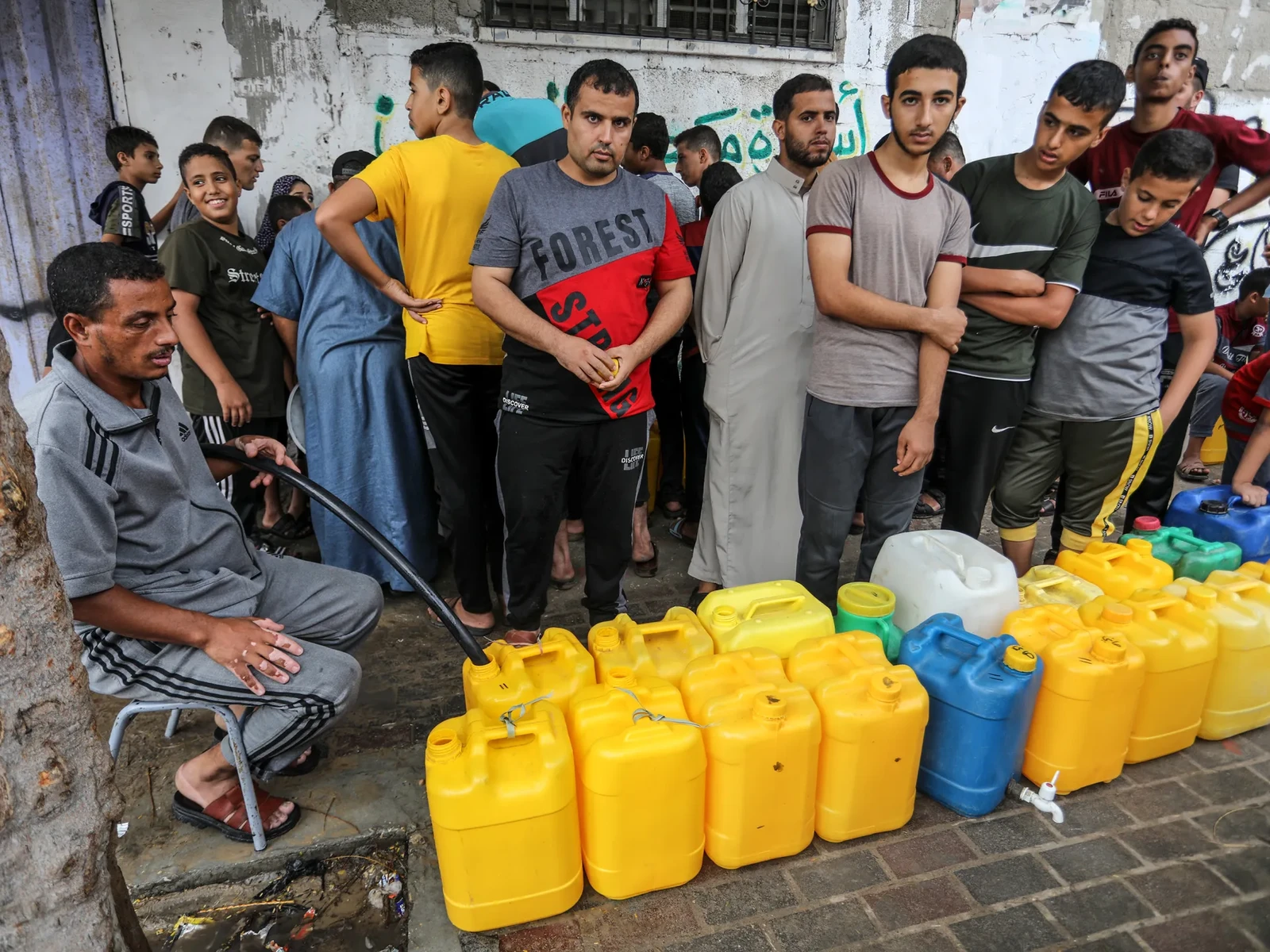
It revealed that Gaza residents are enduring this heat while hundreds of thousands of families are deprived of the minimum amount of water necessary for drinking and basic needs.
The center emphasized that the water shortage and humanitarian crisis in Gaza are primarily a result of a systematic Israeli policy targeting the livelihoods of the civilian population, particularly water and sanitation networks.
It noted that this policy has led to a near-total collapse of basic services and created an uninhabitable environment, contributing to the spread of diseases and epidemics and exposing the population to thirst and malnutrition.
It explained that the average per capita share of water has decreased from 80 liters per day before October 2023 to only between 3 and 6 liters, while in some areas it has dropped to as low as 2 liters per day. These amounts are far below the minimum recommended by the World Health Organization of 15 liters per person per day.
The Gaza Center for Human Rights cited international and UN reports indicating that more than 80% of the water and sanitation networks in the Gaza Strip have been destroyed or damaged, in addition to damage to more than 1,675 kilometers of water and sewage lines. Most desalination, pumping, and treatment plants have ceased operation, leading to groundwater contamination and increased salinity.
The center pointed out that this collapse is directly linked to the continued Israeli blockade of the Gaza Strip, the ongoing ban on the entry of fuel necessary to operate water treatment plants, and the persistent power outages in the Strip, which have paralyzed wells, desalination plants, and pumping networks.
It emphasized that this has exacerbated the suffering of displaced persons and residents of the Strip, who are forced to travel long distances to obtain small quantities of water, often unfit for human consumption.
The center called on the international community, the United Nations, and the States Parties to the Geneva Conventions to act without delay to compel Israel to cease targeting civilian infrastructure.
It reiterated its call for independent international investigations into Israel’s systematic targeting of water and sanitation facilities and for the prosecution of all those responsible for using water deprivation as a weapon against civilians.
It demanded that Israel immediately lift restrictions on the entry of fuel, equipment, and materials necessary to repair the water supply system, ensure access for repair and relief teams to the entire Gaza Strip, and guarantee a sustainable supply of drinking water for the civilian population.