
Insan Organization: Economic War Deepened Humanitarian Crisis in Yemen
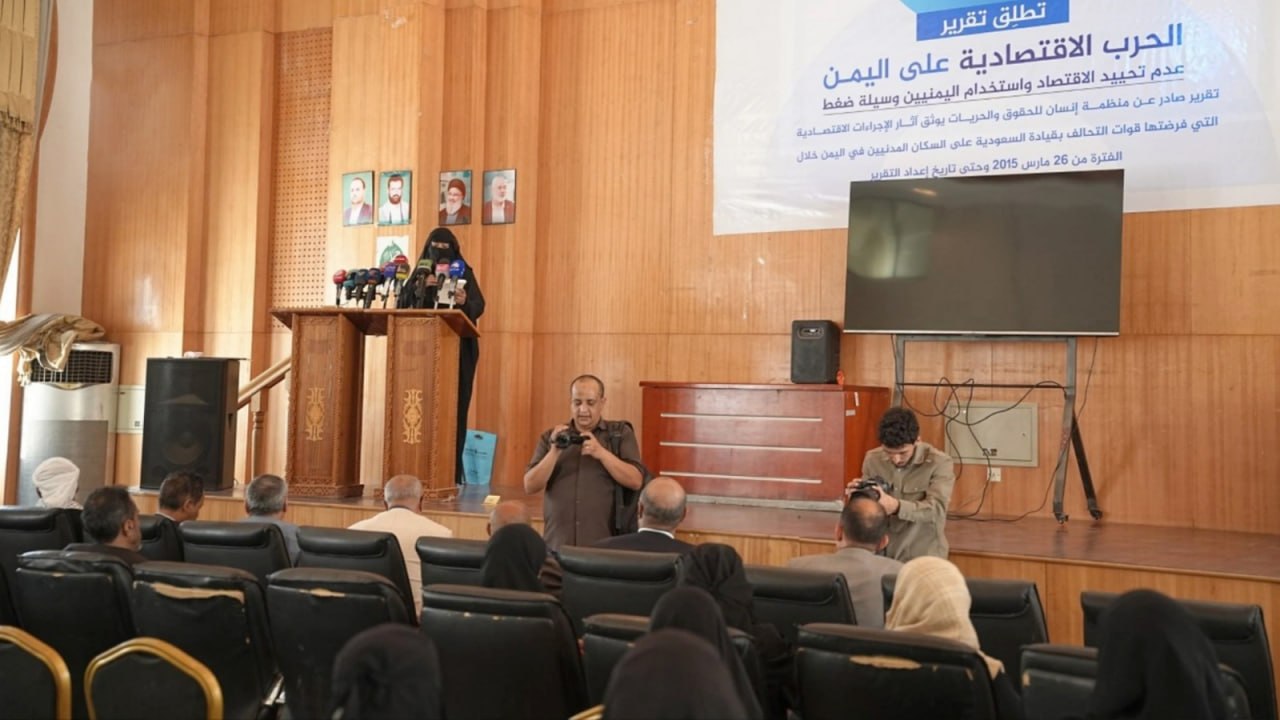
Yemen’s Insan Organization for Rights and Freedoms on Monday released a comprehensive human rights report documenting the devastating economic impact of measures imposed on Yemen since March 26, 2015, accusing the Saudi aggression of waging an “economic war” that has severely affected civilians and the country’s economy.
The report, titled “The Economic War on Yemen: Failure to Neutralize the Economy and the Use of Civilians as a Means of Pressure,” was unveiled during a press conference in Sana’a. It examines the economic consequences of the aggression and the coalition’s economic policies, arguing that they have undermined livelihoods and intensified Yemen’s humanitarian crisis.
According to the report, more than 1,000 economic facilities have been destroyed, while restrictions on air, sea, and land crossings have disrupted supply chains, driven sharp increases in food, fuel, and medicine prices, and worsened living conditions across the country. It also confirmed that repeated airstrikes damaged economic and productive facilities, transportation infrastructure, airports, roads, bridges, industrial and agricultural sites, and food supply networks.
The organization further stated that Yemen’s total economic losses from the conflict have reached an estimated $1.131 trillion, describing the figure as preliminary and stating that a more detailed assessment will be released by the National Human Rights Commission.
The report also highlighted the economic repercussions of relocating the Central Bank of Yemen’s functions to Aden, saying the move contributed to financial instability, disruptions in salary payments for hundreds of thousands of public-sector employees, and increased restrictions on banking services and financial transfers that have hindered commercial activity.
Insan organization said these measures have fueled record levels of poverty, unemployment, and food insecurity, leaving millions of Yemenis dependent on emergency humanitarian assistance. It concluded that the use of economic measures to pressure civilians and the failure to shield the economy from the aggression constitute serious violations of international humanitarian and human rights law.
The organization called for independent and transparent investigations into economic violations and their humanitarian consequences, accountability for those responsible, compensation for victims, and the removal of restrictions impeding Yemen’s economic recovery.
At the same event, the head of Yemen’s Human Rights Authority the existence of 30 secret prisons in several southern and eastern provinces, detainees critical of the coalition were subjected to abuse.
Yemen has faced continuous US-Saudi aggression and a comprehensive blockade since 2015, resulting in severe economic disruption and the deterioration of public services. The targeting of critical infrastructure, combined with restrictions on imports and financial flows, has significantly reduced state revenues and weakened key institutions.
Despite these challenges, Yemeni authorities have repeatedly highlighted efforts to maintain basic services and stabilize the economy under wartime conditions, while calling attention to the humanitarian and economic impact of the blockade on the population.