
How does rapprochement between “Somaliland”, “Israel” threaten Arab national security, security of the Horn of Africa?
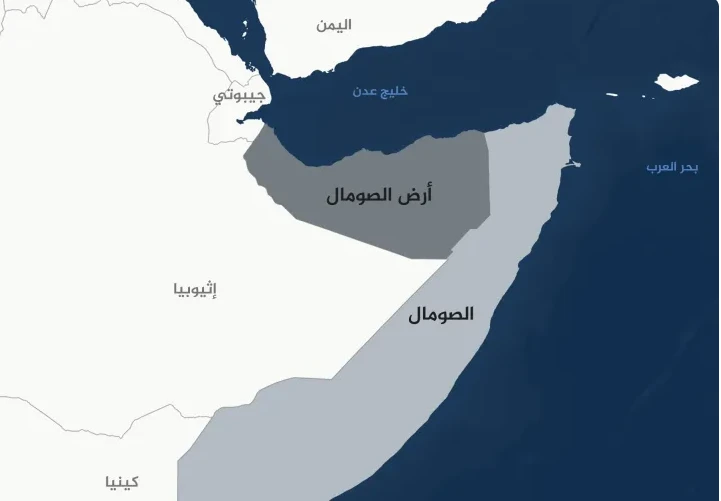
When the leader of the revolution, Sayyed Abdul-Malik Badr al-Din al-Houthi, vowed to target any Israeli presence in what is known as the Somaliland region, he was acting from a keen understanding of the danger posed by the Israeli enemy’s presence there to the entire region, not just Yemen.
Therefore, the leader of the revolution said: “We will not wait for the hesitant and complacent regimes. Rather, we will take the initiative whenever the Israeli enemy establishes any presence in Somaliland by targeting it with all available means.”
He affirmed Yemen’s continued monitoring of developments in the separatist region, saying: “We are closely monitoring developments in Somaliland and the Israeli enemy’s attempts to turn it into a foothold.”
The Deputy Foreign Minister, Abdul-Wahid Abu Ras, had previously emphasized the heavy price of any silence regarding this danger. He said, “Silence regarding Zionist movements will come at a heavy price,” emphasizing that “the security of Yemen and the region is a red line.”
Undoubtedly, the Israeli enemy’s pursuit of a foothold in this region overlooking the Gulf of Aden places Yemen at the forefront of its objectives. Yemen has become an imminent threat to Israel through its missiles, drones, and ability to impose a maritime blockade in the Red Sea. Furthermore, Israel is well aware of the extent of this enemy’s danger to the region and the world. Therefore, establishing a presence in Somaliland will shorten the geographical distance in its conflict with Yemen, on the one hand, and on the other hand, grant it control over maritime traffic at the southern gateway to the Red Sea. There, it poses a threat to Arab national security.
The Republic of Yemen is fully aware of the Israeli enemy’s plans. Accordingly, it is closely monitoring the situation in the region, and any Israeli military presence there will be targeted directly. This threat underscores Yemen’s awareness of the dangers posed to the Arab region by the Israeli presence in the separatist region. Thus, the leader of the revolution affirms that Yemen will not wait for the hesitant and compromising regimes, but will take the initiative to target any Israeli presence there. This is a clear message, and the Israeli enemy has undoubtedly read and understood it well, based on the messages conveyed to it by Yemeni missiles since October 2023.
Many err in believing that any Israeli presence in Somalia will only pose a threat to Yemen. Rather, it will tighten the noose around all Arab islands and ports along the Red Sea, the Gulf of Aden, and the Arabian Sea, extending to the Arabian Gulf, thereby threatening Arab national security. Israel will exploit the influence of its allies in Abu Dhabi and Bahrain, and the silence of its other loyalists—a silence born of fear—in the remaining Arab ports, coasts, and islands. This will enable it to conduct intelligence operations and expand militarily. However, it is far from being able to do so while Yemen stands as a strong and fierce guardian at the southern gateway to the Red Sea. Yemen will under no circumstances allow this enemy to have its say in the Red Sea and consolidate its influence, regardless of its ambitions, plans, or the support of its allies in the region. All these plans are turning into illusions and dreams that the enemy can never realize.
Yemen is well aware of the Israeli enemy’s eagerness to establish diplomatic relations with the Somaliland region. This was clearly demonstrated by the enemy’s recognition of the region as a state, in violation of the UN Charter. The excessive hospitality shown by the enemy towards the so-called president of the region, Abdirahman Mohamed Abdullahi, nicknamed “Aro,” during his visit to the occupied Palestinian territories further confirms this.
What must be clearly understood is that the relationship between the separatist region and the Israeli enemy predates official recognition by years, conducted through secret channels confirmed by both sides.
Numerous countries have condemned Israel’s recognition of the region, including Iran, which described it as a “flagrant violation” and called on the international community to take decisive action.
Furthermore, “Somaliland” is considered a separatist region not recognized by the central Somali government. Any Israeli presence there is considered a “deliberate attack” on Somalia’s sovereignty and could drag Somalia into conflicts that are not in its national interest. This makes it a threat to the stability of the entire Horn of Africa, especially given its dubious relationship with Ethiopia, which cannot be excluded from the equation.
As the Somali Guardian website explained, the Israeli presence in Somaliland is not merely a military base on the map, but a redrawing of the geography of conflict in the region. This will endanger international navigation and threatens to transform the Horn of Africa into a new battleground.
Furthermore, observers believe that Israel’s recognition of Somaliland in December 2015 was not just a diplomatic move, but part of a broader strategy to confront the “axis of resistance” and find a way out of the international isolation Israel faced after the aggression against Gaza.