
Yemen’s Air Deterrence Campaign Disrupts Saudi Aviation, Economic Calculations
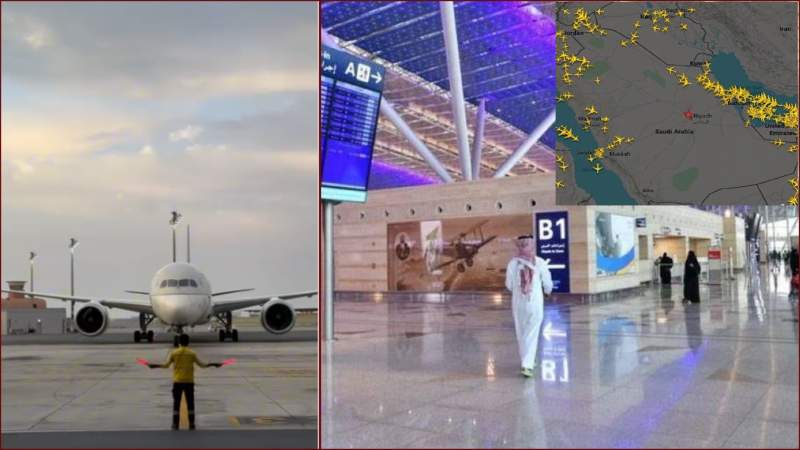
The impact of Yemen’s recent military operations is beginning to affect Saudi Arabia’s aviation sector, with analysts saying the targeting of Abha International Airport has introduced a new phase in the confrontation by linking the security of Saudi air navigation to the lifting of restrictions on Sana’a International Airport.
The latest developments indicate that the long-standing air blockade imposed on Yemen is no longer a one-sided measure controlled solely by Riyadh, as Yemen’s response has created a reciprocal deterrence equation targeting one of Saudi Arabia’s most sensitive economic sectors: civil aviation.
Following the Yemeni Armed Forces’ warning to airlines against using Saudi airports and airspace, several indicators emerged showing that the warning has been treated as an operational security factor by airlines and governments, contributing to growing international pressure on Saudi aviation.
Within hours of the Abha Airport operation, several Gulf and Arab airlines announced flight cancellations. flydubai suspended flights to and from Abha and Najran, while Saudi carriers, including Saudia and Flynas, also halted a number of flights connected to Abha. Egypt’s Air Cairo announced the cancellation of flights to Abha due to the airport’s closure.
Flight tracking data also showed continued disruption, with dozens of arrivals and departures affected at Saudi airports following the escalation.
The situation expanded beyond airline operations after the Canadian government issued a warning advising its citizens against traveling through Abha Airport due to risks associated with missile and drone attacks. Observers said such official advisories could influence international confidence in Saudi aviation and increase operational and insurance costs for airlines.
The significance of these developments lies in the nature of the aviation sector, which relies heavily on security assessments by airlines, insurers, and aviation authorities. Any increase in perceived risks can lead to flight suspensions, schedule changes, and higher operating expenses.
The developments also coincide with Saudi Arabia’s continued closure of Abha, Jizan, and Najran airports, reflecting the security concerns surrounding southern Saudi airspace following the Yemeni operation.
According to analysts, Yemen’s stated strategy has shifted from a direct military response toward creating broader pressure on Saudi Arabia’s transportation, tourism, investment, and economic sectors. They argue that prolonged disruption to aviation could affect Saudi efforts to project stability and attract international business and tourism under its economic development plans.
The latest escalation follows Saudi strikes on Sana’a International Airport and Yemen’s subsequent operation against Abha International Airport, which Sana’a described as part of a reciprocal equation of “airport for airport.” Yemeni officials have warned that continued restrictions on Sana’a Airport would be met with further measures affecting Saudi aviation.
The developments come as Yemen seeks to transform the blockade from a unilateral policy into a reciprocal pressure mechanism, arguing that normal operations at Saudi airports cannot continue while Yemen’s main civilian airport remains restricted.
For more than a decade, Saudi-led restrictions have limited operations at Sana’a International Airport, which has prevented patients, students, and travelers from accessing international routes. The latest escalation followed the departure of an Iranian humanitarian flight carrying Yemeni patients, passengers, and a Yemeni delegation, after attempts were made to prevent the aircraft from reaching Yemen. The incident preceded Yemen’s warning to airlines and its subsequent strike on Abha Airport.