
Mohammed Ali al-Houthi: Martyr of Quran, Sayyed Hussein al-Houthi, presented different interpretation of Karbala Tragedy
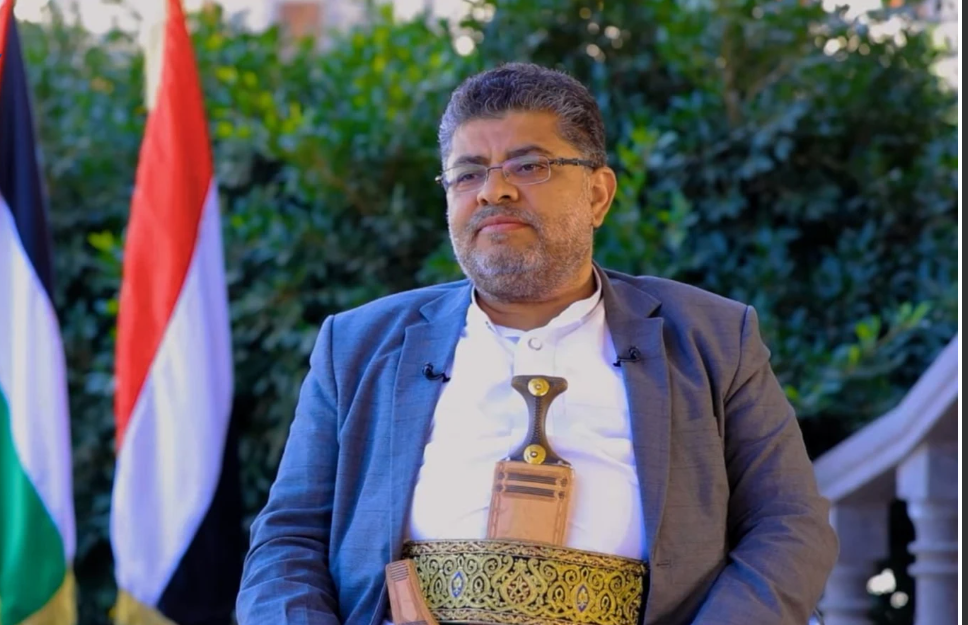
Mohammed Ali al-Houthi, a member of the Supreme Political Council, stated that the martyr of the Quran, Sayyed Hussein Badr al-Din al-Houthi, presented a different interpretation of the Karbala tragedy, considering it a model of the consequences of neglecting awareness and its impact on creating historical transformations and tragedies. He also described it as a renewed call to return to the Holy Quran and history to build insight and draw lessons before it is too late.
This came in a newspaper article by the Supreme Political Council member, published on Tuesday in the Saba News Agency’s Al-Siyasiya newspaper, titled “Karbala Is Not Just for Mourning… But for Uncovering the Causes That Created the Tragedy and Reproduce It in Every Era.”
Mohammed al-Houthi explained that the martyr of the Quran’s interpretation does not stop at merely recalling the past, but rather stems from a historical perspective that sees major events as not repeating themselves with the same individuals, but rather with their underlying causes and psychological and social conditions.
He said: “In the vision of the martyred leader, Karbala is not an occasion for mourning, even though grief for Imam Hussein and his family is a human and faith-based stance. Rather, it is, first and foremost, a school of awareness, a project for understanding divine laws, and a constant warning to the nation against falling into the same predicament as previous nations: a state of negligence after the advent of the divine proof, and a state of waiting until tragedies become tangible before our very eyes.”
The member of the Supreme Political Council pointed out that one of the most prominent features of the martyred leader’s interpretation of the events of Karbala is that he does not treat them as isolated incidents separate from the course of history. Instead, he interprets them within the framework of divine laws that govern the rise and fall of nations, and the triumph of truth or the dominance of falsehood at specific junctures in history.
He stated that the Martyr of the Quran’s reading of Karbala represents a comprehensive intellectual project for rebuilding Islamic historical consciousness, based on four fundamental pillars: identifying negligence as the primary cause of tragedy; understanding the historical patterns that make events recurring; warning against belated awareness that only produces regret; and returning to the Holy Quran as the ultimate authority for understanding reality and shaping stances.
He added: “In this reading, Karbala is not a closed event, nor merely an emotional occasion, but rather an ongoing school for testing the nation’s ability to learn from its history, to discover causes before consequences occur, and to act in a timely manner before awareness turns to sorrow, stance to lamentation, and regret to a feeling that cannot undo what has passed.”
Mohammed Ali al-Houthi emphasized the necessity of returning to the lessons of the martyr of the Quran and studying them deeply to arrive at a solid foundation and a conscious, practical movement from which the nation can launch itself to confront tyrants and oppressors, undeterred by any circumstance, and drawing inspiration from every event to fuel its movement towards liberation from injustice and the attainment of the desired justice under unified leadership, within the framework of one nation and one direction, as the correct path that must be followed and through which life must be lived.